20 events found
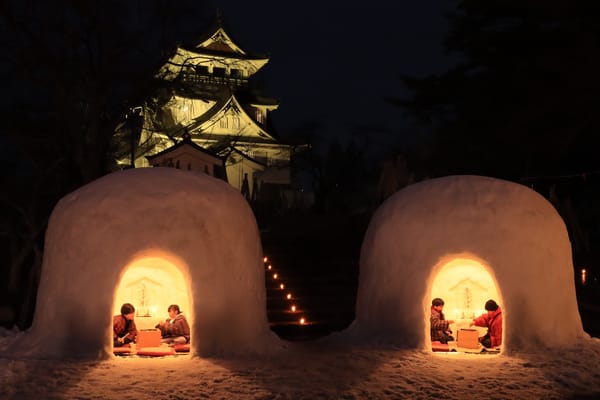
On 12 and 13 February 2027, and note that the dates have moved, the children of Yokote in Akita invite strangers into candle-lit snow huts and serve them grilled mochi and sweet amazake. The custom is about 450 years old, and it only happens on two evenings a year.
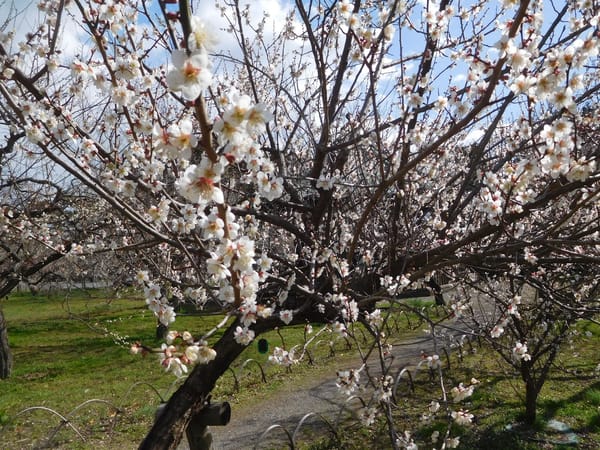
Cherry blossom gets the fame, but plum blossom comes first. For 40 days each year Mito's Kairakuen, one of Japan's Three Great Gardens, fills with around 3,000 plum trees in white, pink and deep red, and the 131st festival in 2027 runs from 11 February to 22 March, an easy day trip from Tokyo.
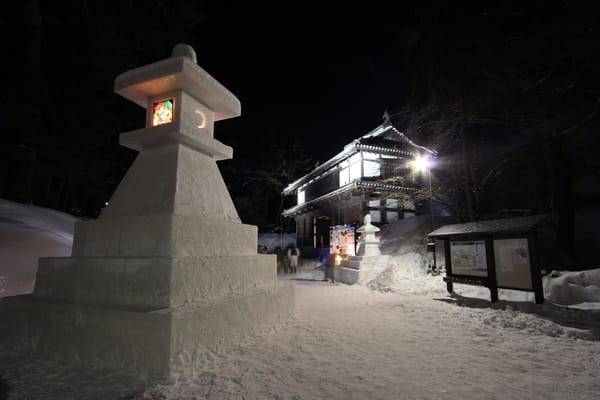
For five nights in February, the grounds of Hirosaki Castle fill with around 150 handmade snow lanterns and some 300 small kamakura glowing with candlelight, all of it built by the citizens of one of Japan's snowiest castle towns. The 51st festival runs from 10 to 14 February 2027, and it pairs with Yokote's kamakura festival for a Tohoku snow circuit.
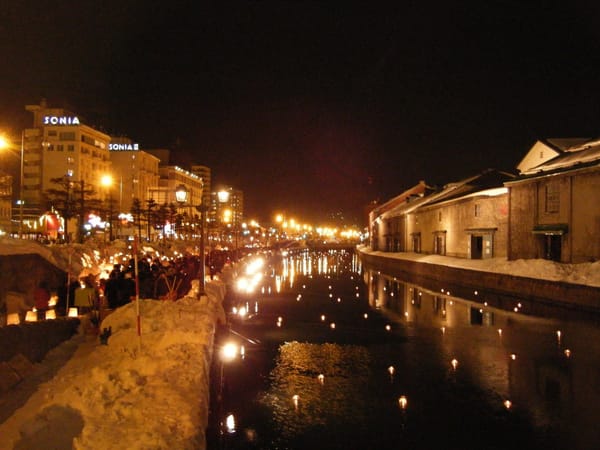
For eight evenings in February, the port city of Otaru turns its lights down and lets candles do the work: snow lanterns along the old canal, glass fishing floats glowing on the water, and a disused railway line lined with small flames. It runs 6 to 13 February 2027, overlapping the Sapporo Snow Festival, and it is free.
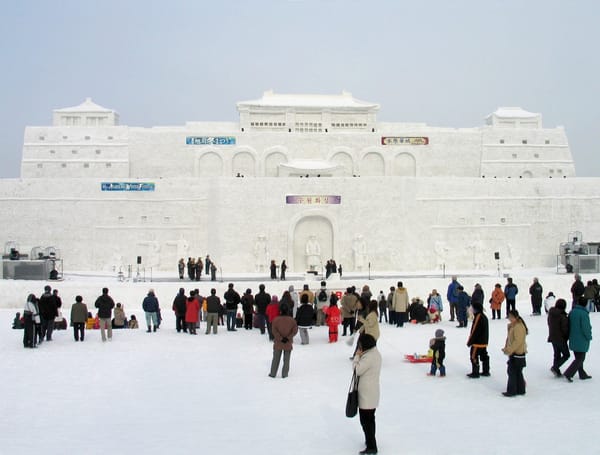
Sapporo gets the crowds, but Asahikawa builds the giant. Its main snow sculpture runs about 140 metres wide, doubles as the festival stage, and in 2027, according to reports, it takes the shape of Godzilla. The 68th Asahikawa Winter Festival runs 6 to 11 February 2027, and entry is free.
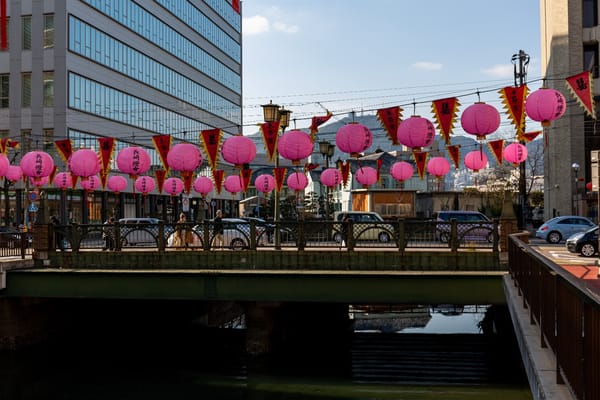
For 17 nights in February 2027, around 15,000 Chinese lanterns take over the streets, rivers and parks of central Nagasaki. It began as the Chinese New Year celebration of the city's Chinatown, and it is still the biggest Lunar New Year event in Japan.
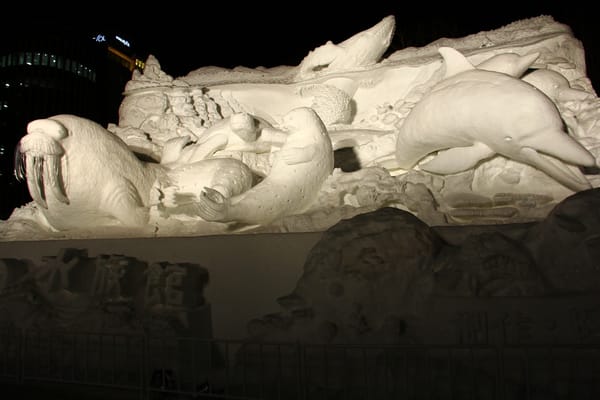
For eight days in February, central Sapporo fills with snow sculptures as tall as buildings, ice carvings in the nightlife district and giant slides for children. The 77th Sapporo Snow Festival runs from 4 to 11 February 2027 across three sites, and every part of it is free.
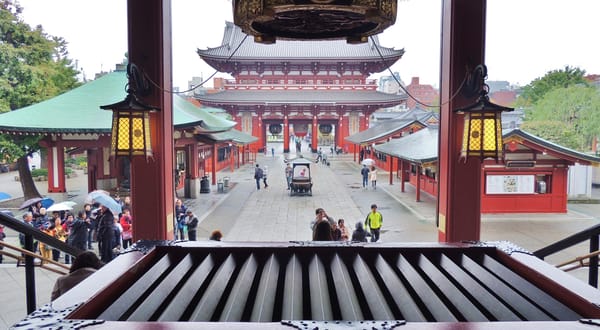
On Wednesday, February 3, 2027, Tokyo's oldest temple scatters lucky beans for Setsubun, with zodiac-year throwers, a dance of the Seven Lucky Gods and an afternoon round by Asakusa entertainers. Senso-ji is also the temple where the crowd never shouts "Demons out", and the reason is a good one.
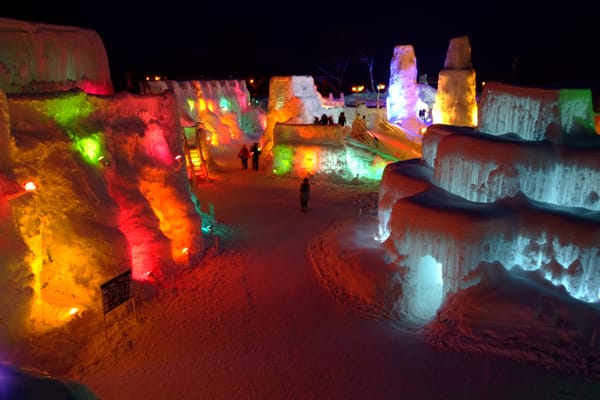
At Shikotsuko Onsen, water drawn from one of Japan's clearest lakes is sprayed onto frames all winter and frozen into towers, tunnels and caves of ice. By day they glow a natural blue; from 16:30 they are lit in colour. The 49th festival runs 30 January to 23 February 2027, and the bus from the airport must be booked ahead.
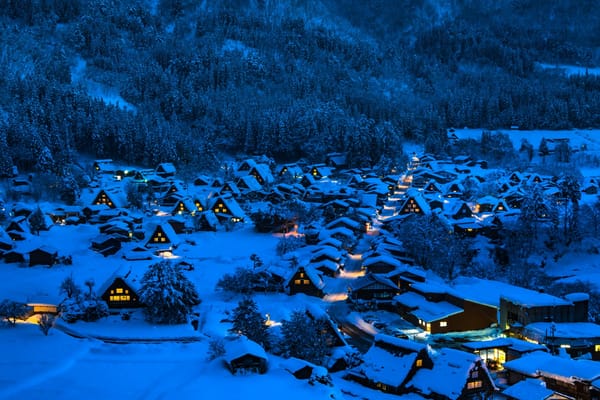
Four evenings only, and nobody gets in without a booking. Shirakawa-go's 41st Light-Up runs on 11, 17, 24 and 31 January 2027, from 17:30 to 19:30, with the gassho-zukuri farmhouses lit in deep snow. Here is how the reservation system actually works, and which of the five ways in are still open.
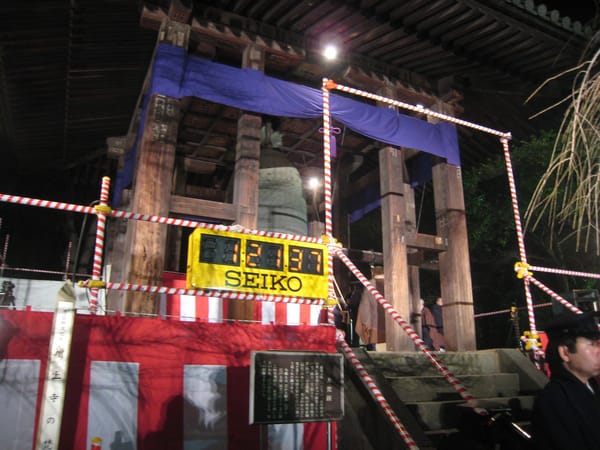
Tokyo's great temple bells ring 108 times on New Year's Eve. At Zojoji, in the shadow of Tokyo Tower, visitors can take a turn on the rope themselves, and for 2026 the ringing moves earlier in the evening, from 21:45 to about 23:00.
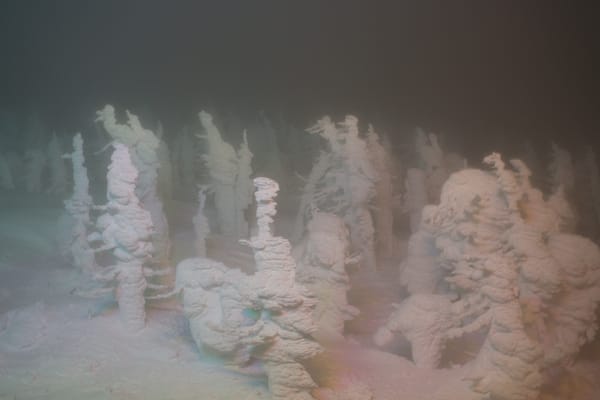
On the high slopes above Zao Onsen, winter turns a forest of fir trees into a crowd of hulking white shapes, the juhyo or snow monsters. On 31 evenings this winter the Zao Ropeway runs after dark and floodlights them, 17:00 to 21:00, with the monsters at their biggest from late January into February.
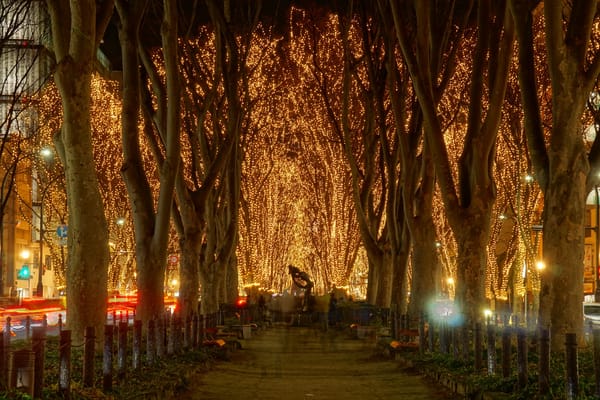
Sendai's winter signature is not a tower or a single decorated tree. It is a whole avenue: 127 zelkova trees along Jozenji-dori carrying about 480,000 warm LEDs, lit every evening from 4 to 27 December 2026. Three times a night, the entire street goes dark on purpose, then comes back on all at once.
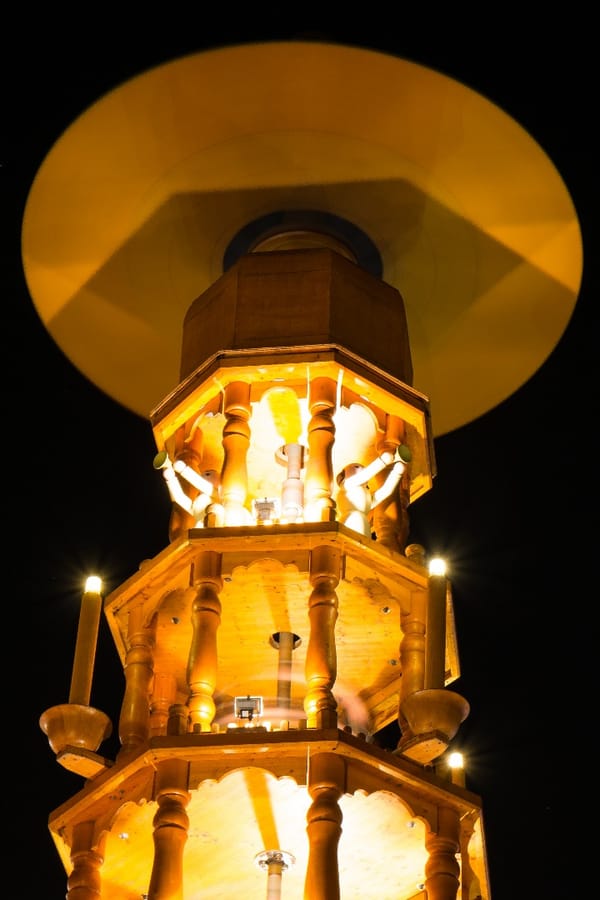
First, the thing older guides get wrong: the Tokyo Christmas Market is not at Meiji Jingu Gaien in 2026. The German-style market runs at Shin-Toyosu on the bay from 20 November and at Shiba Park under Tokyo Tower from 4 December, both until Christmas Day, each built around a 14 metre Christmas pyramid.
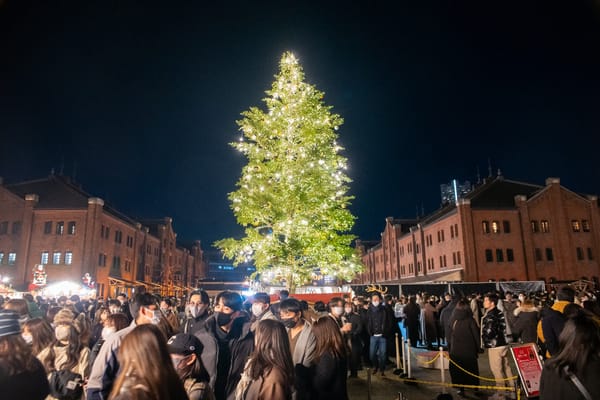
Yokohama's German Christmas market fills the Red Brick Warehouse plaza from 20 November to 25 December 2026: about 60 wooden huts, a real 11 metre tree, entry from ¥500.
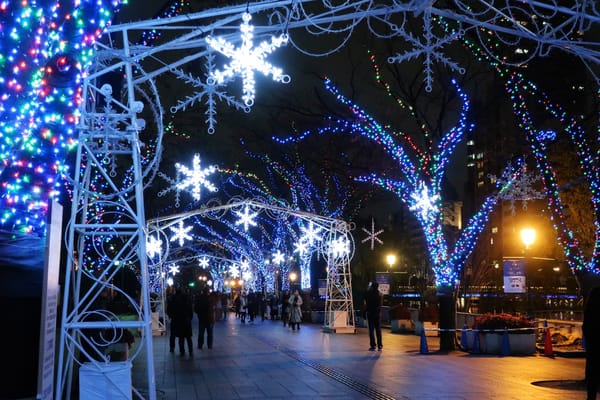
Osaka does winter light at city scale. One festival, two centrepieces: four kilometres of illuminated ginkgo trees down Midosuji boulevard until 31 December, and, for fifteen nights only, projection mapping across the red brick front of the Central Public Hall in Nakanoshima, 11 to 25 December.
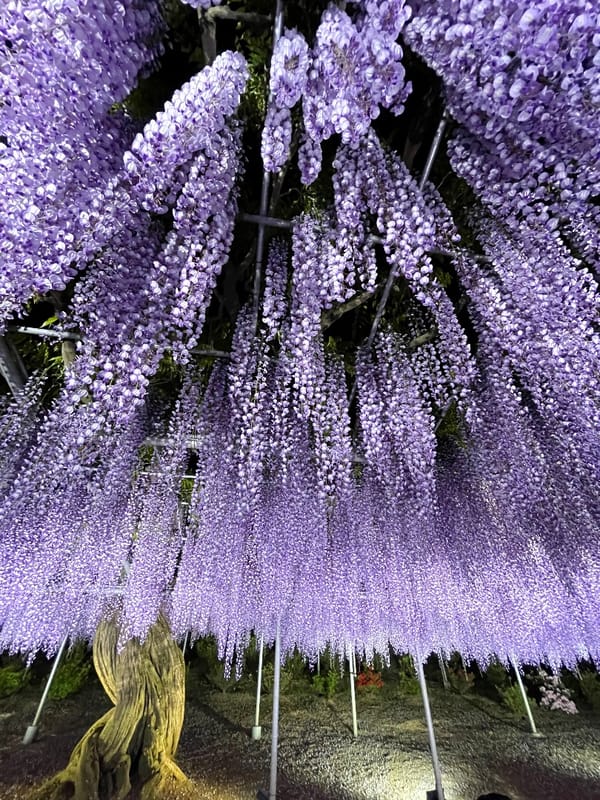
Ashikaga Flower Park is famous for its wisteria in spring. In winter it rebuilds the whole park in light, more than five million bulbs of it, and the great wisteria blooms again as a cascade of lamps. Flower Fantasy runs from 17 October 2026 to 14 February 2027 and has topped Japan's national illumination rankings ten years running.
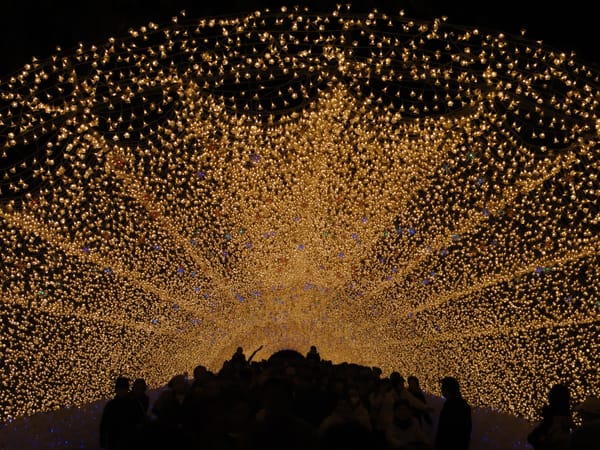
Japan's biggest winter illumination is not in Tokyo. Nabana no Sato, a flower park at Nagashima Resort in Mie, lights up from 17 October 2026 to 31 May 2027: a 200 metre tunnel of warm light, a river of LEDs across the central pond, and a new main theme for this season, Wild Paradise, where dinosaurs and savanna animals play out in light and sound. Nagoya is about 35 minutes away.