Japan's flower season does not start with the cherry blossom. It starts a good month earlier, with plum, and the biggest plum party of all is in Mito, the Ibaraki capital about 75 minutes from Ueno by limited express. The Mito Plum Festival (Mito Ume Matsuri) has been running since the 1890s in one form or another, and the 131st edition in 2027 spreads across 40 days, from Thursday 11 February to Monday 22 March, over two venues that face each other across the old castle town: Kairakuen garden and the Kodokan school.
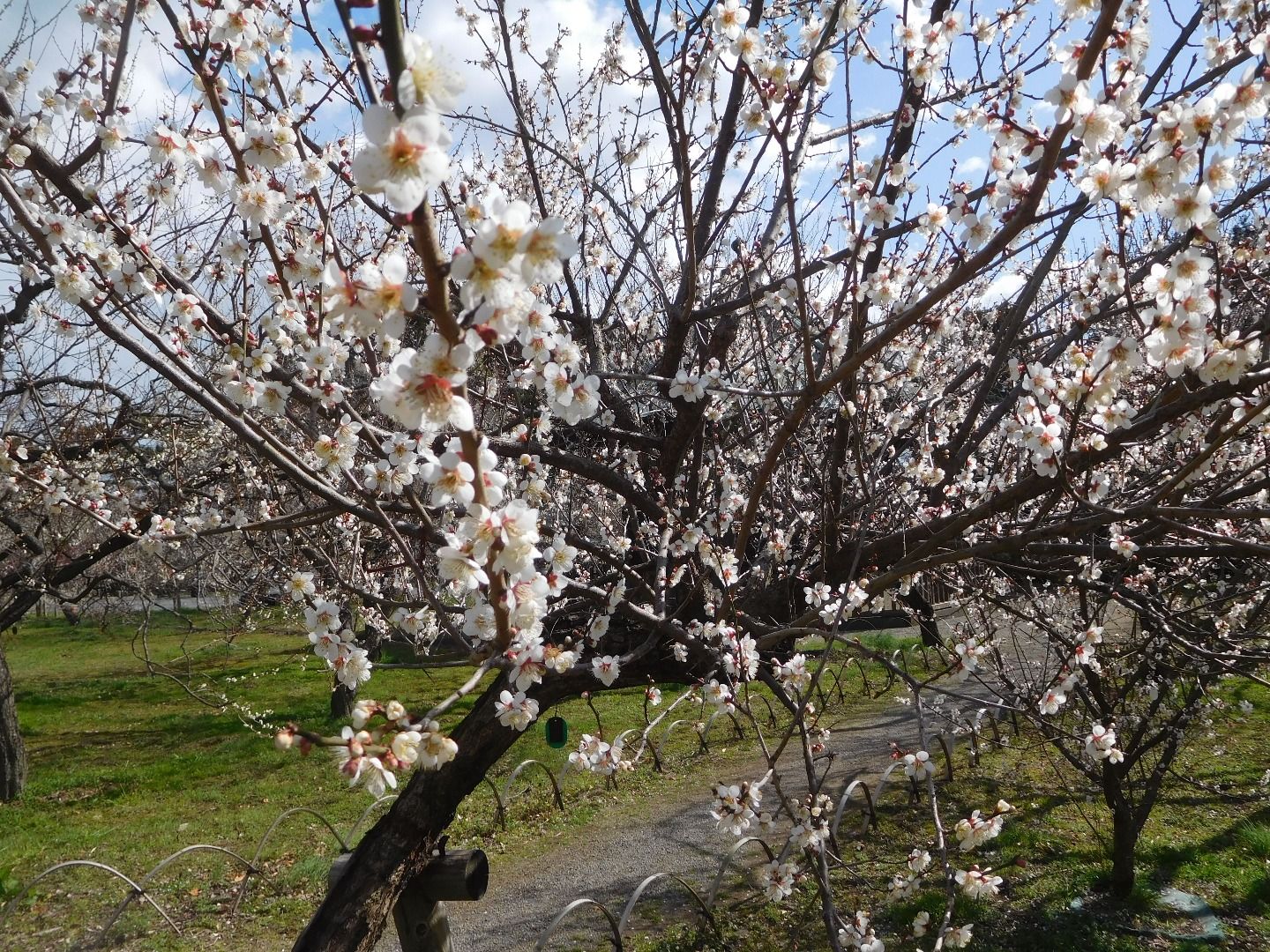
Kairakuen is the main draw. It was laid out in 1842 by Tokugawa Nariaki, the ninth lord of Mito, and it breaks the usual rules of a feudal lord's garden: Nariaki built it for his townspeople as much as for himself, which is where the name comes from, roughly "a garden to enjoy together with the people". It is counted among Japan's Three Great Gardens, alongside Kenrokuen in Kanazawa and Korakuen in Okayama, but in February and March it does something neither of the others can. Around 3,000 plum trees of about 100 varieties are planted across its slopes, and because the varieties are staggered (early, mid and late bloomers, each labelled), something is always in flower across the whole festival. The blossom is not the pale wash of cherry. Plum flowers sit tight on dark, gnarled branches and come in clean white, soft pink and a deep crimson, with a scent you notice before you see the tree.
The garden rewards a slow loop. From the Kobuntei, the three-storey villa Nariaki used for poetry gatherings and rest (entry charged separately from the garden), the view drops over the plum groves to Lake Senba below. Paths run through a bamboo grove and a cedar wood that stay green while the plum is out, and on festival days the grounds fill with food stalls, plum wine and plum sweets stalls, and the festival's own plum ambassador attendants in period dress. Get there early and it is a different place: the gates open at 6:00 during the festival, and the first hour is mostly locals, photographers and birdsong.
The second venue is the Kodokan, a ten-minute walk from Mito Station. Nariaki founded it in 1841 as the Mito domain's school, and it grew into one of the largest domain schools in Edo-period Japan, teaching everything from Confucian classics to astronomy and medicine. The main hall and gates survive, and its grounds hold around 800 plum trees of about 60 varieties, so the school visit is a blossom walk as much as a history lesson. Doing both venues in one day is easy: Kodokan first, straight off the train, then the bus out to Kairakuen, or Kairakuen at opening time and Kodokan on the way back to the station.
On selected evenings the garden changes character completely. Kairakuen UME The Lights lights the plum trees after dark on Fridays, Saturdays, Sundays and public holidays from 12 February, plus Monday 22 February, from 18:00 to 20:30. It is ticketed separately (¥800 in advance, ¥1,000 on the day, for high school age and above), and even daytime visitors have to leave at 17:00 and come back in on the evening ticket, so plan dinner in Mito in between rather than assuming you can stay in the garden. Advance tickets go on sale in January through the festival website.
Two things worth knowing before you book the train. First, the price has changed: Kairakuen's festival admission is ¥500 for adults in 2027, up from the usual ¥320, a revision Ibaraki Prefecture announced in October 2026. The garden's normal free entry before 9:00 and free entry for Ibaraki residents do not apply during the festival. Second, timing the peak is a judgement call. Early varieties open at the start of February and the garden is usually at its fullest from late February into early March, but a warm or cold snap shifts things by a week either way. The festival publishes bloom reports from late January, so check them before fixing your day.
Photos: Miyuki Meinaka (CC BY-SA 4.0), Σ64 (CC BY 4.0) and 小石川人晃 (CC BY-SA 4.0), via Wikimedia Commons.

You cannot run the 2027 Tokyo Marathon, because the 40,000 places went in a ballot that closed in August 2026. But race day, Sunday 7 March 2027, is one of the great free shows in Tokyo: wheelchair racers at 9:05, the world's best marathon runners at 9:10, then hours of costume runners, all on closed streets from Shinjuku to Tokyo Station. Here is where to stand.
Around 3,000 plum trees of about 100 varieties at Kairakuen, one of Japan's Three Great Gardens, created in 1842 by Tokugawa Nariaki A 40-day festival (11 February to 22 March 2027, the 131st edition), long enough to catch early or late bloom whatever the weather does UME The Lights: the plum groves lit after dark on weekend and holiday evenings, ticketed separately The Kodokan, one of the largest domain schools of the Edo period, with about 800 plum trees of its own a short walk from Mito Station The Kobuntei villa inside Kairakuen, with views over the plum slopes to Lake Senba (separate entry fee) Seasonal Kairakuen Station opens right in front of the garden on 24 festival days in 2027, including nine weekdays
•Go on a weekday if you can, and use the 6:00 opening: by late morning on peak-bloom weekends the main groves are crowded, while the first hour is quiet
•The seasonal Kairakuen Station only serves down trains (the direction from Ueno and Tokyo) between 9:45 and 16:35 on its operating days, so the return journey always starts from Mito Station, about 20 minutes away by bus
•Buses for Kairakuen leave from Mito Station's north exit (stands 4 and 6) and take about 20 minutes; the Kodokan is an 8-minute walk from the same exit, uphill in places
•UME The Lights needs its own ticket even if you visited during the day, and the garden empties at 17:00 first; buying in advance saves ¥200 and the January on-sale date is on the festival website
•Kairakuen's east gate closed for renovation works in November 2026, with the work expected to run into February 2027 and a temporary entrance in use, so check the garden's official news page for which gate is open before you go
•Plum jam, plum wine and pickled plums are the souvenirs here; the stalls inside the garden stock Mito-made versions you will not find at Tokyo Station
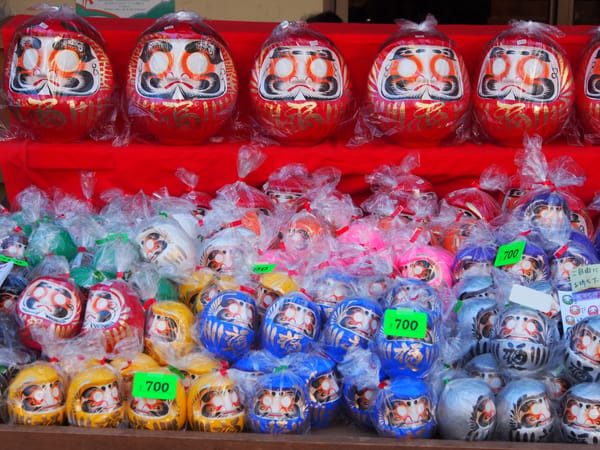
For two days every March, hundreds of stalls fill the grounds of Jindaiji Temple in Chofu with daruma dolls of every size and colour, and monks open each new doll's first eye with a Sanskrit character. It is one of Japan's three great daruma markets, an easy bus ride from Shinjuku.
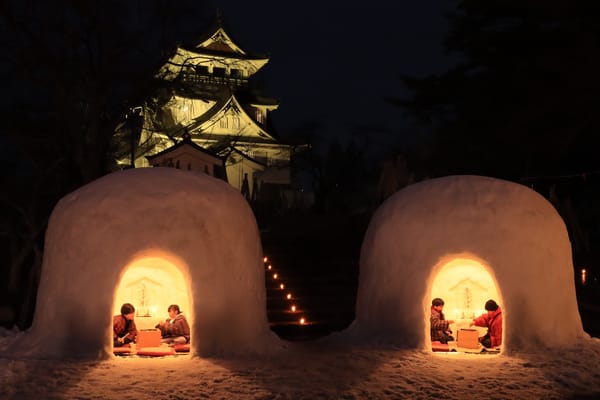
On 12 and 13 February 2027, and note that the dates have moved, the children of Yokote in Akita invite strangers into candle-lit snow huts and serve them grilled mochi and sweet amazake. The custom is about 450 years old, and it only happens on two evenings a year.