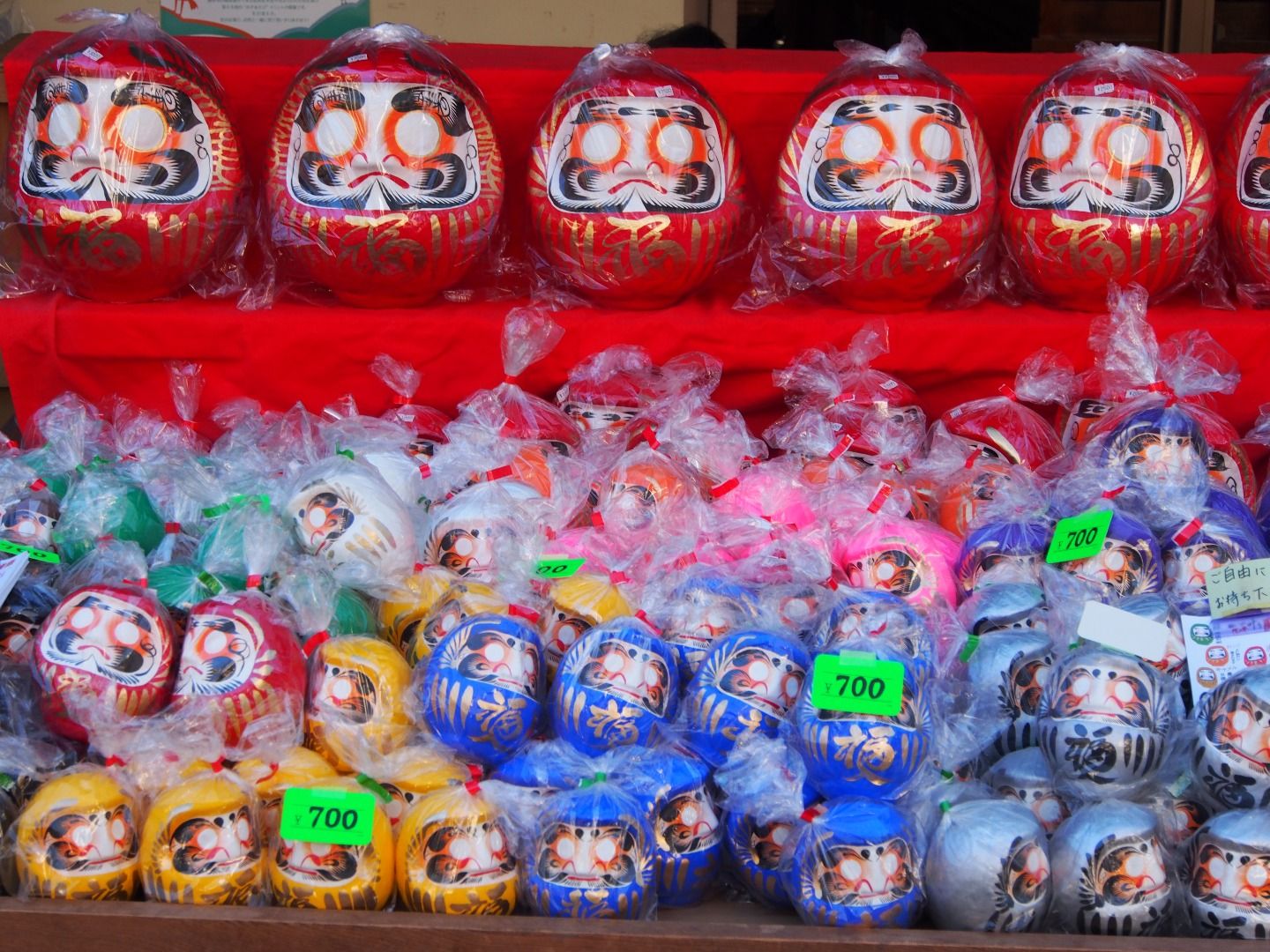
Most Tokyo temples have their biggest day on 1 January. Jindaiji saves its own for the start of spring. On 3 and 4 March, the temple's grand festival for Ganzan Daishi, the priest remembered as a protector against misfortune, turns the grounds and the lanes around the gate into one of Japan's three great daruma markets.
Around 300 stalls crowd in, and most of them sell one thing. Daruma are stacked in pyramids and lined up in rows, red above all, but also white, gold, pink, green and blue, each colour carrying its own meaning. The smallest are palm sized and start at a few hundred yen. The largest stand taller than the children posing next to them. The temple counts more than 100,000 visitors across the two days, and by mid-morning the approach from the bus stop is a slow shuffle.
The heart of the fair is a small desk in front of the Ganzan Daishi Hall. Buy a daruma anywhere else in Japan and its eyes are yours to paint in at home. At Jindaiji, a monk does it, and he does not paint a pupil. He brushes the Sanskrit character "a" (阿) into the doll's left eye, the eye on your right as you face it. In Buddhist tradition "a" is the first sound of the universe, the beginning of all things, so the character opens the eye and the wish at the same time. Take the doll home, set it somewhere you will see it every day, and work at whatever you wished for. If the wish comes true, bring the daruma back to the same desk. The monk adds "un" (吽), the final sound, to the second eye, and the doll is left at the temple in thanks, its work finished. The temple describes this Sanskrit eye opening as a custom found nowhere else.
Around the market, the festival itself keeps temple hours. In the Ganzan Daishi Hall, goma fire prayers run through the morning (in 2026, roughly every half hour from 9:30 to 13:00, with a further session at 15:00). At 13:45 on both days, senior monks in brocade robes process through the grounds behind gagaku musicians in the oneri gyoretsu; if it rains, the procession moves indoors and out of sight, which is one more reason to hope for a clear March day. There is also a fair-only goshuin stamp with a daruma design, ¥500 in 2026 and sold on paper only, which tends to run out.
Leave time for the temple and the street outside it. Jindaiji was founded in 733, making it the second oldest temple in Tokyo after Senso-ji, and its main hall keeps a bronze Shaka Buddha classed as a National Treasure. The gate lanes are lined with soba shops, some in old thatched buildings, all trading on the clear spring water of the Musashino plateau. Jindaiji soba has been the local speciality for centuries, and a bowl of it, eaten standing in the March cold between stalls, is part of the day whether you planned it or not.
A note on times: the 2027 timetable had not been published when this page was prepared, and the temple usually confirms it in February. In 2026 the market ran from about 9:00 to 16:00 and the eye-opening desk from 9:00 to 16:30. Both 2027 dates fall on weekdays, which usually makes for a slightly calmer fair than a weekend year.
Photos: nakashi (CC BY-SA 2.0) and 掬茶 (CC BY-SA 3.0), via Wikimedia Commons.
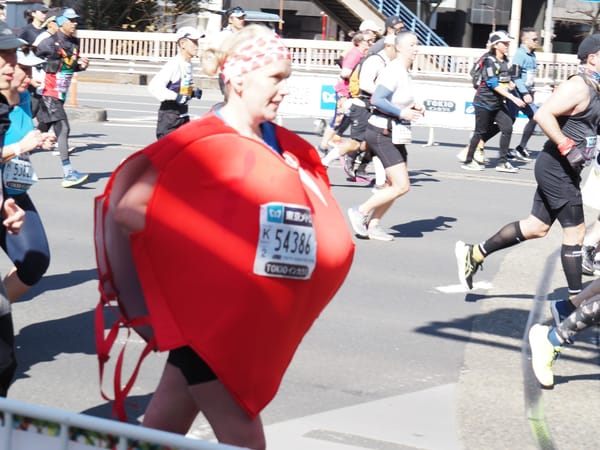
You cannot run the 2027 Tokyo Marathon, because the 40,000 places went in a ballot that closed in August 2026. But race day, Sunday 7 March 2027, is one of the great free shows in Tokyo: wheelchair racers at 9:05, the world's best marathon runners at 9:10, then hours of costume runners, all on closed streets from Shinjuku to Tokyo Station. Here is where to stand.
Around 300 stalls of daruma in every size and colour, from palm-sized dolls at a few hundred yen to giants taller than a child The eye-opening desk in front of the Ganzan Daishi Hall, where a monk brushes the Sanskrit character for "beginning" into your new daruma's first eye Bringing last year's daruma back to have the second eye completed and leaving it at the temple in thanks The oneri gyoretsu procession at 13:45 on both days, with gagaku musicians and senior monks in brocade robes, plus goma fire prayers through the morning Jindaiji soba for lunch in the thatched lanes by the gate, and a National Treasure bronze Buddha in the main hall
•Come by bus. On fair days parts of Jindaiji-dori become one-way (10:00–16:00 in recent years) and the temple car park closes to general visitors, so driving in is more trouble than it is worth.
•The eye-opening desk draws the longest queue from late morning. Arriving close to the 9:00 start keeps the wait short, and the procession is at 13:45, so an early start still leaves the whole day.
•Bring cash. Many stalls are cash only, and the fair-only goshuin (¥500 in 2026, paper only) sells out, so pick one up before lunch if you collect them.
•Returning a daruma? Go to the eye-opening desk before you buy a new one, so the monks can complete the second eye and take the old doll in.
•Buses back to Chofu and Kichijoji get crowded from mid-afternoon. Leaving before the market winds down, or staying for soba until the rush passes, both work better than the 16:00 scrum.
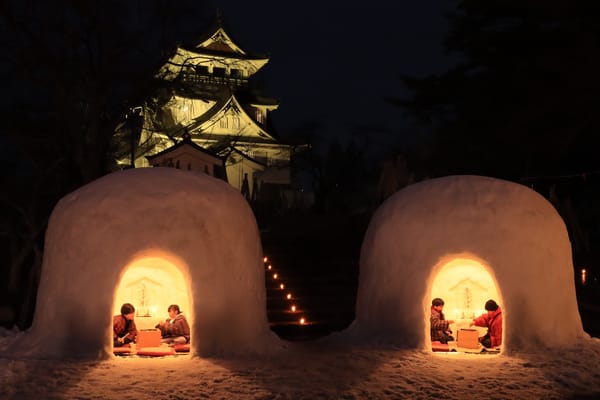
On 12 and 13 February 2027, and note that the dates have moved, the children of Yokote in Akita invite strangers into candle-lit snow huts and serve them grilled mochi and sweet amazake. The custom is about 450 years old, and it only happens on two evenings a year.
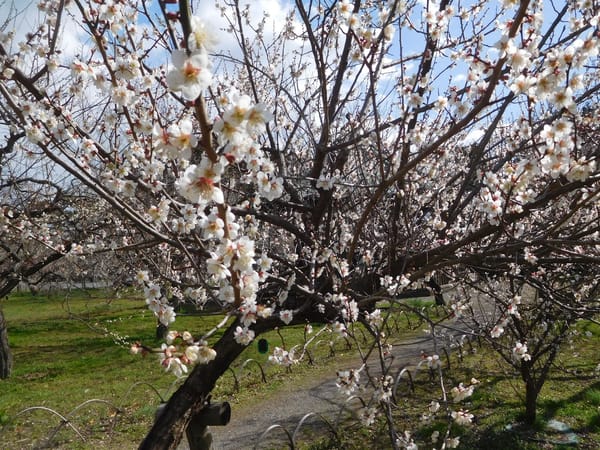
Cherry blossom gets the fame, but plum blossom comes first. For 40 days each year Mito's Kairakuen, one of Japan's Three Great Gardens, fills with around 3,000 plum trees in white, pink and deep red, and the 131st festival in 2027 runs from 11 February to 22 March, an easy day trip from Tokyo.