First, the thing that will catch people out. Yokote's kamakura festival was held on 15 and 16 February for decades, and most English write-ups still say so. From 2026 the dates moved: the festival now takes the Friday and Saturday immediately before the Bonten festival, which in 2027 means Friday 12 and Saturday 13 February. Yokote City has announced those dates in writing, and the new pattern runs on a trial basis through February 2029. The Bonten festival itself, a Shinto rite, did not move: it stays on 16 and 17 February, with the contest in front of city hall on the morning of the 16th. The old trip that caught the snow huts one night and the Bonten poles the next morning no longer exists, so in 2027 you choose one or the other, or stay the better part of a week.
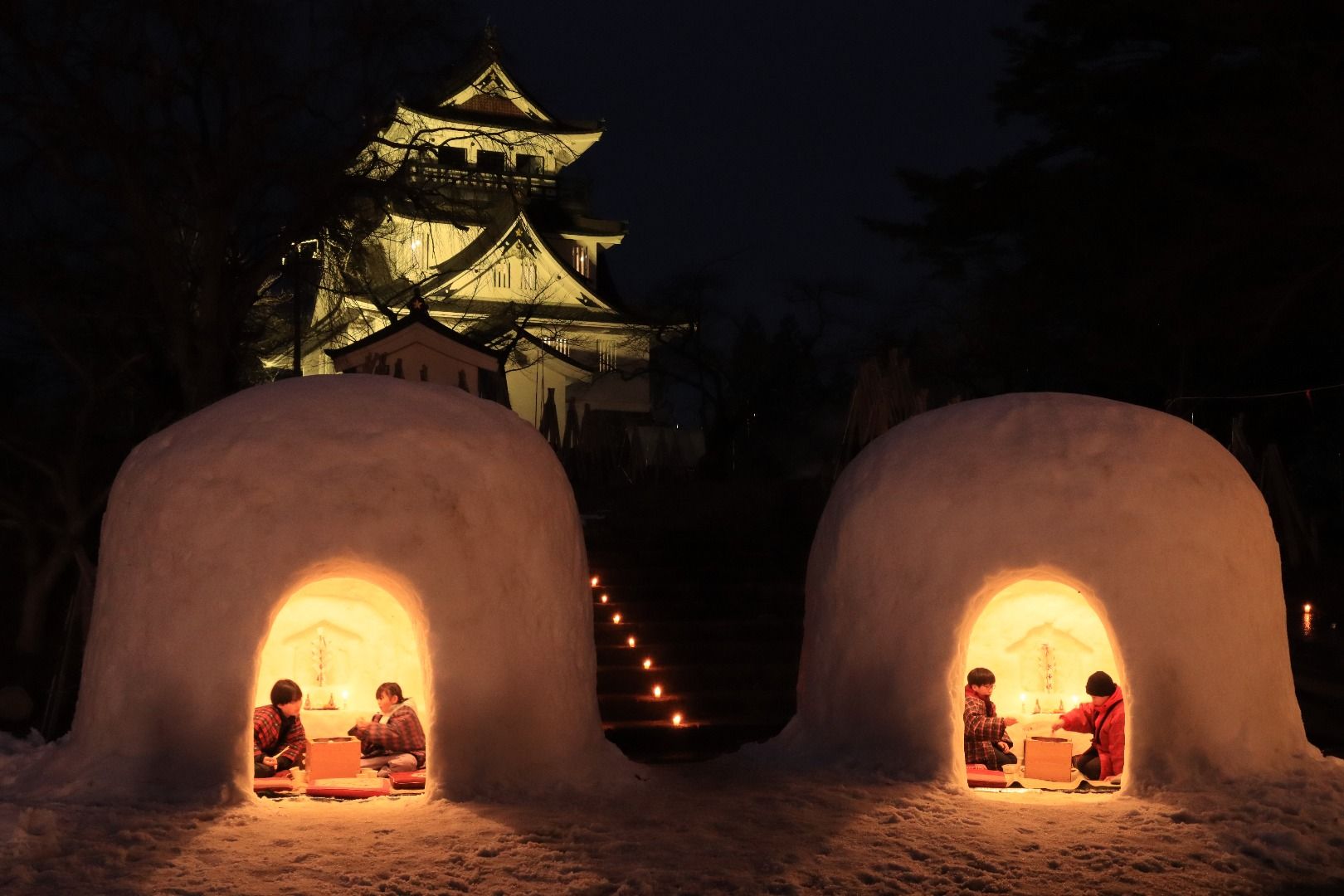
The custom itself is far older than any of its dates. For roughly 450 years, around the Little New Year, the people of Yokote have built kamakura: domed huts hollowed out of mounds of packed snow, each with a small snow altar inside dedicated to the water deity, where prayers are made for ample water. A charcoal brazier keeps the inside warm and grills the mochi. For the two festival evenings, from about 18:00 to 21:00, local children take over as hosts. They invite passers-by in with a call of "haitte tanshe", duck through the low entrance, sit down, and you are served grilled mochi and amazake, the sweet, almost alcohol-free rice drink, while the candlelight moves on the snow walls. In return, visitors make a small offering at the altar. Around 60 kamakura are built across the town (the tourist association's figure), in front of city hall, in Yokote Park, in Futaba-cho, beside ordinary houses on ordinary streets, so the whole centre of town takes part rather than one fenced festival ground.
The full-size huts are only half of it. Along the Yokote River, on the Janosaki riverbed, hundreds of mini kamakura, each the size of a lantern and holding a single candle, are lit from dusk until 21:00, a field of small flames with the castle on the hill above. More mini kamakura stand at Minami Elementary School, where there are snow sculptures and a snow slide for children, and at Komyoji Park you can watch kamakura being made, and in past years help make one. Yokote Castle, normally closed through the winter, opens specially for the festival, into the evening, so you can look down on the lit town from its observation deck. A free loop bus has run on festival evenings between the Kamakurakan Hall, Minami Elementary School and the castle in past editions.
Yokote is a commitment to reach: about three hours fifty minutes from Tokyo, changing at Omagari. That distance is exactly why the festival has kept its character. This is not a show staged for visitors; it is a town rite that visitors are welcomed into, two evenings a year, in one of the snowiest cities in Japan. Go on the Friday if you can, dress for standing in snow at well below freezing, and accept the invitation when a child calls you in. If your dates miss the festival entirely, the Kamakurakan Hall, ten minutes from the station, keeps real kamakura all year in a room held at about minus 10 degrees (open 9:00 to 17:00, admission ¥100), which is a poor second to the real night but better than nothing.
Photos: Rarisan (CC0) and 掬茶 (CC BY-SA 4.0), via Wikimedia Commons.

You cannot run the 2027 Tokyo Marathon, because the 40,000 places went in a ballot that closed in August 2026. But race day, Sunday 7 March 2027, is one of the great free shows in Tokyo: wheelchair racers at 9:05, the world's best marathon runners at 9:10, then hours of costume runners, all on closed streets from Shinjuku to Tokyo Station. Here is where to stand.
New dates for 2027: Friday 12 and Saturday 13 February, moved from the old fixed 15 and 16 February that most English pages still print Sit inside a candle-lit snow hut while local children serve you grilled mochi and amazake, a custom of about 450 years Around 60 kamakura across the town centre, in front of city hall, in Yokote Park and Futaba-cho, and beside people's houses Hundreds of candle-lit mini kamakura spread across the Janosaki riverbed along the Yokote River until 21:00 Yokote Castle opens specially into the evening during the festival, with views over the lit town The Bonten festival did not move with it: the pole contest stays on the morning of 16 February in front of city hall
•Ignore any page that says 15 and 16 February: for 2027 the festival is Friday 12 and Saturday 13 February, evenings only, about 18:00 to 21:00, so a day trip that leaves before dark misses the entire point
•From Tokyo, ride the Akita Shinkansen to Omagari (about 3 hours 30 minutes) and change to the JR Ou Main Line for Yokote (about 20 minutes); book the shinkansen early, as festival-weekend seats go
•Book Yokote accommodation very early or stay in Omagari or Akita City and ride in; the town is small and its hotels fill for these two nights
•Dress for deep snow and temperatures well below freezing: waterproof boots with grip, layers, hat and gloves; you will queue outside and then sit still inside the huts
•Carry small coins for the offering at the snow altar inside each kamakura
•The 2027 venue map, shuttle and parking details had not been announced at the time of writing; check the Yokote City and tourist association pages again before you travel
For two days every March, hundreds of stalls fill the grounds of Jindaiji Temple in Chofu with daruma dolls of every size and colour, and monks open each new doll's first eye with a Sanskrit character. It is one of Japan's three great daruma markets, an easy bus ride from Shinjuku.
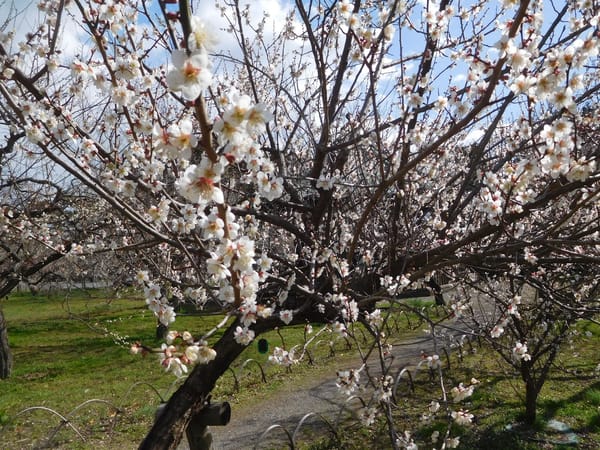
Cherry blossom gets the fame, but plum blossom comes first. For 40 days each year Mito's Kairakuen, one of Japan's Three Great Gardens, fills with around 3,000 plum trees in white, pink and deep red, and the 131st festival in 2027 runs from 11 February to 22 March, an easy day trip from Tokyo.