Most winter festivals in Hokkaido compete on size. Otaru's goes the other way. The Snow Light Path, Yuki Akari no Michi in Japanese, began in 1999 and is still built largely by hand, by residents and volunteers who spend the short February days packing snow into lanterns and setting out candles before dark. The name comes from a collection of poems by Sei Ito, a writer born in Otaru, and the festival has kept the quiet character that the name suggests. There are no floodlit stages and no giant sculptures. The light comes in small flames, thousands of them, and the city does the rest.
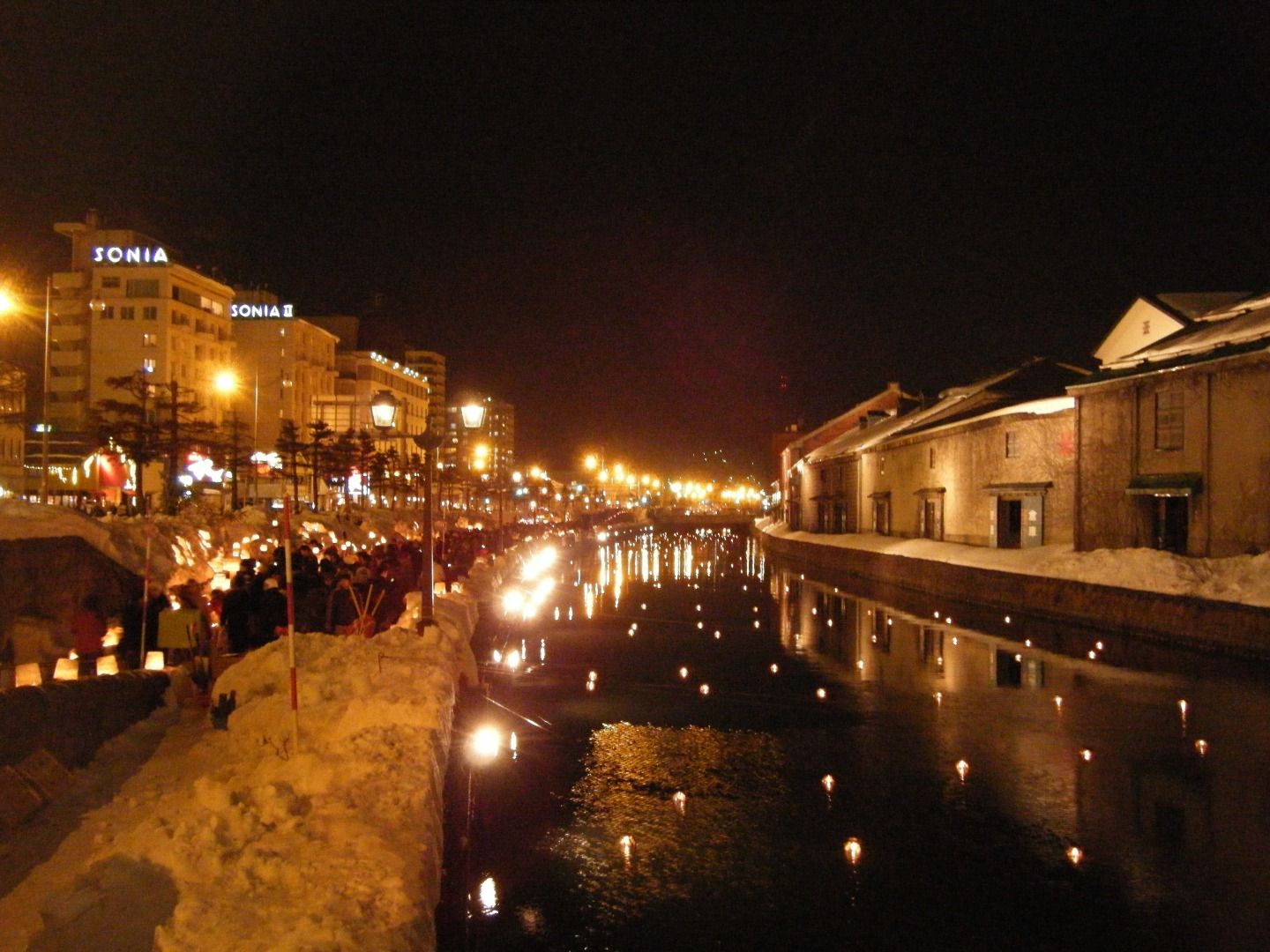
The centre of it is the Otaru Canal. Along the stretch of water lined by stone warehouses, snow candles are set out on the banks, and glass balls, the floats once used by local fishermen, are filled with candles and set on the surface of the canal, where their light doubles in the black water. The warehouses on the far bank are lit from below, so the whole scene holds still like something behind glass. Come at the moment the candles are lit and the canal path fills quickly; an hour later the crowds thin and it is mostly couples and photographers walking slowly in the cold.
The second main venue could hardly be more different. The former Temiya Line is a disused railway trackbed that runs through the middle of the city, tracks lifted long ago, and during the festival it becomes a path of snow candles and small snow objects, with a snow slide that keeps children busy and volunteers from Japan and overseas tending the lights. Sapporo's official tourism site calls it a place where travellers mix, which is about right: it feels less like a spectacle and more like a neighbourhood that has left its lights on for guests. A third venue sits out at Asarigawa Onsen, the hot spring district in the hills behind the city, and smaller clusters of candles appear at sites around town, so an evening in Otaru during the festival rarely feels finished after one stop.
Timing is the practical gift of the 2027 edition. The festival runs from Saturday 6 to Saturday 13 February, and the Sapporo Snow Festival runs from 4 to 11 February, so the two overlap for six days, from 6 to 11 February. Otaru is 30 to 45 minutes from Sapporo by train, which makes the obvious plan a good one: the big snow sculptures in Sapporo by day, then the train along the coast and a candlelit canal after dark. Book Sapporo hotels early if you are travelling that week, because the whole of Hokkaido seems to arrive at once.
Two honest cautions. The committee has not yet published the 2027 lighting hours; in recent editions the venues were lit from 17:00 to 21:00, a window of only four hours, and the detailed 2027 venue list will follow the same pattern of arriving closer to the event. Plan around the 17:00 to 21:00 window, but check the official site before you travel. And this is a Hokkaido February night: the canal path is packed snow, the wind comes off the sea, and the cold settles in while you stand still taking photographs. Dress for standing around, not for walking.
Photos: Keyaki and t-konno, CC BY-SA 3.0, via Wikimedia Commons. Festival photos are from earlier editions.

You cannot run the 2027 Tokyo Marathon, because the 40,000 places went in a ballot that closed in August 2026. But race day, Sunday 7 March 2027, is one of the great free shows in Tokyo: wheelchair racers at 9:05, the world's best marathon runners at 9:10, then hours of costume runners, all on closed streets from Shinjuku to Tokyo Station. Here is where to stand.
Glass fishing floats filled with candles, floating on the Otaru Canal in front of the stone warehouses Snow candles lining the former Temiya Line, a disused railway trackbed through the middle of the city, with a snow slide and volunteer-tended lights A third candlelit venue at Asarigawa Onsen, Otaru's hot spring district, plus smaller clusters of lights around town Runs 6 to 13 February 2027 and overlaps the Sapporo Snow Festival (4 to 11 February) for six days, an easy same-trip pairing Built by residents and volunteers since 1999, and named after a poetry collection by Otaru-born writer Sei Ito Free at the main venues, with food tickets on sale during the festival for sushi, sweets and noodles at local shops
•The lighting window is short, about 17:00 to 21:00 in recent editions, so be at the canal before the candles are lit rather than arriving mid-evening
•Weekday evenings are calmer than weekends; the canal path gets crowded in the first hour after lighting
•Check the last trains back to Sapporo before you set out, and do not leave the return to the final service on a snowy night
•Wear boots with real grip: the canal path and the Temiya Line are packed snow and ice, and you will be standing still in temperatures well below zero
•Use the daytime in Otaru for Sakaimachi Street, the glass workshops and the music box museum, then return to the canal after dark
•Book accommodation early for the overlap week with the Sapporo Snow Festival, and check the official site for the confirmed 2027 hours before you travel
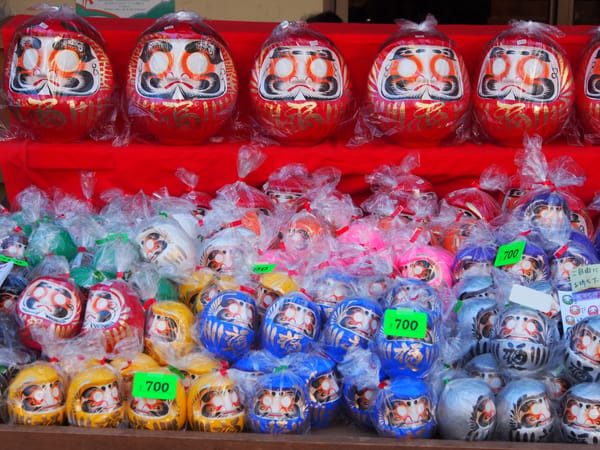
For two days every March, hundreds of stalls fill the grounds of Jindaiji Temple in Chofu with daruma dolls of every size and colour, and monks open each new doll's first eye with a Sanskrit character. It is one of Japan's three great daruma markets, an easy bus ride from Shinjuku.
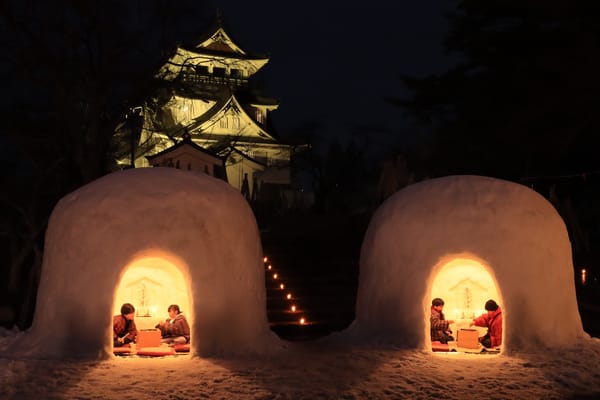
On 12 and 13 February 2027, and note that the dates have moved, the children of Yokote in Akita invite strangers into candle-lit snow huts and serve them grilled mochi and sweet amazake. The custom is about 450 years old, and it only happens on two evenings a year.