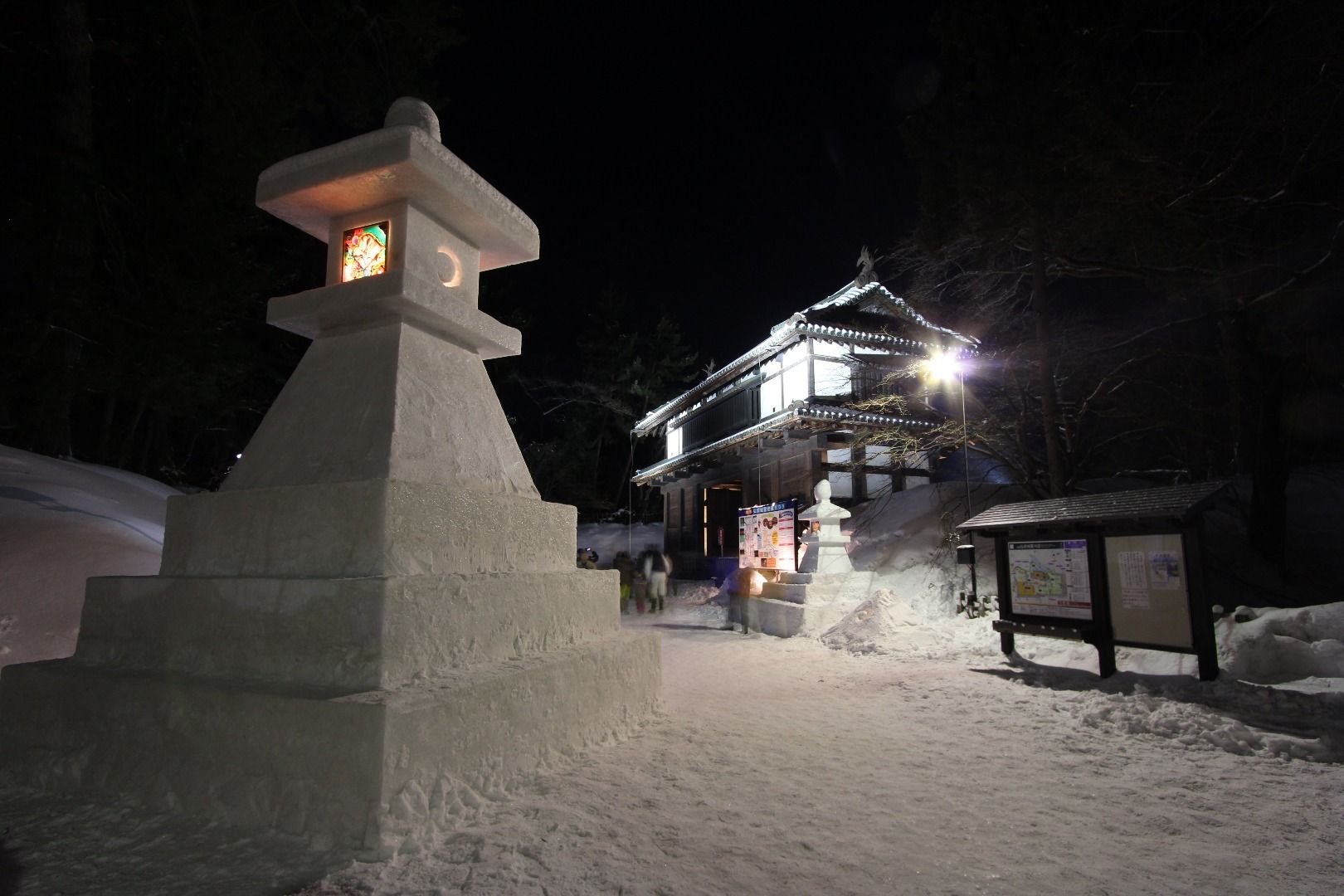
Hirosaki is famous in spring, when some 2,600 cherry trees turn its castle park pink. February is the other Hirosaki, quieter and in some ways more local. The Snow Lantern Festival began in 1977, when residents decided to make something of the long northern winter rather than simply endure it, and the lanterns are still handmade by citizens, community groups and schoolchildren in the weeks before the festival, packed and carved from the snow that the town has in abundance.
The setting does half the work. Hirosaki Castle's keep is one of only twelve castle keeps in Japan that survive from the Edo period, and during the festival it stands floodlit above the park while the snow lanterns burn below. On the pattern of recent festivals, around 150 snow lanterns and snow sculptures of all sizes are placed across the grounds, and around the lotus pond in the western bailey some 300 mini kamakura, small snow domes each holding a single candle, are set out in rows facing the keep and the silhouette of Mount Iwaki beyond. In the main Yonnomaru bailey a large snow sculpture is built each year; the theme announced for 2027 is the Romon gate of Iwaki-san Shrine, the great shrine on the mountain that watches over the region. Food stalls gather in Yonnomaru too, around twenty of them in 2026, which matters in a Hirosaki February: the festival is an evening event in a town where the temperature sits well below freezing, and a hot bowl of something between lantern rows is part of the rhythm of the night.
One point needs stating plainly, because older write-ups tend to blur it. The Hirosaki Tourism and Convention Bureau has announced the 2027 dates, Wednesday 10 to Sunday 14 February, and the big sculpture theme, but the detailed 2027 programme and hours have not been published yet. In 2026 the festival ran from 10:00 to 21:00 each day, closing at 20:00 on the final day, with the lantern and sculpture light-up from 16:30, sunset, until closing. That is the shape to plan around, but it is last year's pattern, and anyone booking travel around specific hours should check the bureau's festival page again closer to February, when the 2027 details are expected.
The dates invite a combination. Yokote's Kamakura Festival, in the Akita city of Yokote, falls on Friday 12 and Saturday 13 February 2027, right inside the Hirosaki run, and the two pair naturally into a Tohoku snow circuit: candlelit snow lanterns under a castle in Aomori, then full-size snow huts with amazake in Akita. They are a few hours apart by local train, so the sensible version is one festival per night rather than both in a day. And if the trip extends a little either side, the park's outer moat has in recent winters carried its own separate light-up, when snow settled on the cherry branches is lit pink to look like blossom in midwinter, a strange and lovely sight that runs through the same weeks of the season.
Practical notes from the organisers themselves: the paths inside the park freeze hard and are genuinely slippery, and the bureau asks visitors to wear footwear that grips and to watch their step. There is no parking inside Hirosaki Park. Dress as you would for standing outdoors at night in northern Tohoku, because that is exactly what this is.
Photos: くろふね (CC BY 3.0), Feri88 (CC BY 3.0) and 掬茶 (CC BY-SA 4.0), via Wikimedia Commons.
Around 150 citizen-made snow lanterns and snow sculptures spread across the grounds of a real Edo-period castle (on the pattern of recent festivals) Some 300 candlelit mini kamakura around the lotus pond, facing the floodlit castle keep and Mount Iwaki The 2027 big snow sculpture theme is confirmed: the Romon gate of Iwaki-san Shrine, in the Yonnomaru bailey Hirosaki's keep is one of only twelve surviving Edo-period castle keeps in Japan, seen here in snow rather than the famous cherry blossom Food stalls in Yonnomaru (about twenty in 2026) serving hot food through the evening Overlaps the Yokote Kamakura Festival on 12 and 13 February 2027, making a two-festival Tohoku snow circuit possible in one trip
•Plan around the 2026 pattern but verify before you travel: the 2027 hours and programme were still unannounced at the time of writing, and the Hirosaki Tourism and Convention Bureau page is the source to re-check
•Wear boots or shoes with real grip; the organisers warn that the park paths freeze and become very slippery, and there is no parking inside the park
•Dress for well below freezing and plan warming stops; the stalls in Yonnomaru and the cafes on the streets outside the park gates are the natural rhythm of the evening
•Book Hirosaki hotels early; the town is small, the festival is its biggest winter weekend, and rooms near the park go first
•Combine with Yokote's Kamakura Festival on 12 or 13 February if you have a second night, but give each festival its own evening; they are a few hours apart by train
•Come in daylight once as well if you can: the keep, the snow-covered pines with their winter rope supports, and Mount Iwaki on a clear morning are a different park from the one that glows at night

You cannot run the 2027 Tokyo Marathon, because the 40,000 places went in a ballot that closed in August 2026. But race day, Sunday 7 March 2027, is one of the great free shows in Tokyo: wheelchair racers at 9:05, the world's best marathon runners at 9:10, then hours of costume runners, all on closed streets from Shinjuku to Tokyo Station. Here is where to stand.
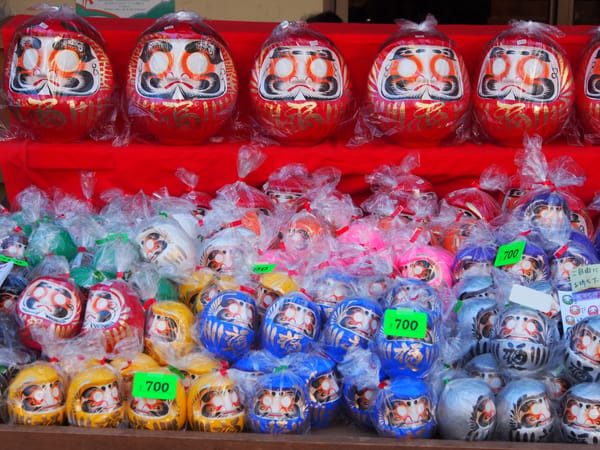
For two days every March, hundreds of stalls fill the grounds of Jindaiji Temple in Chofu with daruma dolls of every size and colour, and monks open each new doll's first eye with a Sanskrit character. It is one of Japan's three great daruma markets, an easy bus ride from Shinjuku.
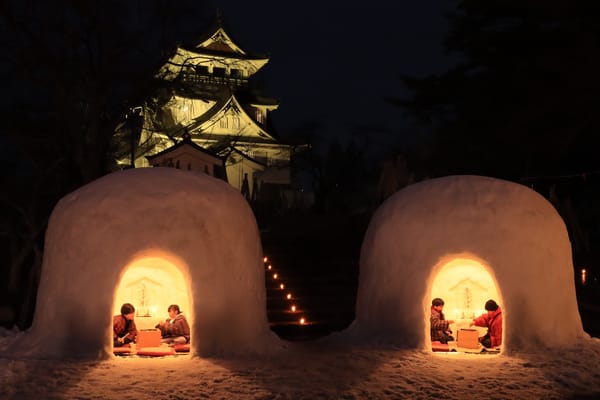
On 12 and 13 February 2027, and note that the dates have moved, the children of Yokote in Akita invite strangers into candle-lit snow huts and serve them grilled mochi and sweet amazake. The custom is about 450 years old, and it only happens on two evenings a year.