Nagasaki's winter festival did not start as a festival for the whole city. It began in Shinchi Chinatown, where the Chinese community celebrated the New Year (the Spring Festival) by hanging lanterns, in the Chinese custom of lighting lanterns for the Lantern Festival that closes the New Year season. The lanterns spread street by street until the celebration outgrew Chinatown, and today it runs for 17 days across the middle of the city, with around 15,000 lanterns in total. It is the largest Lunar New Year celebration in Japan, and it suits Nagasaki: this was the port where Chinese traders lived and worked through the centuries when Japan was otherwise closed to the world.
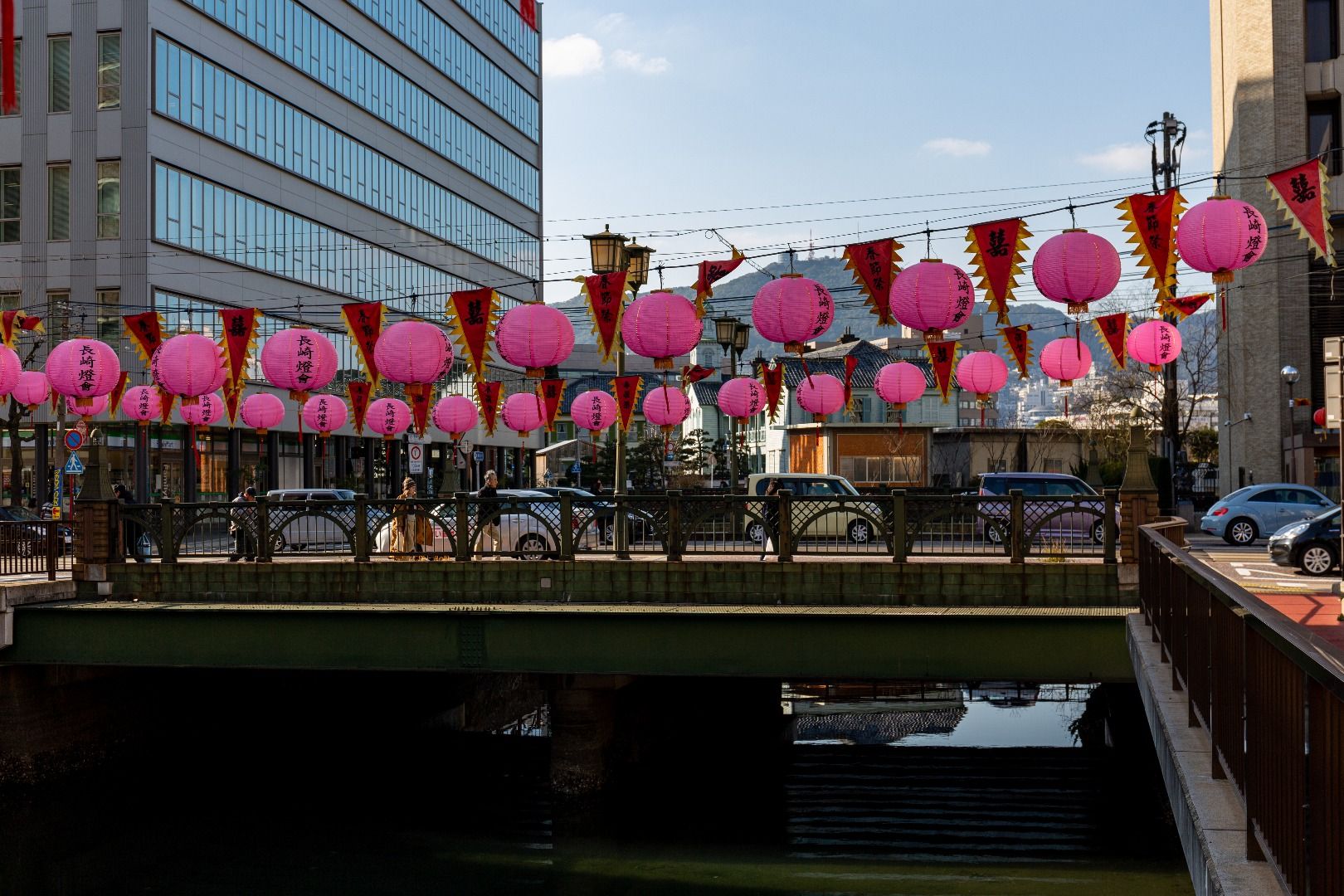
The venues form a loose walking route. Shinchi Chinatown itself is the heart of it, its gates and lanes packed with sculptural lanterns, some of them five metres long: dragons, phoenixes, carp, historical scenes, all built as lit wire-frame figures rather than simple paper lights. Along the Nakashima River the style changes completely. Hundreds of round yellow lanterns are strung over the water in long rows, and at dusk their reflections double them in the river below the stone bridges. Minato Park hosts some of the biggest set pieces, Chuo Park fills with lantern displays of its own, and the Doza River, in the Chinatown area, is done in pink lanterns, which changes the mood of that stretch entirely.
Three set pieces carry the programme, and they are worth planning around. The Emperor Parade, on Saturday 13 and Saturday 20 February, re-creates the Qing dynasty custom of the emperor and empress leaving the palace to celebrate the New Year among the people: around 150 participants in full Chinese court costume, flag bearers included, carry the imperial palanquins through the streets. The Mazu Procession, on Sunday 7 and Sunday 14 February, is older in spirit. It re-enacts what the crews of Chinese ships actually did in the Edo period, carrying Mazu, the goddess who protects sailors, in procession to be enshrined in the Mazu hall of a Chinese temple before a voyage. The dragon dance runs every day: a team working a dragon body about 20 metres long, in a dance that began as a rain ritual, chasing clouds and trying to swallow the moon. There is also a face-changing show, the Sichuan opera art of swapping masks in a blink, which is ticketed, as are the paid seats that put you in the front row for the day's events.
One venue asks for a small detour in your timing. Nagasaki Confucius Temple, built in 1893 with the Qing government and the overseas Chinese community behind it and the only Confucius temple in Japan built by Chinese hands, is decorated for the festival and opens for New Year worship at the Taisei Hall. It keeps daytime hours, 9:30 to 18:00 with last entry at 17:30, and charges its own admission (¥880 for adults), so it belongs at the start of a festival evening rather than the end of one. After that, the natural order of a Nagasaki lantern night is Chinatown for an early dinner (this is the neighbourhood that gave Japan champon and sara udon) and then the river after dark, when the lanterns are lit from roughly 17:00 to 22:00 and the reflections are at their best.
Photos: Balon Greyjoy (CC0), via Wikimedia Commons.
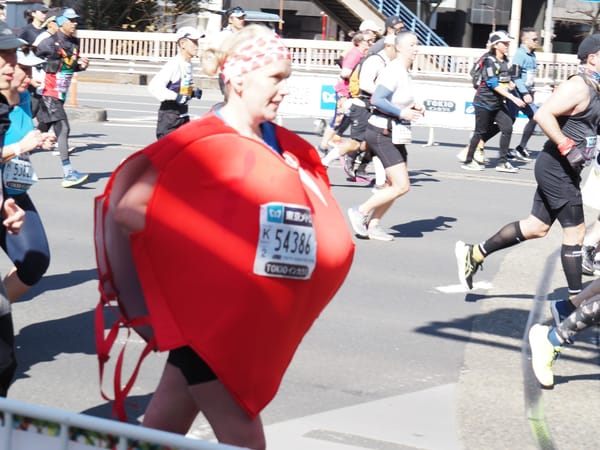
You cannot run the 2027 Tokyo Marathon, because the 40,000 places went in a ballot that closed in August 2026. But race day, Sunday 7 March 2027, is one of the great free shows in Tokyo: wheelchair racers at 9:05, the world's best marathon runners at 9:10, then hours of costume runners, all on closed streets from Shinjuku to Tokyo Station. Here is where to stand.
Around 15,000 lanterns across central Nagasaki for 17 nights, the biggest Lunar New Year celebration in Japan The Nakashima River after dark, where rows of yellow lanterns are doubled by their reflections under the stone bridges The Emperor Parade on 13 and 20 February: about 150 people in Qing dynasty costume around the imperial palanquins The Mazu Procession on 7 and 14 February, re-enacting the Edo-period rite of Chinese ships' crews honouring the goddess of safe voyages A dragon dance every day of the festival, working a dragon about 20 metres long Giant sculptural lanterns in Shinchi Chinatown and Minato Park, some around five metres long, plus the pink lanterns of the Doza River
•The Emperor Parade only runs on the two Saturdays (13 and 20 February) and the Mazu Procession on the two Sundays (7 and 14 February), so a weekend trip catches one of each; book Nagasaki hotels early for those weekends
•Visit Nagasaki Confucius Temple first, not last: it closes at 18:00 (last entry 17:30) and charges ¥880 for adults, while the street lanterns stay lit until roughly 22:00
•Arrive at the Nakashima River just before the lanterns come on at around 17:00 and stay for full dark, when the reflections settle
•The face-changing show and the paid front-row seats sell separately and in limited numbers, so buy them ahead if either is on your list
•Spread the venues over two evenings if you can; Chinatown, the river and Minato Park in one night is a lot of walking in February cold
•Weekday evenings are noticeably quieter than weekends, and the lanterns are identical
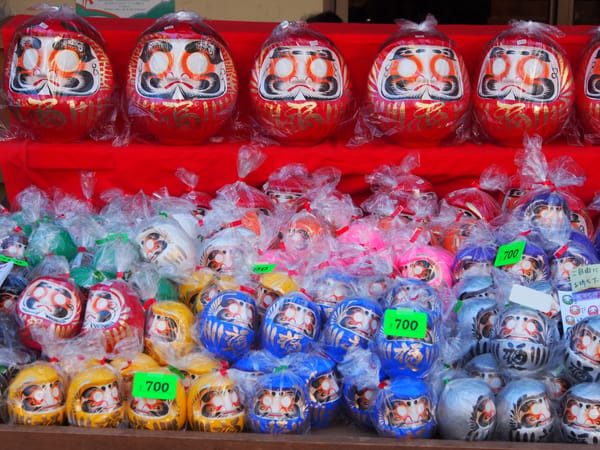
For two days every March, hundreds of stalls fill the grounds of Jindaiji Temple in Chofu with daruma dolls of every size and colour, and monks open each new doll's first eye with a Sanskrit character. It is one of Japan's three great daruma markets, an easy bus ride from Shinjuku.
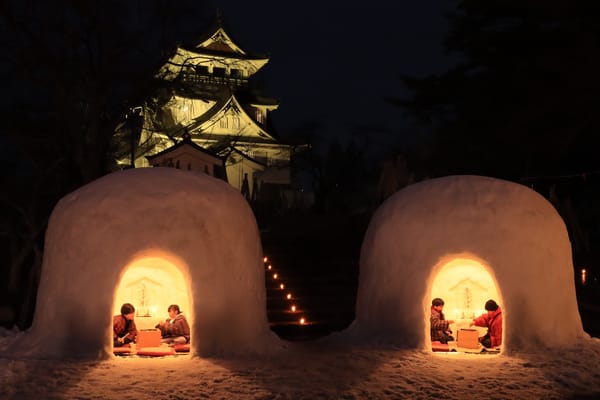
On 12 and 13 February 2027, and note that the dates have moved, the children of Yokote in Akita invite strangers into candle-lit snow huts and serve them grilled mochi and sweet amazake. The custom is about 450 years old, and it only happens on two evenings a year.