Most winter illuminations in Japan run for six or eight weeks and pack up by February. Nabana no Sato runs for more than seven months. The flower park at Nagashima Resort in Kuwana, Mie, switched on its 2026 to 2027 season on Saturday 17 October 2026 and keeps the lights burning until Monday 31 May 2027, closing only for two maintenance days on 6 and 7 January. It is the event's 23rd season, and the park bills it as one of the largest illuminations in Japan. The scale is the point: this is not a street of decorated trees but a whole garden rebuilt in light every night.
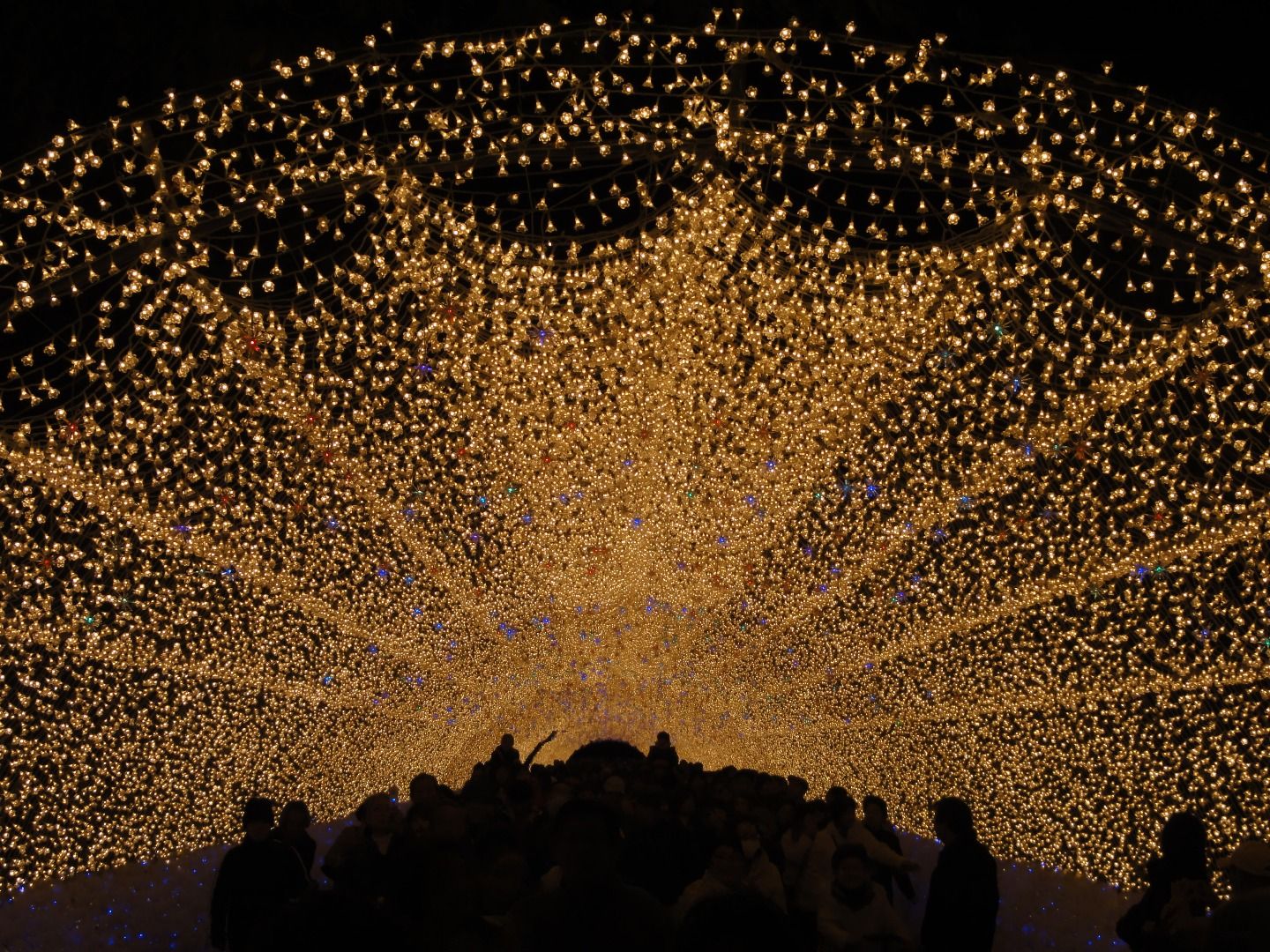
The fixtures that regulars come back for are all in place. The Tunnel of Light runs for 200 metres, a walk-through canopy of warm white bulbs that has become the park's signature photograph. On the central pond, the River of Light lays about 130 metres of LEDs across the water, one of the largest water illuminations in the country. By the chapel stand the Twin Trees, lit to the sound of the chapel bell, and the Begonia Garden greenhouse stays open into the evening, with a short sound and light performance once the main lights are on. Entry to the Begonia Garden is included in the illumination ticket.
The big set piece changes every year. This season's main theme area is Wild Paradise, a light and sound show of about ten and a half minutes that works through the story of life on Earth in five scenes: giant dinosaurs and an erupting volcano on an ancient continent, flamingos and elephants around an oasis under baobab trees, lions, zebras and giraffes crossing a savanna at sunset, an underwater world that rises into a vast waterfall modelled on Victoria Falls, and a quiet finish of jacaranda blossom under moonlight. Over in the Flower Plaza there is a new area for this season, Golden Safari, where near life-size animal figures stand in champagne gold light among the seasonal flowers.
Tickets are priced by date, and every ticket comes with money back inside the park: ¥1,000 of vouchers for the shops and restaurants on ordinary dates, ¥2,000 on the Christmas dates, plus the Begonia Garden admission. From now until 22 December, and again from 26 December to the end of February, entry costs ¥3,000 with an advance ticket or ¥3,200 at the gate. From 1 March to the end of May it drops to ¥2,500 either way. Christmas is the exception in every sense: on 23, 24 and 25 December the park opens at 15:00 for a special operation, entry is ¥5,500, and you need a date-specified ticket bought in advance, because ordinary tickets are not accepted on those three days.
The practical shape of a visit is simple. The park opens at 10:00, the lights come on around sunset, and closing is 21:00 on most days and 22:00 on the busiest ones, with last entry half an hour before. Buying the advance ticket at a FamilyMart or Seven-Eleven before you travel is worth the small effort: it is cheaper on most dates, and the park warns that issuing a ticket at the gate can take more than 30 minutes on a busy evening. The event runs in the rain, and the official site makes a fair point of it: wet paths double the lights in reflection.
Getting there from Nagoya takes about 35 minutes if the connections line up. The Kintetsu line runs from Kintetsu Nagoya Station to Kintetsu Nagashima Station in about 17 minutes by express or 25 minutes by semi-express, and a direct bus covers the last stretch to Nabana no Sato in about 10 minutes, running daily throughout the season. There is also a direct bus from the Meitetsu Bus Center in Nagoya, about 35 minutes. One trap to avoid: the bus from Kuwana Station, the route most guides describe for the rest of the year, does not run during the illumination season. Drivers get free parking for 5,700 cars, though the roads around Nagashima Resort clog badly on December weekends.
Photos: panoramiokobax (CC BY 3.0) and Hustvedt (CC BY-SA 3.0), via Wikimedia Commons. All photos show previous seasons.

You cannot run the 2027 Tokyo Marathon, because the 40,000 places went in a ballot that closed in August 2026. But race day, Sunday 7 March 2027, is one of the great free shows in Tokyo: wheelchair racers at 9:05, the world's best marathon runners at 9:10, then hours of costume runners, all on closed streets from Shinjuku to Tokyo Station. Here is where to stand.
One of Japan's largest illuminations, running more than seven months: 17 October 2026 to 31 May 2027, in its 23rd season The Tunnel of Light, a 200 metre walk-through canopy of warm white bulbs, the park's signature sight This season's main theme area, Wild Paradise: a five-scene light and sound show running from dinosaurs and a volcanic eruption to a savanna sunset, a waterfall modelled on Victoria Falls, and jacaranda blossom by moonlight The River of Light, about 130 metres of LEDs laid across the central pond, among the largest water illuminations in Japan A new area for this season, Golden Safari in the Flower Plaza: near life-size animal figures in champagne gold light among the seasonal flowers Every ticket includes vouchers to spend inside the park (¥1,000, or ¥2,000 at Christmas) plus admission to the Begonia Garden, which stages its own sound and light performance after dark
•Buy the advance ticket at a FamilyMart or Seven-Eleven before you go: it is cheaper than the gate price on most dates, and gate ticket issuing can take over 30 minutes on busy evenings
•Christmas needs its own ticket: on 23, 24 and 25 December only the ¥5,500 date-specified advance ticket gets you in, ordinary tickets are not valid, and the park opens at 15:00 on those days
•Do not travel via Kuwana Station in illumination season; that bus is suspended. Go to Kintetsu Nagashima Station and take the direct bus (about 10 minutes)
•The park is closed on Wednesday 6 and Thursday 7 January 2027 for maintenance
•March to May is the quiet half of the season: the same lights, thinner crowds, and the lowest price at ¥2,500, with tulips lit up from late March and nemophila from late April
•Arrive in daylight if you can: the gardens are worth seeing before dark, and you will be in place for the switch-on at sunset
•Last entry is 30 minutes before closing; return buses fill up at closing time, so leaving the theme area a few minutes early beats queuing in the cold
•The included vouchers have an expiry date printed on them; dinner inside the park is the easiest way to use them up
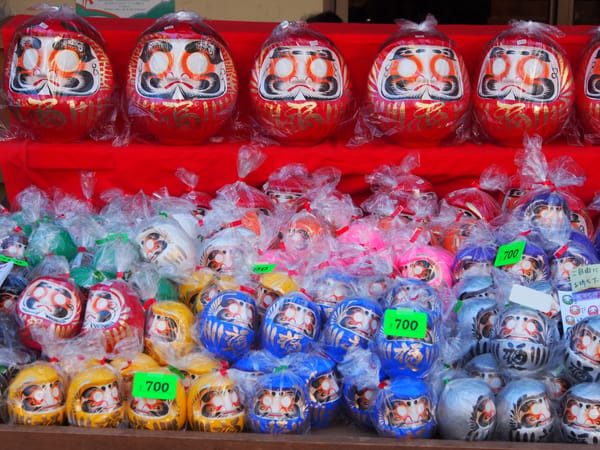
For two days every March, hundreds of stalls fill the grounds of Jindaiji Temple in Chofu with daruma dolls of every size and colour, and monks open each new doll's first eye with a Sanskrit character. It is one of Japan's three great daruma markets, an easy bus ride from Shinjuku.
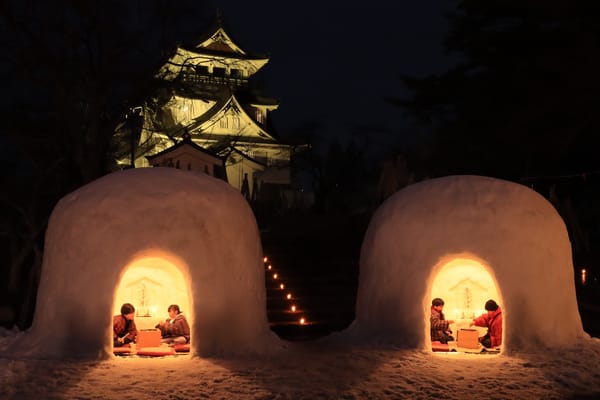
On 12 and 13 February 2027, and note that the dates have moved, the children of Yokote in Akita invite strangers into candle-lit snow huts and serve them grilled mochi and sweet amazake. The custom is about 450 years old, and it only happens on two evenings a year.