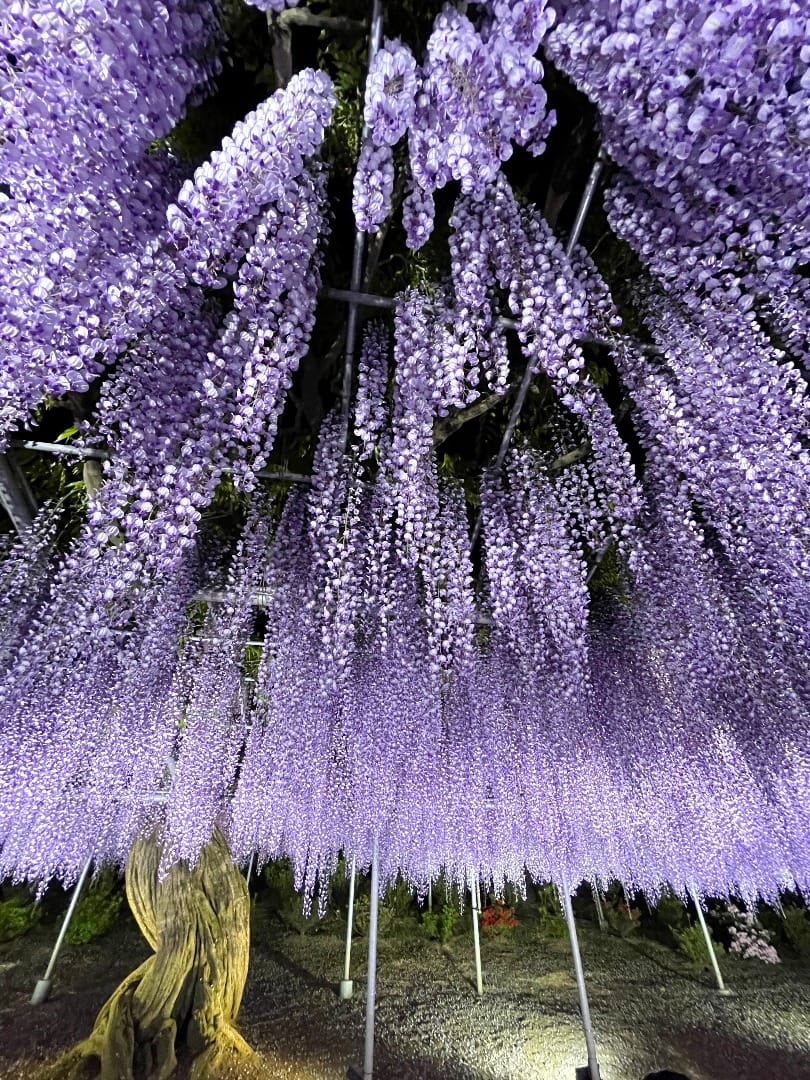
Most people know Ashikaga Flower Park for one photograph: the great wisteria in late April, a ceiling of purple blossom over a tree more than 150 years old. Flower Fantasy is the same park answering a harder question. What do you do with a flower park in the middle of winter? You rebuild it in light, all of it, with more than five million bulbs, and you let the wisteria bloom again as a curtain of lamps on the bare trellis.
This is the illumination's 25th anniversary season, and it runs from Saturday 17 October 2026 to Sunday 14 February 2027, closing only on 31 December. It is counted among Japan's three great illuminations and has finished first in the national illumination rankings ten years in a row, which sounds like marketing until you are standing in it. The centrepiece is the Miracle Great Wisteria, the park's famous trellis recreated in light, running through the life of the flower in sequence: first buds, full bloom, then the petals falling. The park even recreates the scent of its real wisteria around the display, a detail nobody else bothers with.
Around it, the park is divided into scenes. The Flower Castle is a full castle of light with a viewing deck and the scent of roses inside. The Rose Garden of Light wraps a 120 metre wall in lamps. Snow World builds an aurora and snow crystals across a 20 metre by 65 metre mural, with an illumination tower above it. The Four Seasons of Japan display projects the turning year onto the stone garden, and the water lilies glow on the ponds. New for this season are a 21 metre Great Christmas Tree just inside the main gate and a Flower Road beside the castle, and the park changes its mood three times across the run: flowers and light together in autumn, a Christmas programme from late November, then a New Year illumination with winter-blooming peonies from 1 January to the close.
The practical side is simple. The park opens for the evening at 15:30, the lights come on around 16:30 to 17:00 as the sky darkens, and closing is 20:30, or 21:00 on weekends and holidays. From 7 November to 3 January the park stays open later, until 21:00 on weekdays and 21:30 on weekends and holidays. Night entry costs ¥1,500 for adults and ¥800 for children aged 4 to elementary school age. Getting there is part of the pleasure: Ashikaga Flower Park has its own station on the JR Ryomo Line, about three minutes on foot from the gate, reached from Tokyo by changing at Oyama. It makes an easy evening trip, roughly two hours each way, and the last trains are worth checking before you settle in for the final displays.
The Miracle Great Wisteria: the park's famous trellis recreated in light, cycling from first buds to full bloom to falling petals, with the scent of real wisteria recreated around it More than five million bulbs across the whole park, ranked first in Japan's national illumination rankings ten years running New for the 25th anniversary season: a 21 metre Great Christmas Tree and a new Flower Road beside the Flower Castle Three seasons in one run: autumn flowers and light, a Christmas programme from late November, and a New Year illumination with winter peonies from 1 January The park has its own station, Ashikaga Flower Park on the JR Ryomo Line, about three minutes from the gate
•Go on a weekday if you can; weekends in December are the busiest nights of the season, and the extended hours (until 21:00, or 21:30 on weekends and holidays) run from 7 November to 3 January
•Arrive before the lights come on, around 16:30 to 17:00, so you see the park change as it darkens, and check the last train back from Ashikaga Flower Park Station before the final displays
•The park is closed on 31 December 2026, the only closed day of the run
•It is an outdoor park in the Tochigi hills in midwinter; dress for standing outside for two hours, especially after 19:00
•Advance tickets (convenience stores and online) are a little cheaper than the gate price and skip the ticket queue on busy nights

You cannot run the 2027 Tokyo Marathon, because the 40,000 places went in a ballot that closed in August 2026. But race day, Sunday 7 March 2027, is one of the great free shows in Tokyo: wheelchair racers at 9:05, the world's best marathon runners at 9:10, then hours of costume runners, all on closed streets from Shinjuku to Tokyo Station. Here is where to stand.
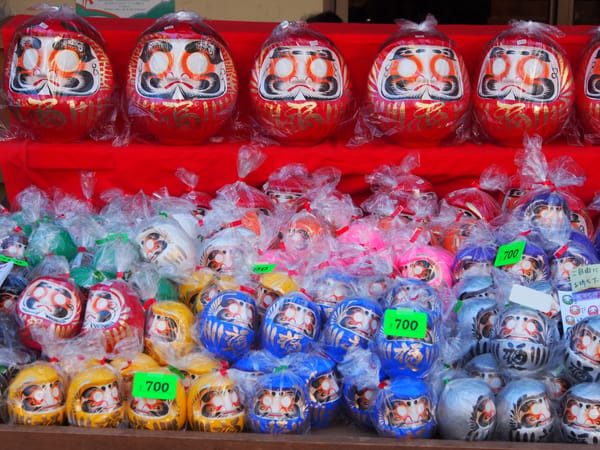
For two days every March, hundreds of stalls fill the grounds of Jindaiji Temple in Chofu with daruma dolls of every size and colour, and monks open each new doll's first eye with a Sanskrit character. It is one of Japan's three great daruma markets, an easy bus ride from Shinjuku.
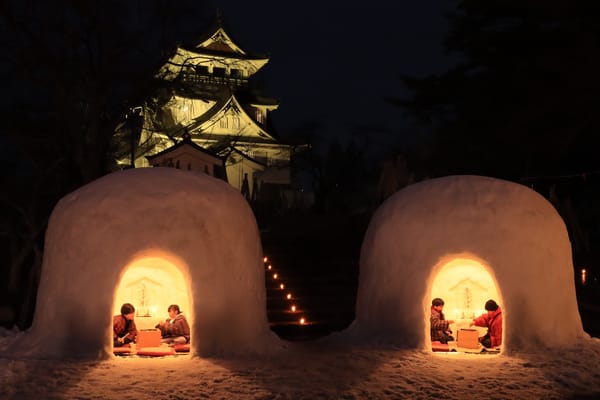
On 12 and 13 February 2027, and note that the dates have moved, the children of Yokote in Akita invite strangers into candle-lit snow huts and serve them grilled mochi and sweet amazake. The custom is about 450 years old, and it only happens on two evenings a year.
