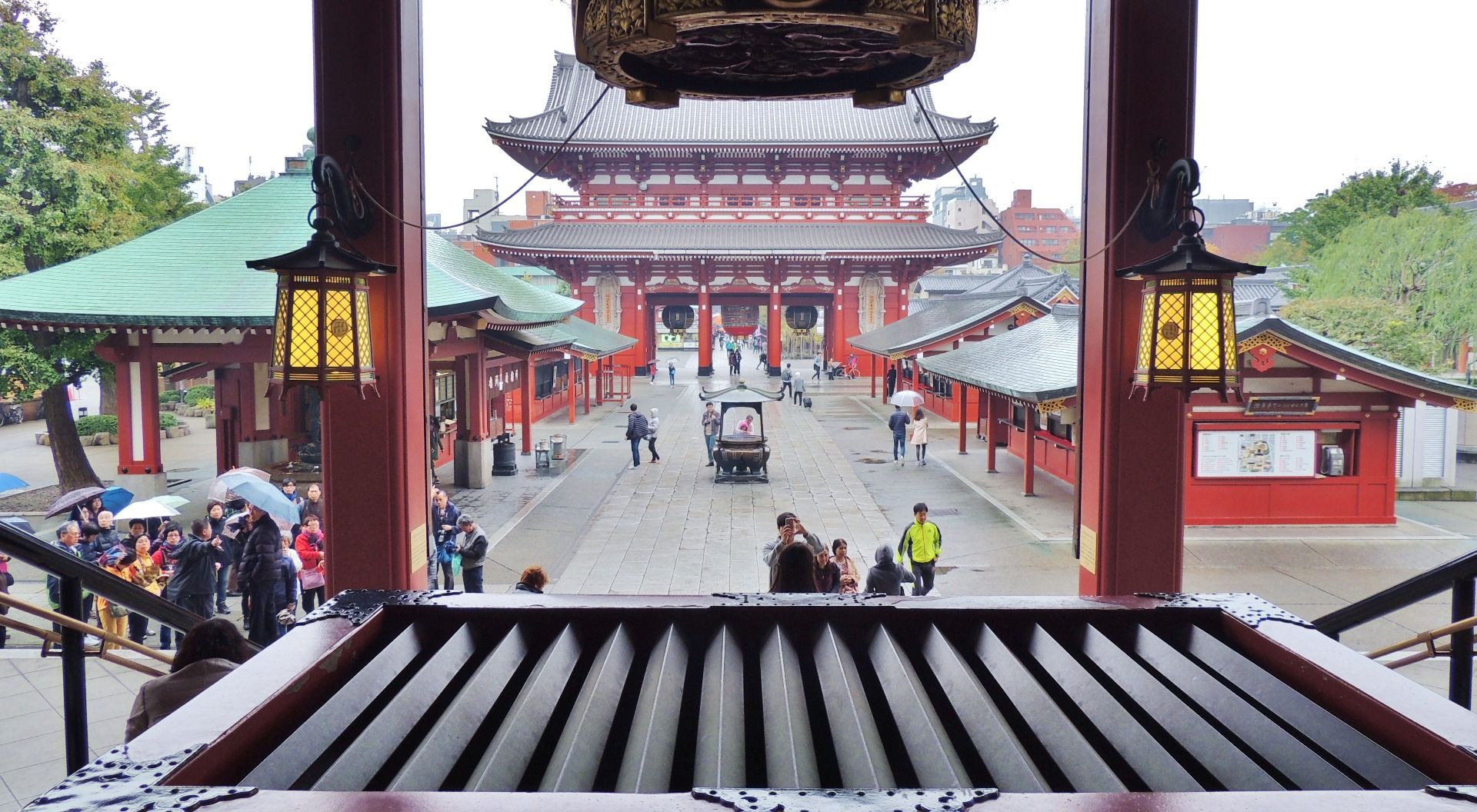
Every February, Japan throws beans at the dark. Setsubun, the day before Risshun (the traditional first day of spring), is when households and temples scatter roasted soybeans to clear out the bad luck of winter and call in the good. In 2027 the date is Wednesday, February 3, fixed by the National Astronomical Observatory's calendar rather than by habit, and in Tokyo nobody does it on a grander scale than Senso-ji. The temple says it was the first in Edo to hold Setsubun in a big, public way, and the crowds in the grounds suggest the habit stuck.
The first thing regulars notice is the shouting. Almost everywhere else in Japan the cry is "Oni wa soto, fuku wa uchi" (Demons out, fortune in). At Senso-ji you will not hear the first half. The temple's own explanation is disarmingly simple: there are no demons before Kannon, the bodhisattva of compassion enshrined in the main hall, so there is nobody to throw out. Instead the throwers call "Senshu banzai, fuku wa uchi", which amounts to "A thousand autumns, ten thousand years, and fortune in". It turns an exorcism into something closer to a toast.
The day is built around processions. Priests and the year's toshiotoko, men born in the incoming zodiac year (2027 is the Year of the Goat) who volunteer from among the temple's lay followers, walk in procession from Dempoin, the temple's historic sub-temple, up to the main hall. In recent years the processions have set off at around 11:30 and 13:30. A service follows in the hall, the first beans are thrown inside, and then the throwing moves outside to a special stage built on the east side of the main hall. Children from Senso-ji's kindergarten get their own round in front of the hall, which is exactly as chaotic as it sounds, in a good way.
After the morning throwing comes one of the temple's treasures. The Fukuju no Mai, the dance of the Seven Lucky Gods, is one of Senso-ji's three great temple dances. It was created in 1964 to celebrate the completion of the Hozomon Gate, and its name comes from a line in the Kannon Sutra about a sea of gathered blessings. The seven gods arrive with their treasures, Ebisu with his sea bream, Daikokuten with his mallet, and the whole performance has the feel of a New Year card come to life, a few weeks late and none the worse for it.
The afternoon belongs to Asakusa itself. The Asakusa Kannon Bunka Geinojin Setsubun-e, organised by the Asakusa Tourism Federation, brings entertainers with ties to the neighbourhood onto the same stage: actors, comedians, rakugo storytellers and local personalities, throwing beans in groups from around 16:00. In 2026 there were four groups at twenty-minute intervals and 79 throwers in total. It is the loudest, happiest and most crowded part of the day, and the one where a caught packet of beans feels like a genuine trophy.
Visitors watch rather than throw (the throwing is for the toshiotoko, the children and the invited guests), but nobody leaves empty-handed by design. Packets of fukumame, the roasted lucky beans, are given out at the temple's award office as well as scattered from the stage, and the custom is to eat one more bean than your age and wish for a healthy year. Finish the job the way the neighbourhood does: an eho-maki, the thick uncut sushi roll eaten in silence facing the year's lucky direction, which for 2027 is north-northwest.
One honest caveat. Senso-ji had not published its 2027 timetable or the entertainers' line-up when this page was prepared, and in recent years those details have arrived in late January. The times above follow the temple's well-established pattern from 2025 and 2026, and the date, Wednesday, February 3, 2027, is confirmed. Check the temple's official site in the last week of January for the final running order.
Photo credits: Hero image, Senso-ji Main Hall, by Yoshio Kohara, CC BY 3.0. Gallery: bean-throwing at Senso-ji's Setsubun-e in 2015, by iamshinya777, CC BY 3.0; fukumame lucky beans, by Masahiko OHKUBO, CC BY 2.0; "Beans for Tossing During Setsubun Exorcism Ceremony", an Edo-period print by Kubo Shunman made for an Asakusa group, CC0, The Metropolitan Museum of Art. All via Wikimedia Commons.

You cannot run the 2027 Tokyo Marathon, because the 40,000 places went in a ballot that closed in August 2026. But race day, Sunday 7 March 2027, is one of the great free shows in Tokyo: wheelchair racers at 9:05, the world's best marathon runners at 9:10, then hours of costume runners, all on closed streets from Shinjuku to Tokyo Station. Here is where to stand.
The only big Tokyo Setsubun where the chant is "Senshu banzai, fuku wa uchi" (Long life, fortune in), with no "Demons out", because no demon is said to stand a chance before Kannon Two processions of priests and zodiac-year throwers (toshiotoko) walk from Dempoin to the main hall, usually around 11:30 and 13:30 Bean-throwing from the main hall and a special stage on its east side, plus a round in front of the hall by Senso-ji kindergarten children The Fukuju no Mai, the dance of the Seven Lucky Gods, one of Senso-ji's three great temple dances, created in 1964 for the completion of the Hozomon Gate A late-afternoon session by entertainers with Asakusa ties, the day's biggest crowd-puller, usually from around 16:00 Free to watch, and packets of fukumame (lucky beans) are also given out at the temple's award office
•The 2027 timetable and celebrity line-up are usually announced in late January. Check Senso-ji's official site before you go, as times follow the pattern of recent years until then
•Arrive 30 to 45 minutes before a session for a spot near the stage on the east side of the main hall, where the throwing is easiest to see and catch
•Catch a packet if you can, then follow the custom: eat one bean more than your age for a healthy year
•February 3, 2027 is a Wednesday, so crowds should be a notch calmer than a weekend Setsubun, though the entertainers' round still packs the grounds
•Pair it with an eho-maki sushi roll from a Nakamise or Asakusa shop and eat it facing north-northwest, the lucky direction for 2027
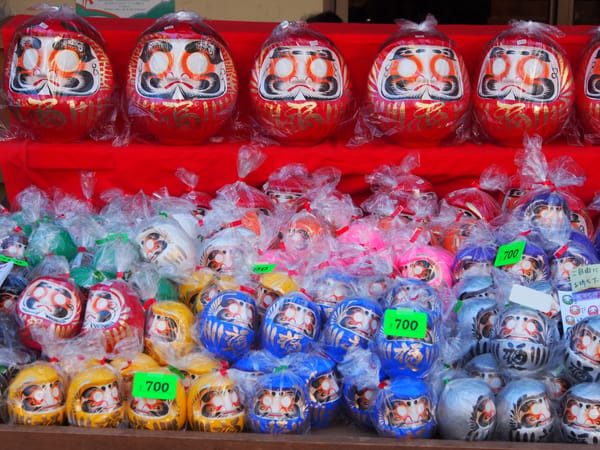
For two days every March, hundreds of stalls fill the grounds of Jindaiji Temple in Chofu with daruma dolls of every size and colour, and monks open each new doll's first eye with a Sanskrit character. It is one of Japan's three great daruma markets, an easy bus ride from Shinjuku.
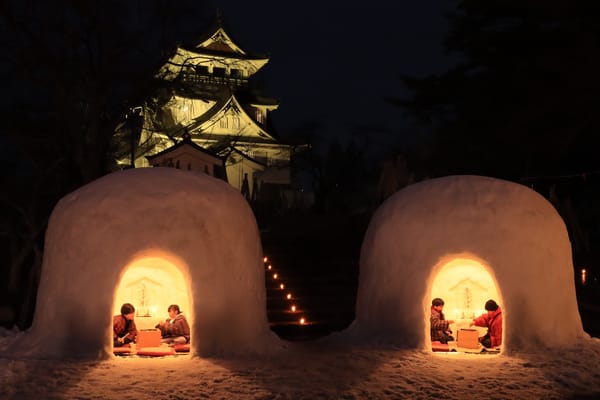
On 12 and 13 February 2027, and note that the dates have moved, the children of Yokote in Akita invite strangers into candle-lit snow huts and serve them grilled mochi and sweet amazake. The custom is about 450 years old, and it only happens on two evenings a year.