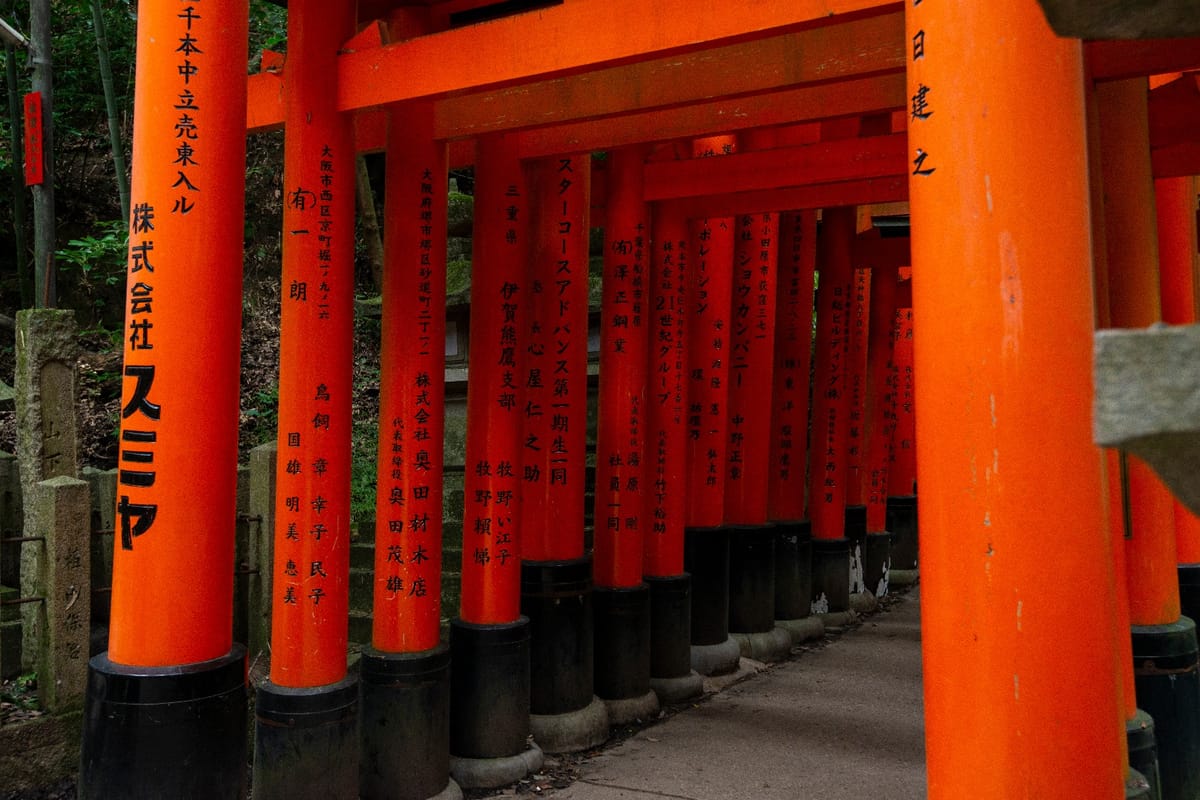
The torii path at Fushimi Inari Taisha, Kyoto, which this route saves for the late afternoon on Day 5. Photo: Maarten Heerlien, CC BY 2.0, via Wikimedia Commons.
Ten days is enough for a first trip to Japan, provided you spend them in a line rather than a loop. This route runs west in a straight line: four nights in Tokyo, four nights in Kyoto, one night in Osaka, then home from Kansai Airport. You change hotels twice, you never backtrack, and no day asks you to be in more than two neighbourhoods.
It suits first-time visitors who want the headline sights done properly rather than quickly. It also assumes you book a handful of things ahead. None are difficult, but two sell out, and the deadlines are listed before the days so you can work backwards from your flights.
For the money side, read our Japan trip cost breakdown (https://yonihon.com/travel-guide/how-much-does-a-trip-to-japan-cost/); for choosing a Tokyo base, see where to stay in Tokyo (https://yonihon.com/travel-guide/where-to-stay-in-tokyo/); and for arrivals, our Narita and Haneda transfer guide (https://yonihon.com/travel-guide/narita-or-haneda-to-tokyo/) covers both airports step by step.
The shape of the trip
Fly into Tokyo (Haneda if you can, Narita if the fare is better) and out of Kansai International Airport near Osaka. This open-jaw ticket saves you a half-day return train ride and roughly ¥14,000 in fares, and usually costs little more than a standard return.
Nights split 4, 4 and 1. Tokyo gets four because it is really several cities stacked together, and because jet lag eats the first day. Kyoto gets four because it holds two full sightseeing days, a Nara day trip and your arrival afternoon. Osaka gets one because its best sights fit a single well-planned day, and because sleeping there on the last night makes the airport run simple.
Book these before you fly
Work through this list as soon as your flights are fixed. Everything else in the itinerary can be decided on the day.
Ghibli Museum, Mitaka (Day 4). Tickets are reservation only, sold through Lawson Ticket, and go on sale at 10:00 Japan time on the 10th of the month before your visit. Adult entry is ¥1,000. Set an alarm: popular dates go within the hour. The museum is closed on Tuesdays.
Shibuya Sky (Day 3). The rooftop above Shibuya Station sells timed tickets exactly 14 days ahead, from midnight Japan time. Adult web tickets cost ¥2,700 for entry before 15:00 and ¥3,400 from 15:00 on. Sunset slots disappear first.
Shinkansen seats, Tokyo to Kyoto (Day 5). Reserved seats go on sale one month before departure. Book through the SmartEX app or at a JR station once you land. If your suitcase measures between 160 and 250 cm in total dimensions, reserve a seat with an oversized baggage area, which costs nothing extra.
The ring-making workshop (Day 2). Book your slot online before you travel so the morning in Asakusa has a fixed point to build around.
Hotels. Book Tokyo and Kyoto early in peak seasons (late March to mid April, and mid November to early December), when well-located rooms thin out months ahead.
Day 1: Arrive in Tokyo, and do very little
Base: Tokyo. Land, clear immigration, load an IC card onto your phone or buy a physical one, and ride into the city. Treat today as logistics plus one gentle pleasure. Check in (most Japanese hotels set check-in at 15:00, though many will store bags earlier), walk the streets around your hotel while the light lasts, and eat somewhere small and near: a noodle counter, a conveyor-belt sushi bar, the basement food hall of the nearest department store.
Resist the urge to cross the city for a famous sight. An early night now buys you a clear head for the rest of the trip.
Day 2: Asakusa in the morning, Ueno after lunch
Base: Tokyo. Start in Asakusa, Tokyo's old temple quarter, and start early: Senso-ji's grounds are open around the clock and the main hall opens at 6:00, so a 7:30 arrival gives you the temple before the tour groups. Our dedicated guide to the best things to do in Asakusa (https://yonihon.com/travel-guide/best-things-to-do-in-asakusa/) walks the area street by street, so follow it rather than a plan repeated here.
Build the late morning around the one hands-on booking on this route: the private ring-making workshop in Asakusa (https://yonihon.com/experience/private-ring-making-experience-at-asakusa-hanare-tokyo/). You hammer, shape and polish a silver ring with a craftsperson beside you, and take it home the same day. At about an hour and ¥3,850 per person, iit fits neatly between the temple and lunch.
Spend the afternoon in Ueno, a short train ride away. The Tokyo National Museum is the heavyweight here, with the finest collection of Japanese art in the country; allow two unhurried hours. Most of Ueno's museums close on Mondays, so if Day 2 falls on one, swap today with Day 3.
Day 3: Shrines, towers and the crossing at dusk
Base: Tokyo. Walk the gravel approach to Meiji Jingu first thing, while the shrine's forest is still cool and quiet. Come out into Harajuku for coffee, drift down Omotesando for the architecture, and have lunch before the crowds peak.
In the afternoon, head to Shinjuku. The twin towers of the Tokyo Metropolitan Government Building have free observation decks, open late, and on a clear winter day Mount Fuji shows up on the horizon: the best free view in the city.
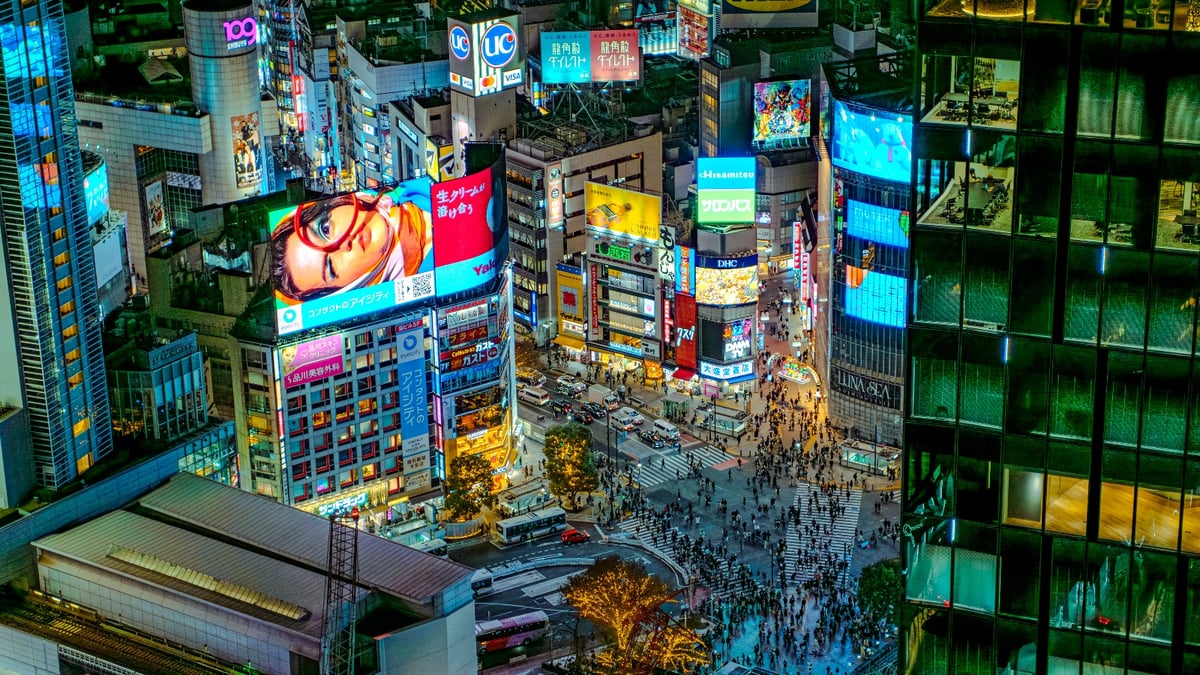
Shibuya Crossing from above. Day 3 ends on the Shibuya Sky rooftop at sunset, booked two weeks ahead. Photo: David Kernan, CC BY 4.0, via Wikimedia Commons.
Finish in Shibuya. Your Shibuya Sky ticket, booked a fortnight ago, puts you on an open-air rooftop 229 metres above the crossing as the light goes. Book the slot about 30 minutes before sunset for your date. Afterwards, drop to street level, watch the crossing do its thing from the pavement, and eat in the lanes behind Shibuya Mark City.
Day 4: The Ghibli Museum and Kichijoji
Base: Tokyo. Ride the JR Chuo Line to Mitaka, about 15 minutes from Shinjuku, and walk to the Ghibli Museum along the Tamagawa aqueduct or take the little community bus from the station. Your ticket names an entry time; arrive within the hour after it. Inside, two to three hours disappears easily, and photography is not allowed indoors, which turns out to be a relief.
Lunch in Kichijoji, one stop back towards the city and one of Tokyo's most likeable neighbourhoods. Inokashira Park sits beside the station, and the shopping lanes around the north exit reward an aimless hour.
If Ghibli tickets did not happen, swap today for teamLab Planets in Toyosu instead. It sells timed tickets in advance only, with nothing available at the door, and adults pay from ¥3,800. The museum has announced it will run until the end of 2027.
Tonight, forward your luggage. Send your main suitcase from your Tokyo hotel to your Kyoto hotel with a delivery service such as Yamato Transport. It travels overnight, costs a few thousand yen per case, and means tomorrow's train ride involves nothing heavier than a daypack. Ask at reception before dinner; hotels do this every day.
Day 5: The Shinkansen to Kyoto, torii gates at dusk
Base: Kyoto. Take a Nozomi Shinkansen from Tokyo or Shinagawa Station to Kyoto: about 2 hours 15 minutes, ¥14,170 for a reserved seat. Sit on the right-hand side of the train (seat E in ordinary cars) and watch for Mount Fuji about 40 minutes in, weather permitting. Buy an ekiben station bento on the platform; it is part of the ritual.
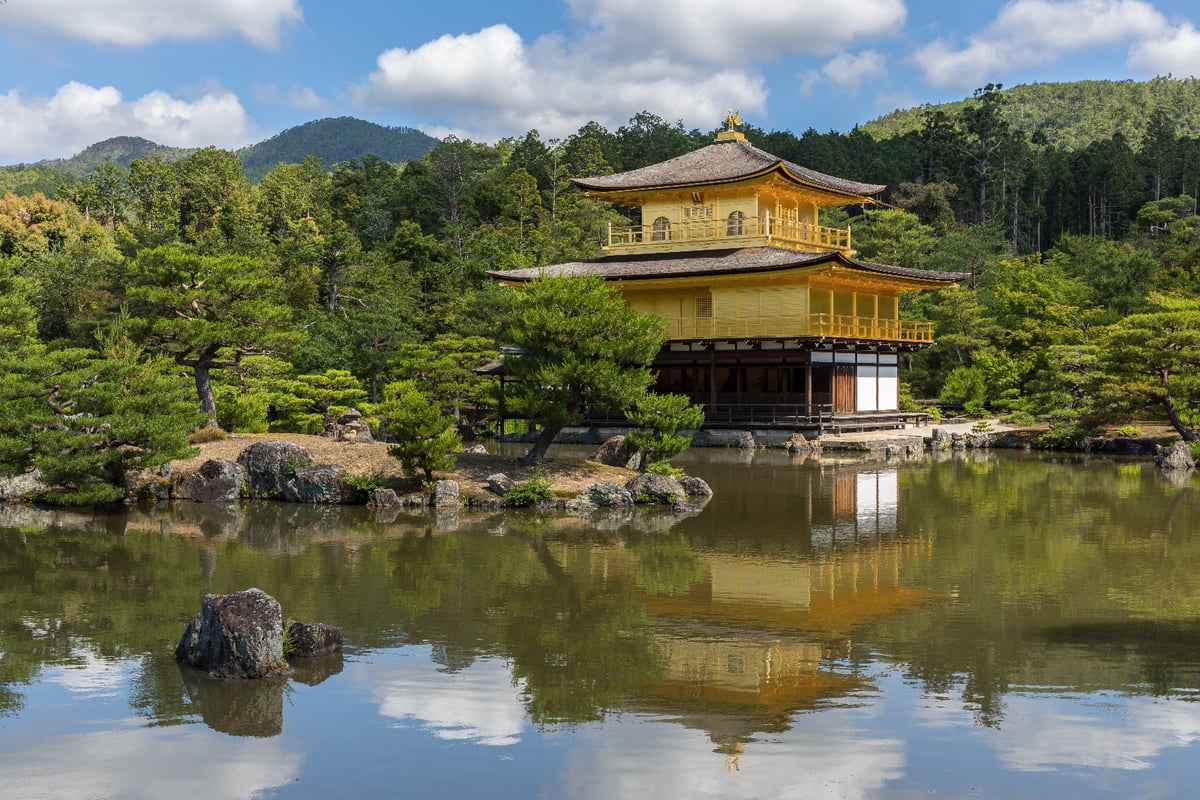
Kinkaku-ji, the Golden Pavilion, which pairs with Arashiyama on Day 7. Photo: Basile Morin, CC BY-SA 4.0, via Wikimedia Commons.
Check in, drop your daypack, and leave your suitcase to the delivery service. By mid afternoon, take the JR Nara Line five minutes south to Inari Station. Fushimi Inari Taisha, the shrine of ten thousand vermilion gates, stands directly outside the station, charges nothing and never closes. Note that only local trains stop at Inari.
Late afternoon is the smart time to climb. The day-trip crowds drain away, the gates glow in low light, and the 45-minute walk to the Yotsutsuji viewpoint earns you a panorama over the city. The full loop over the summit takes 2 to 3 hours; save it for a trip with fresher legs. Eat near Kyoto Station or in Pontocho back in the centre.
Day 6: Higashiyama from the top of the morning
Base: Kyoto. Kiyomizu-dera opens at 6:00 and admission is ¥500. Be at the gate by 7:00 and you will have the great wooden stage, and the lanes of Sannenzaka and Ninenzaka below it, at their quietest. This single early start is worth more than any queue-skipping ticket in Kyoto.
Walk downhill slowly through the preserved lanes to Kodai-ji and Yasaka Shrine, then take a proper breakfast. Cross to Nishiki Market for a grazing lunch in its covered arcade, where Kyoto's cooks shop.
Keep the evening for Gion. Walk Hanamikoji street at dusk, when the lanterns come on, then eat in Pontocho, the narrow lane of restaurants along the Kamo River. Look and photograph the streets, but be respectful: Gion's side lanes are private roads where photography is not permitted.
Day 7: Arashiyama early, the Golden Pavilion after
Base: Kyoto. Take the JR Sagano Line to Saga-Arashiyama, about 15 minutes from Kyoto Station, and walk straight to the bamboo grove. Before 9:00 it is a hushed green corridor; by 10:30 it is a procession. Tenryu-ji, the great Zen temple beside the grove, opens its garden at 8:30 (¥500, with the halls ¥300 more), so do the grove first and the garden second.
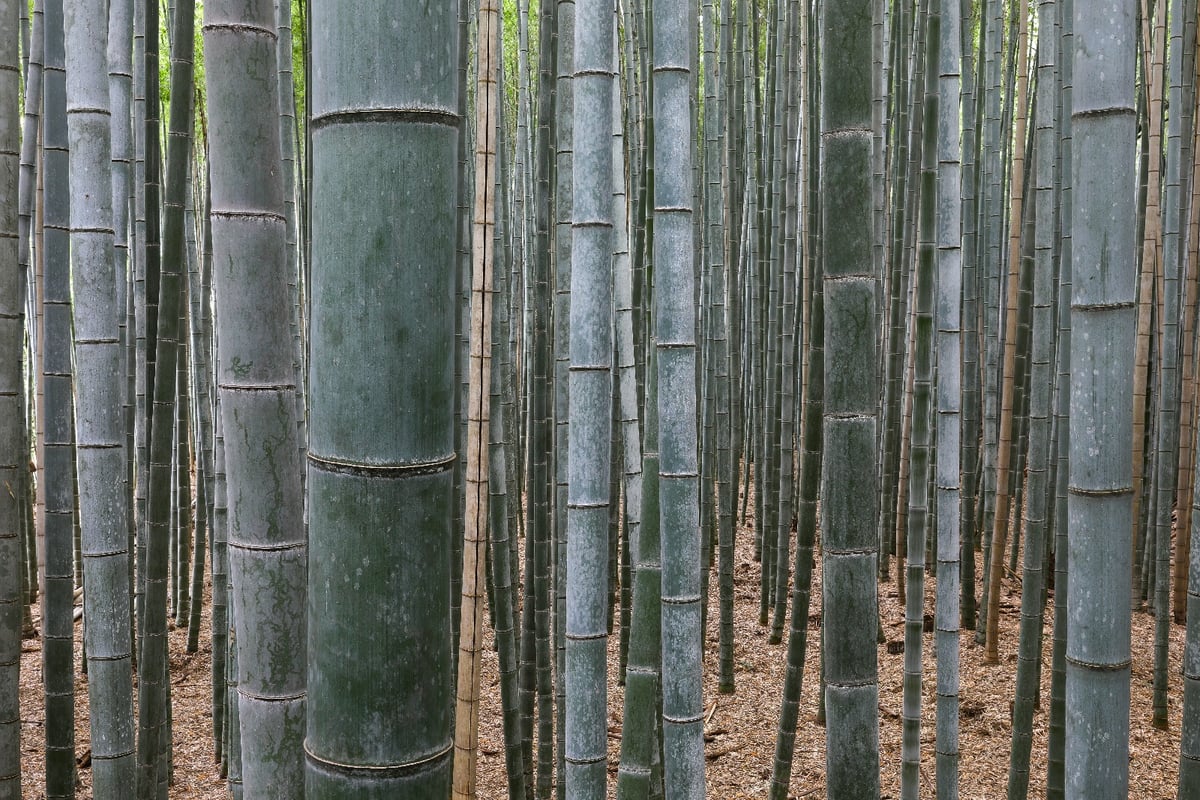
The Arashiyama Bamboo Grove, worth an early start on Day 7. Photo: Basile Morin, CC BY-SA 4.0, via Wikimedia Commons.
Cross the Togetsukyo Bridge for lunch, then take a taxi, or the Randen tram and a bus, across to Kinkaku-ji, the Golden Pavilion, in the north-west of the city. It is open daily 9:00 to 17:00 and costs ¥500; the visit follows a one-way garden path and takes under an hour. Late afternoon light on the gold leaf, reflected in the pond, is the version worth timing for.
Day 8: Nara, the easy day trip
Base: Kyoto (day trip). Nara sits about 45 minutes away by JR Miyakoji rapid train from Kyoto Station. Kintetsu trains reach Kintetsu-Nara Station, which is the closer of the two stations to the park, in a similar time. Either way, the deer find you first: around 1,200 of them roam Nara Park, and vendors sell shika senbei crackers (¥200) made for feeding them. Bow, and a surprising number bow back.
The Great Buddha Hall at Todai-ji is the day's anchor: a vast wooden hall holding a 15-metre bronze Buddha, open 7:30 to 17:30 from April to October and 8:00 to 17:00 from November to March, with admission at ¥800. Add Kasuga Taisha, the shrine of a thousand lanterns in the woods behind the park, if your legs allow. Be back in Kyoto by early evening; tonight is for a long dinner and for packing.
Day 9: Osaka Castle by day, Dotonbori by night
Base: Osaka. Kyoto to Osaka is the easiest intercity hop in Japan: JR Special Rapid trains run about every 15 minutes, take roughly 30 minutes to Osaka Station and cost ¥580, no reservation needed. Drop your bags at your Osaka hotel and go straight to Osaka Castle.
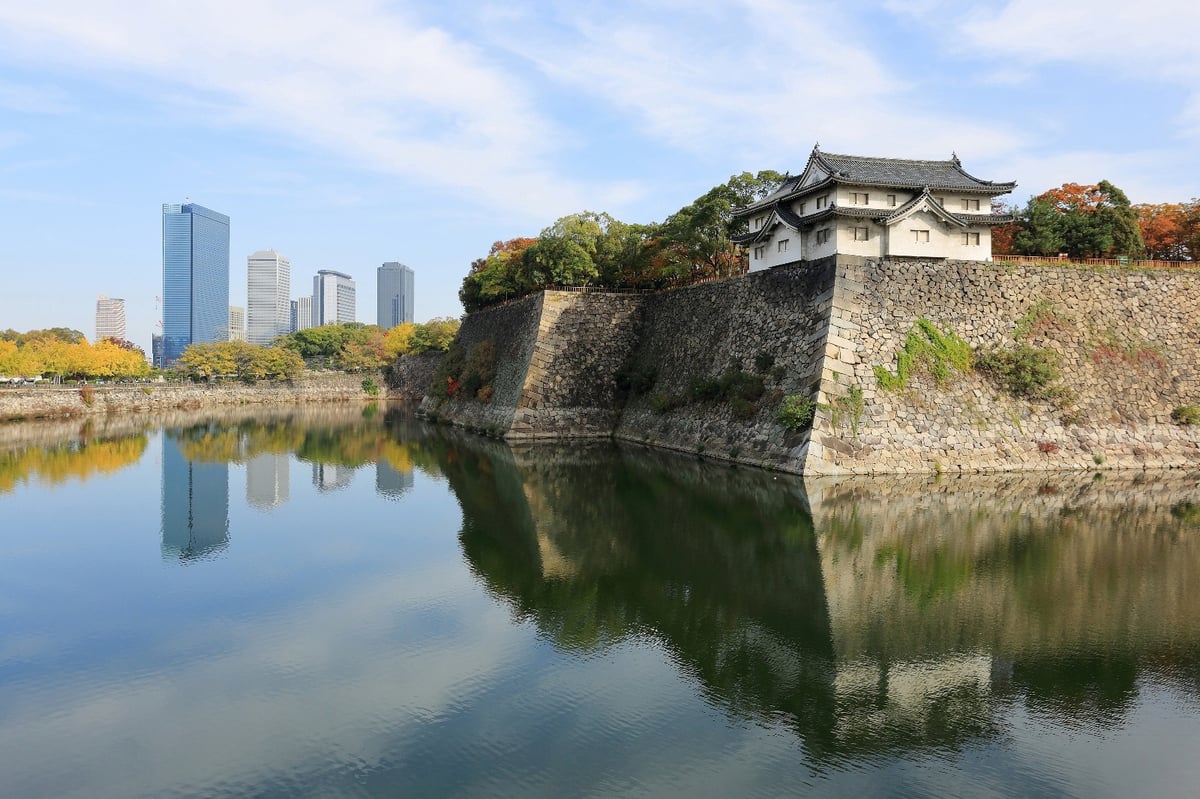
Osaka Castle across its outer moat, the morning stop on Day 9. Photo: Martin Falbisoner, CC BY-SA 4.0, via Wikimedia Commons.
The castle keep is a museum inside a reconstruction, open 9:00 to 18:00 with last entry at 17:30 and admission of ¥1,200 (closed only from 28 December to 1 January). The top floor gives you the city in every direction. Graze through Kuromon Market for lunch, then rest or shop in Shinsaibashi during the afternoon lull.
Osaka saves its best for after dark: Dotonbori canal, the Glico running man, takoyaki stands with queues worth joining, kushikatsu skewers in Shinsekai. This is your last night, so eat like it.
Day 10: One slow morning, then the airport
Base: none, departure day. If your flight leaves in the afternoon, the morning is yours: a bakery breakfast, a final convenience-store sweep for the things you meant to buy, perhaps the Osaka Aquarium at Kaiyukan if the flight is late. Airport expresses run from the city to Kansai International in roughly 35 to 65 minutes depending on your station; the JR Haruka and the Nankai Rapi:t both leave about every half hour. Aim to arrive two hours before an international departure.
If your return flight leaves from Tokyo instead, the Nozomi from Shin-Osaka reaches Tokyo in about 2 hours 30 minutes, and you will still need the best part of an hour to reach Narita. Leave Osaka by mid morning.
The ten days at a glance
| Day | Overnight base | Main area | Travel and booking notes |
|---|---|---|---|
| 1 | Tokyo | Arrival, your hotel's neighbourhood | No timed bookings; early night |
| 2 | Tokyo | Asakusa and Ueno | Ring-making slot booked ahead; Ueno museums close Mondays |
| 3 | Tokyo | Harajuku, Shinjuku, Shibuya | Shibuya Sky ticket, on sale 14 days ahead |
| 4 | Tokyo | Mitaka and Kichijoji | Ghibli Museum ticket, on sale 10th of the month before; closed Tuesdays. Forward luggage tonight |
| 5 | Kyoto | Shinkansen transfer, Fushimi Inari | Nozomi about 2 hours 15 minutes; shrine open 24 hours |
| 6 | Kyoto | Higashiyama and Gion | Kiyomizu-dera opens 6:00; nothing to pre-book |
| 7 | Kyoto | Arashiyama and Kinkaku-ji | Bamboo grove before 9:00; both sights ¥500 |
| 8 | Kyoto | Nara day trip | Trains about 45 minutes each way; Todai-ji ¥800 |
| 9 | Osaka | Osaka Castle and Dotonbori | JR Special Rapid from Kyoto, about 30 minutes, ¥580 |
| 10 | Departure | Kansai Airport | Airport express 35 to 65 minutes; open-jaw ticket |
If it rains
Rain does not break this route; it just reorders it. Swap a wet day's outdoor hours for teamLab, the Tokyo National Museum or the department store food halls, and give the shrines the clear day instead. In Kyoto, Nishiki Market is under cover, and Fushimi Inari's gates drip and gleam rather than close. Arashiyama is the one day to protect: check the forecast when you arrive in Kyoto and trade Day 7 with Day 6 or Day 8 if a dry morning is coming.
The slower version
If ten days at this pace still sounds like work, cut Osaka's overnight stay rather than a Kyoto day. Sleep all five Kansai nights in Kyoto and visit Osaka as a day trip on Day 9; at 30 minutes each way, the trains make it painless, and you change hotels only once. Alternatively, drop the Nara day trip and give Kyoto a genuinely empty day: a late breakfast, a sento bathhouse, a train to Uji for matcha if the mood takes you. The route bends; it does not break.
Questions, answered
Is ten days enough? For these three cities, yes. It is not enough for the whole country, and the mistake to avoid is adding a fourth base. Hiroshima, Hakone and Takayama each deserve a longer trip, or their own.
Should I fly out of a different city? Yes. Into Tokyo and out of Osaka follows the direction of travel, deletes a return Shinkansen ride, and usually costs little more than a standard return. If open-jaw fares are steep, fly out of Tokyo and budget the Day 10 train.
Can I skip a stop? If you must cut something, cut the Osaka overnight and day-trip it from Kyoto. Do not cut Kyoto short to add stops elsewhere: Days 6 and 7 are the heart of the trip, and they need their early starts.
What about the JR Pass? On this route, almost certainly not worth it. One Tokyo to Kyoto Shinkansen ride plus local trains comes nowhere near the ¥50,000 price of a 7-day pass. Our transport guides on YoNihon run the full maths.
8 minutes · November 23, 2026
9 minutes · November 23, 2026
9 minutes · November 23, 2026
