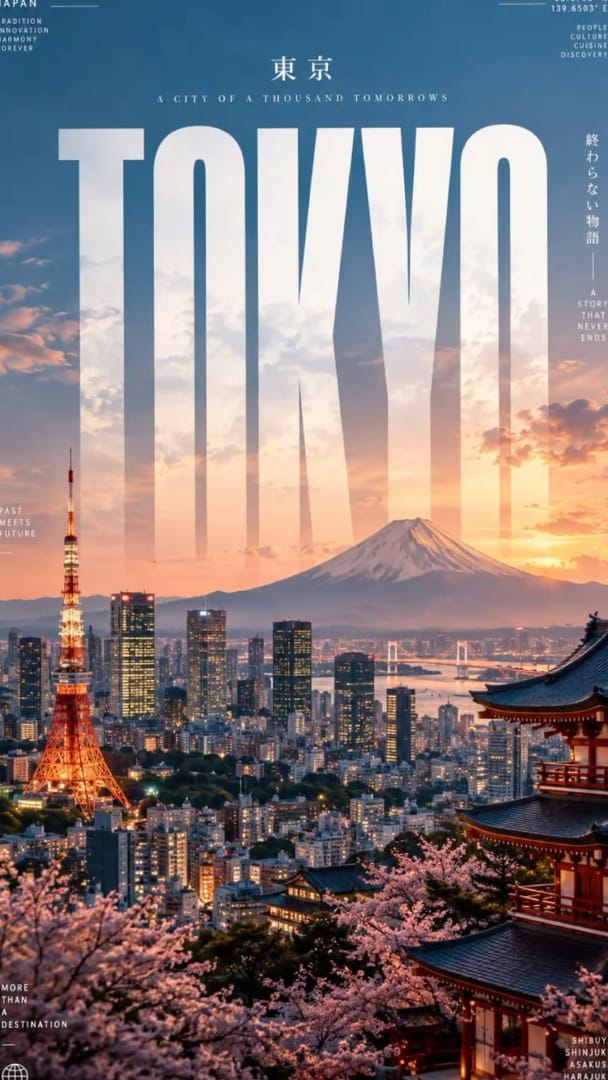
A first-time visitor’s guide to five neighbourhoods, the airport routes into each, and the hotel costs and taxes to expect.
Tokyo is not one city centre but dozens of them, and where you sleep decides how much of each day you spend on trains. The good news is that first-timers can get this right with one simple rule and one honest question.
Most first-time visitors do best in Shinjuku or Shibuya, on the west side. If you want old Tokyo and quieter evenings, choose Asakusa or Ueno in the east. If bullet trains and day trips matter most, choose Ginza or Tokyo Station.
The one rule: stay within a short walk of a JR Yamanote Line station. That green loop links Shinjuku, Shibuya, Harajuku, Ueno, Akihabara and Tokyo Station, so a hotel on or just off it saves time every single day.
The honest question is which side of the city you want to wake up in. Shinjuku and Shibuya are in the west. Asakusa, Ginza and the Tokyo Bay area are in the east. Prices generally fall the further you move from central areas such as Shinjuku, Shibuya, Ginza and Akihabara, but so does convenience.
Best for: first-timers who want energy, nightlife and the easiest rail connections.
Shinjuku is Tokyo at full volume: skyscrapers, neon and a station big enough to feel like its own city. It is one of the best-connected transport hubs in Tokyo and the starting point for many day trips. The trade-off is crowds and noise. Choose a hotel south or east of the station rather than deep inside the Kabukicho entertainment district.
Best for: shopping, food and a younger, trend-led feel.
Home of the famous crossing and the Shibuya Sky observation deck, with Harajuku and Shinjuku close by. Shibuya has fewer hotels than Shinjuku or Asakusa, and prices tend to skew a little higher. It is also less convenient for eastern sights such as Asakusa and Ueno.
Best for: a gentler first night, temples and a slice of old Tokyo.
Asakusa is built around Senso-ji and its Kaminarimon gate, with the Tokyo Skytree, Ueno and Akihabara within easy reach. Many visitors find it noticeably quieter and less overwhelming than Shinjuku or Shibuya, which helps if you arrive jet-lagged. Nightlife is thinner, so expect early evenings.
Best for: families, museums and travellers leaving Tokyo by train.
Ueno has its park and the Ameyoko market street, and several lines meet at Ueno Station, including the bullet train, which makes airport trips and day trips straightforward. Many travellers treat it as a practical alternative to Asakusa, and hotels often offer family-sized rooms.
Best for: logistics, day trips and a polished, upscale base.
Tokyo Station is the city’s main transport artery, and Ginza is one stop away, so this pair works well if you plan to leave Tokyo often. Ginza is known for upscale shopping and tends to attract mid-range and luxury hotels. It is calmer at night than Shinjuku or Shibuya.
Rail times and fares are approximate 2026 figures and can change. Confirm with the operator.
| Area | Mood | Easiest from Narita | Watch out for |
|---|---|---|---|
| Shinjuku | Busy, neon, late nights | Narita Express, direct | Noise; avoid Kabukicho for sleep |
| Shibuya | Trendy, shopping-led | Narita Express, direct | Fewer hotels, higher prices |
| Asakusa | Traditional, quiet evenings | Keisei Access Express, direct | Few late-night options |
| Ueno | Relaxed, family-friendly | Skyliner, about 43 minutes | Fewer fashion and nightlife options |
| Ginza / Tokyo Station | Polished, well-connected | Narita Express to Tokyo Station | Higher hotel prices |
Haneda is closer to the city and generally gives faster, cheaper transfers, so choose it if your flight options allow. If you land at Narita, which is about 60 km from central Tokyo, these are the main routes:
From Haneda, the Keikyu line can take you straight through to Asakusa.
In ordinary weeks, published 2026 price surveys put business-hotel rooms at roughly ¥7,000–¥15,000 a night, mid-range rooms at ¥12,000–¥25,000, and upscale rooms from ¥35,000. These are per room, and rates can swing widely by date. One survey found the same Kyoto hotels differing by up to 3.3 times across four dates, and Tokyo behaves similarly around blossom season, Golden Week and New Year. Check your own dates.
At present, Tokyo charges per person per night: nothing under ¥10,000, ¥100 from ¥10,000 to ¥14,999, and ¥200 from ¥15,000. Two changes are worth knowing:
Area advice draws on several 2026 first-timer guides, which broadly agree on Shinjuku and Shibuya for most visitors and on Asakusa, Ueno and Ginza for specific tastes. Airport fares come from published 2026 transfer guides and differ slightly between sources. Tax details come from Tokyo Metropolitan Government announcements as reported in July 2026 and from hotel notices. Hotel prices are survey ranges, not a live search. Confirm fares, rates and rules before you book.
8 min read · October 3, 2026