8 minutes · November 23, 2026
9 minutes · November 23, 2026
Here is the honest starting point: nobody knows the exact 2027 dates yet, and anyone who gives you a single precise day this far out is guessing.
What we can do is work from the long term averages and the earliest estimates, which agree closely enough to plan a trip around. On current estimates, Tokyo reaches full bloom around 30 to 31 March 2027 and Kyoto follows between 30 March and 4 April. The first official forecast, from the Japan Meteorological Corporation, is expected in mid to late December 2026, and this guide will be updated when it lands.
The practical message is simpler than the forecast. If you want a hotel in Tokyo, Kyoto or Osaka for late March or early April 2027, book it by December 2026. The blossom window is about a week wide, the whole world wants the same week, and rooms go first.
Two bits of vocabulary first. Kaika is the day the first blossoms open on a city's official sample tree. Mankai, full bloom, follows about a week later, and the flowers hold at their best for roughly five to seven days before the petals start to fall in earnest.
The Japan Meteorological Agency no longer issues blossom forecasts (it stopped in 2010 and left forecasting to private weather companies), but its 30 year averages are the baseline every forecast starts from. The estimates below combine those averages with the earliest 2027 outlooks. Treat them as a planning window, not a promise.
Tokyo. First bloom around 24 March, full bloom around 30 to 31 March 2027. Best viewing roughly 28 March to 6 April.
Kyoto. First bloom around 26 March, full bloom estimated between 30 March and 4 April 2027. Kyoto's temples and gardens stretch the season a little, because early and late varieties grow side by side.
Osaka. First bloom around 27 March, full bloom around 3 to 4 April 2027.
Fukuoka. The first of the big cities, with full bloom around 31 March 2027.
Further north. Sendai peaks in mid April, Aomori towards the end of April, and Sapporo not until the first days of May. That northward staircase matters if your dates are fixed and the Tokyo window does not fit (see the section on missing peak bloom below).
One more thing to know about timing. A warm February can pull the bloom forward by several days and a cold snap can push it back, which is why the forecasters revise their calls every week or two through the season. Book the window, then fine tune your sightseeing days once the March forecasts firm up.
Hotels, by December 2026. This is the deadline that matters. Rooms in Kyoto in particular sell out for the peak week, and what remains gets expensive. Book a refundable rate now if you can, so a shift in the forecast does not trap you. If you are still deciding where to base yourself, our guide to the best time to visit Japan month by month (https://yonihon.com/travel-guide/best-time-to-visit-japan-a-month-by-month-travel-guide/) explains how the blossom weeks compare with the rest of spring.
Flights, by the end of 2026 if your dates are set. International fares for the last week of March rise steadily from the new year onwards.
The few things that need reserving. Most blossom viewing is free and unbooked: you just turn up. The exceptions are worth knowing. Shinjuku Gyoen in Tokyo has used advance reservations for entry on the busiest cherry blossom weekends in recent years, so check its official site before a weekend visit. Popular restaurants in Kyoto for the peak week also fill early. Trains between Tokyo and Kyoto run constantly and rarely need booking far ahead, although reserving a seat costs little and removes one worry.
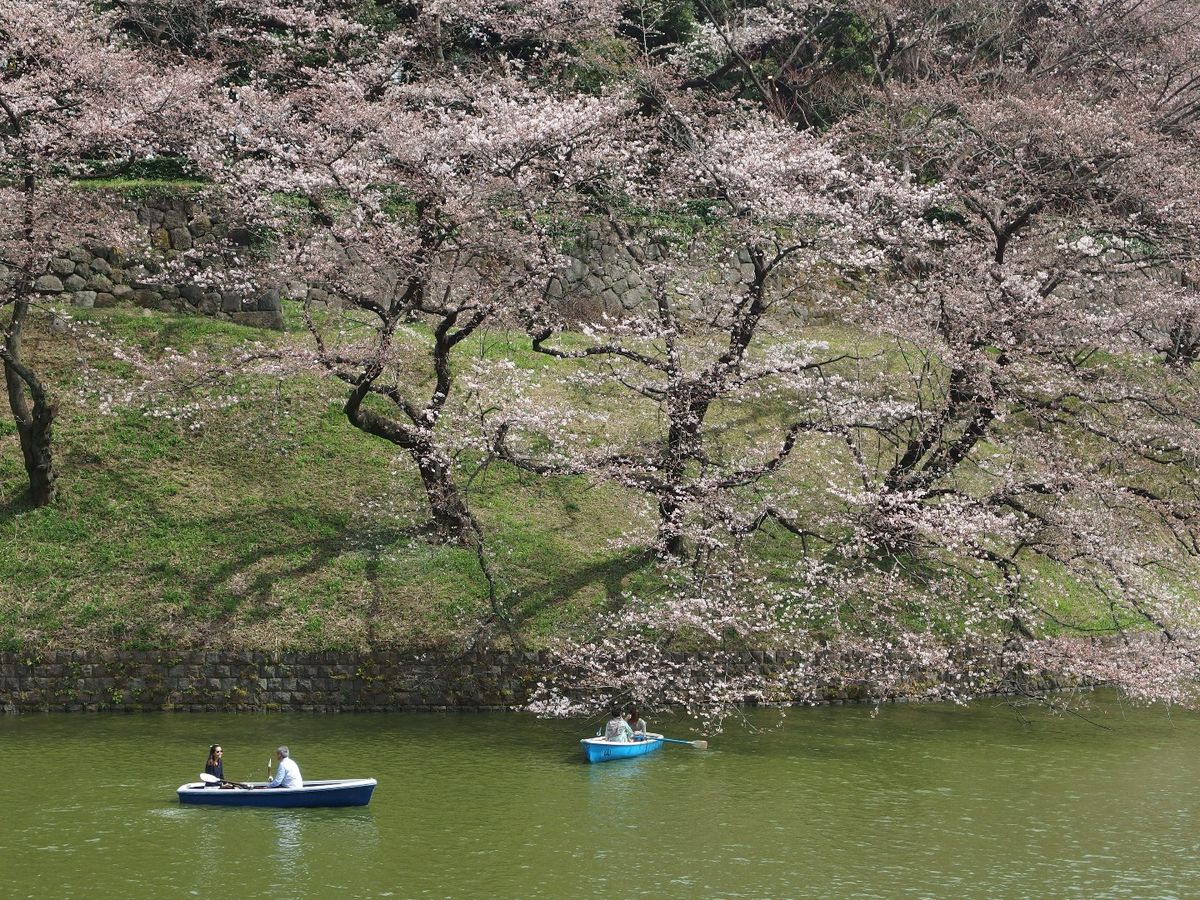
The moat of the old Edo Castle, a short walk from Kudanshita Station, is lined with several hundred cherry trees whose branches hang over green water. Rowing boats can be hired on the moat during the season, and from a boat the view looks back up at a tunnel of blossom. Go early, because the boat queue builds fast on fine days. In the evening the trees are lit, and the same path feels completely different.
Around 800 trees line the Meguro River through Nakameguro, and during the festival period lanterns light the banks after dark. The river is narrow, the branches meet overhead, and petals collect on the water. It is the most social of Tokyo's blossom spots, with food stalls and small bars along the side streets. Come on a weekday evening if you can; weekend afternoons here are the most crowded blossom viewing in the city.
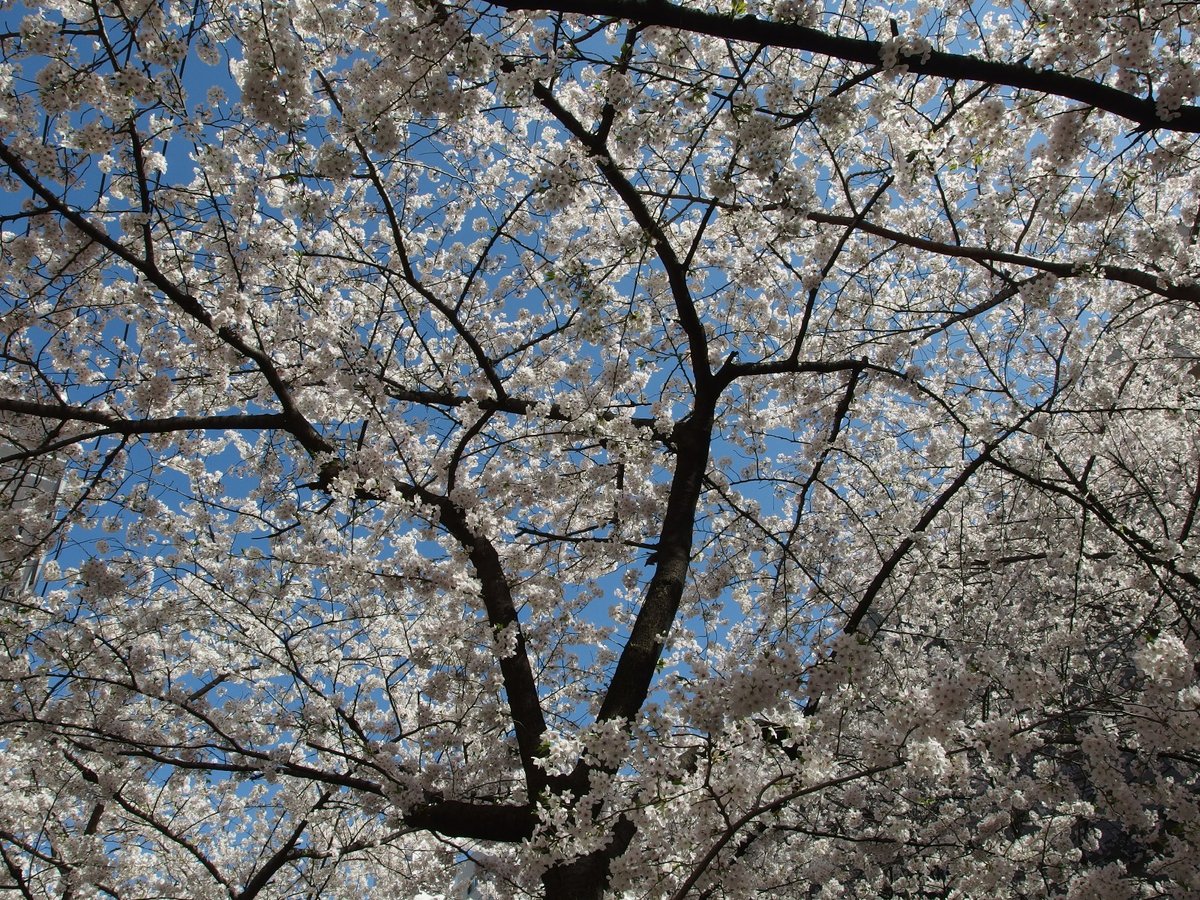
The Meguro River at full bloom, Nakameguro. Photo from a previous season. Photo: Guilhem Vellut, CC BY 2.0
This large garden, a short walk from Shinjuku, holds around 900 cherry trees of roughly 70 varieties. That variety is the point: early types open in February, the famous Somei Yoshino peak in late March, and the double flowered yaezakura carry on into mid April. Entry costs ¥500 for adults, children 15 and under are free, and the garden opens every day during the blossom period (25 March to 24 April). Alcohol is not allowed, which keeps the lawns calmer than the big parks. Details are on the garden's official site (https://policies.env.go.jp/national-garden/shinjukugyoen/english/).
Ueno's central path is Tokyo's oldest famous blossom walk, and the atmosphere is a festival: groups on tarpaulins, food stalls, and lanterns strung along the avenue. It is crowded and cheerful rather than tranquil. Arrive before 9am if you want the path itself in your photos.
Two quieter alternatives worth a morning each: Sumida Park in Asakusa, where the trees frame the Tokyo Skytree across the river, and Inokashira Park in Kichijoji, where you can take a boat out under the branches.
A canal side path in the north east of the city, running between Ginkaku-ji and the Nanzen-ji area, with hundreds of trees reflected in the water. It is narrow and famous, so the difference between 7am and 11am is the difference between a gentle walk and a slow shuffle. Start at the Ginkaku-ji end and walk south, then cut up to Nanzen-ji's brick aqueduct afterwards.
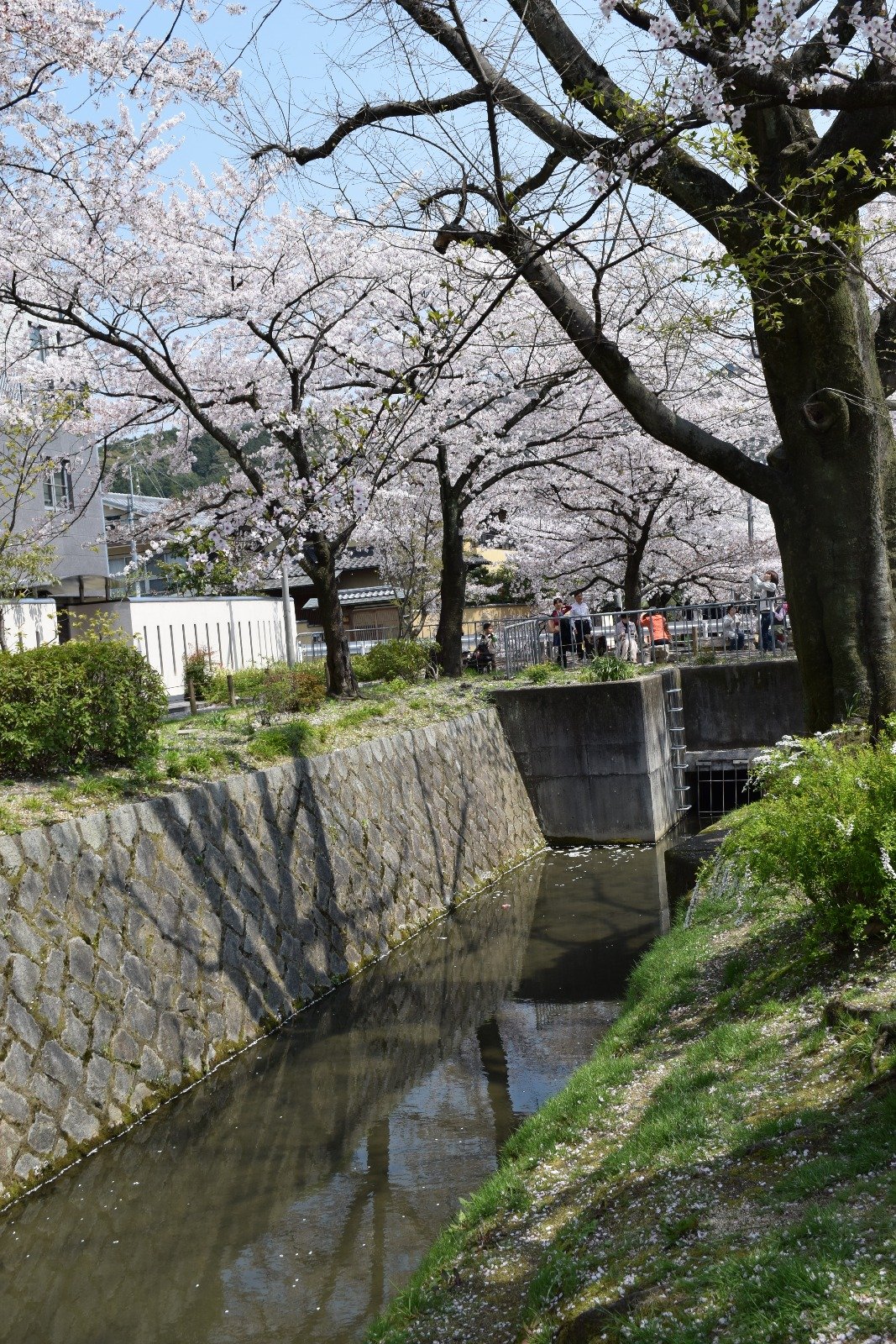
The Philosopher's Path in Kyoto under full bloom. Photo from a previous season. Photo: ::::=UT=::::, CC BY-SA 3.0
Kyoto's oldest park, behind Yasaka Shrine in Gion, is built around one enormous shidarezakura, a weeping cherry that is lit up at night during the season. The park fills with food stalls and picnic groups, and the evening illumination is the time to come. Pair it with a walk down the preserved lanes of Ninenzaka and Sannenzaka while the lanterns are on. For couples planning a Kyoto day around the blossom, our Tokyo for couples guide (https://yonihon.com/travel-guide/things-to-do-in-tokyo-for-couples/) has a Kyoto friendly pacing style that works just as well here, slow mornings, one big sight before lunch, and the famous view saved for dusk.
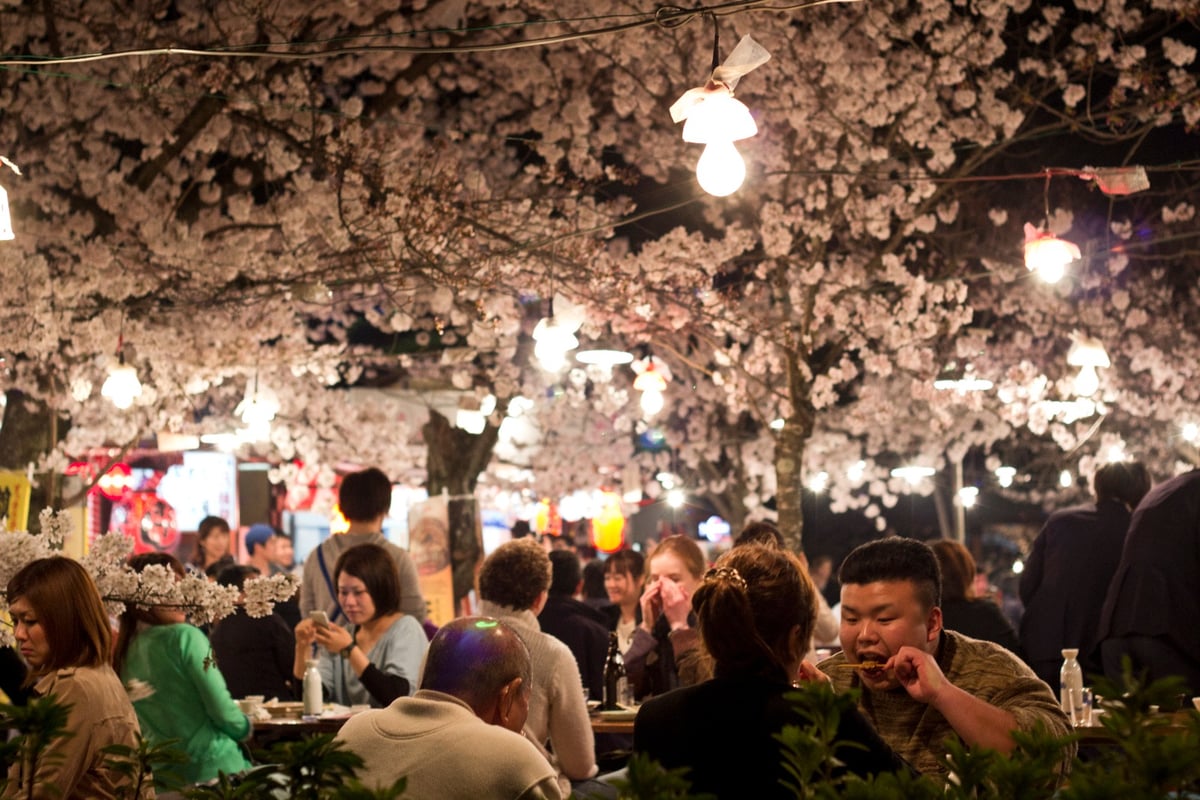
Hanami picnics in Maruyama Park, Kyoto. Photo from a previous season. Photo: Japanexperterna.se, CC BY-SA 3.0
Daigo-ji, in the south east of the city, is where the warlord Toyotomi Hideyoshi held his legendary blossom viewing party in 1598, and the temple still plants its grounds densely, including weeping cherries that peak a little before the main wave. In Arashiyama, the Hozu River and the bamboo grove area give you blossom with mountains behind it. The Keage Incline, a disused railway slope near Nanzen-ji, is planted with around 90 trees along the old tracks and is one of the most photographed short walks in Kyoto each spring.
It happens to someone every year, and it is not the disaster it feels like when you read the forecast on the plane.
You arrived just after full bloom. The falling petals are their own event. A breeze through a tree at this stage produces hanafubuki, a brief blizzard of petals, and the moats and rivers carry hanaikada, rafts of pink petals on the water. Chidorigafuchi and the Meguro River are at their most photographed in some ways during petal fall.
You arrived a week late. Head for the late varieties. Shinjuku Gyoen's yaezakura peak around mid April, a full two weeks after the Somei Yoshino. Or follow the season north: Sendai in mid April, Hirosaki Castle in Aomori towards the end of April, and Sapporo in the first days of May.
You arrived a week early. The buds and the first scattered blossoms still read as spring, the crowds are a fraction of peak week, and Kyoto's plum blossom at shrines such as Kitano Tenmangu may still be finishing as the earliest cherries open. Hotel prices will also be kinder, which softens the blow.
Fix your dates around the window, 28 March to 6 April 2027 for Tokyo and Kyoto. Book the hotels by December 2026, on refundable rates. Read the Japan Meteorological Corporation's first forecast when it appears in mid to late December, and adjust nothing drastic. Then, in the last two weeks of March, use the weekly forecast updates to decide which city gets your first days. The blossom rewards people who plan early and stay flexible at the edges.
13 min · November 21, 2026
