8 minutes · November 23, 2026
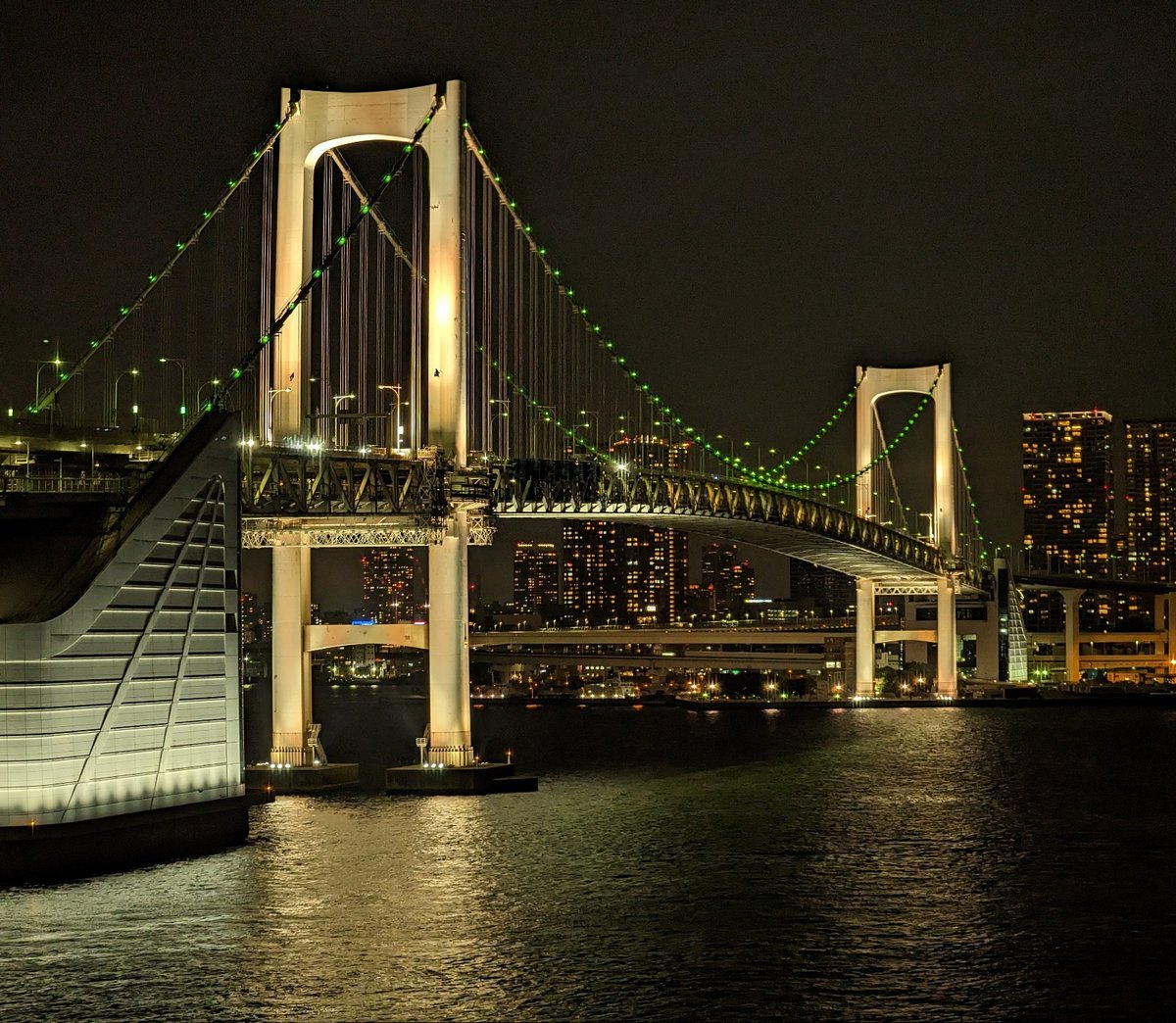
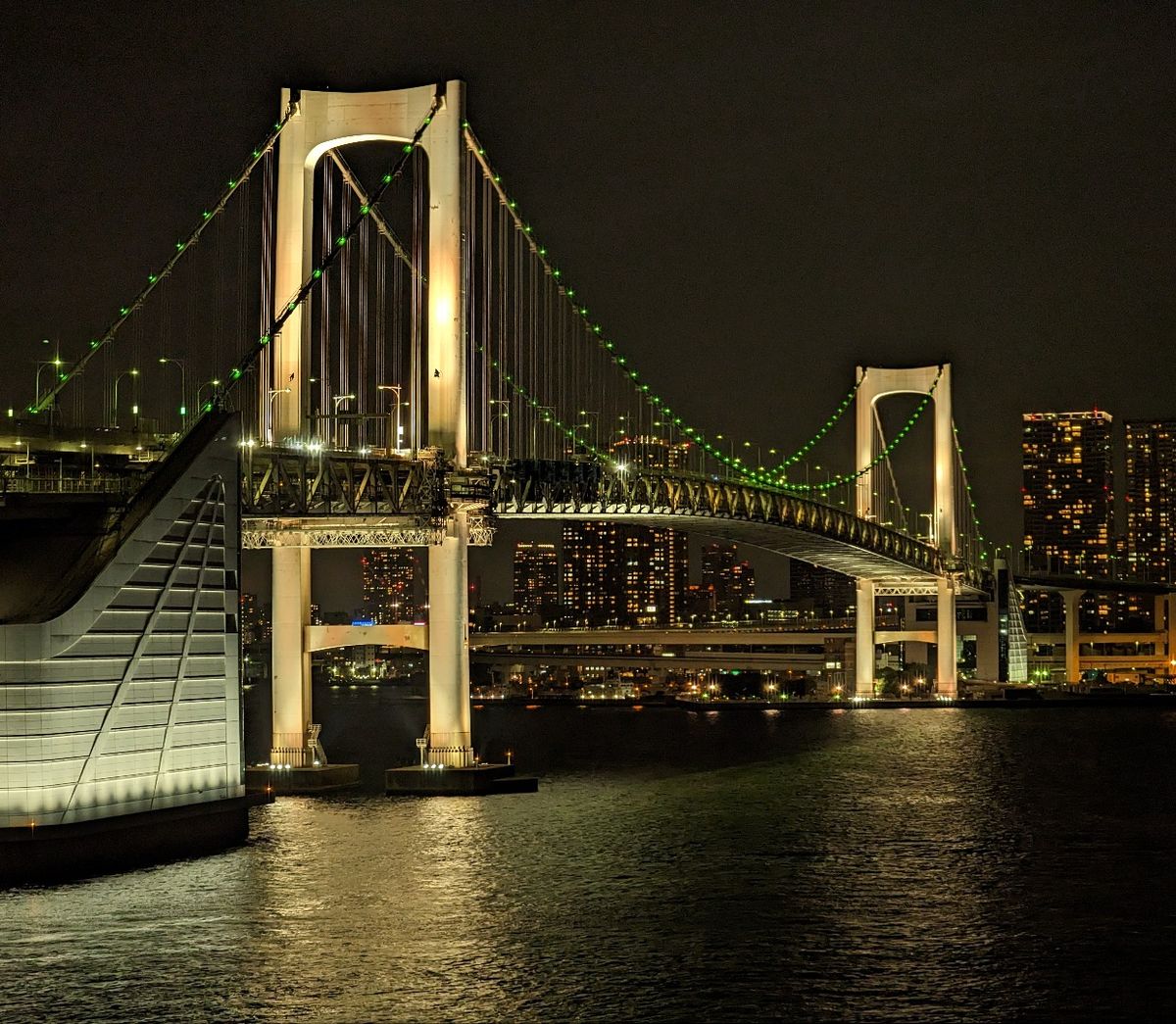
Rainbow Bridge from Odaiba after dark, the view that ends the half-day date route at the bottom of this guide. Photo: Syced, CC0
The dates that work in Tokyo are rarely the expensive ones. They are the ones with something to do together: hammering a pair of rings in a backstreet workshop, drifting down the Sumida River on a water bus, or standing on a rooftop while the city lights come on. Dinner can be two rice balls from a department store basement, eaten on a bench, and the day still lands.
This guide is organised by mood rather than by neighbourhood, with prices for two people throughout, checked in November 2026. It covers creative workshops, slow walks, the viewpoints worth booking, food dates that need no ceremony, and what to do when it rains. If you have not yet chosen where to base yourselves, start with our guide to where to stay in Tokyo (https://yonihon.com/travel-guide/where-to-stay-in-tokyo/), then come back here.
A workshop date gives you a shared task, a lot to laugh about, and a souvenir that is not a keyring. Tokyo has pottery studios, glass workshops, kintsugi repair classes and cooking schools all over the city, most running one to three hours and most needing a booking a few days ahead. The one we can describe down to the last detail is ring-making, because it is ours.
Full disclosure, stated plainly: the private ring-making workshop at nane Asakusa Hanare is a YoNihon experience, so it is listed here because we know exactly how it runs, not because this page needed an advert. You can read the details and book on the workshop page (https://yonihon.com/experience/private-ring-making-experience-at-asakusa-hanare-tokyo/).
The two of you work with a craftsperson using tankin, a traditional hammering technique, shaping and texturing a metal band until it fits. The session takes about one hour, costs ¥3,850 per person (¥7,700 for two), and the workshop holds a 5.0 rating across 32 reviews. Instruction is available in English, the session is private rather than a group class, and you take the finished rings home the same day. There is no waiting a week for a parcel to find your hotel.
Can complete beginners make the rings? Yes, and most people who book are beginners. Hammering a band to size is physical rather than delicate work, the craftsperson guides each stage, and the ring cannot really go wrong in a way that shows. If one of you is nervous, that is the normal starting point, not a problem.
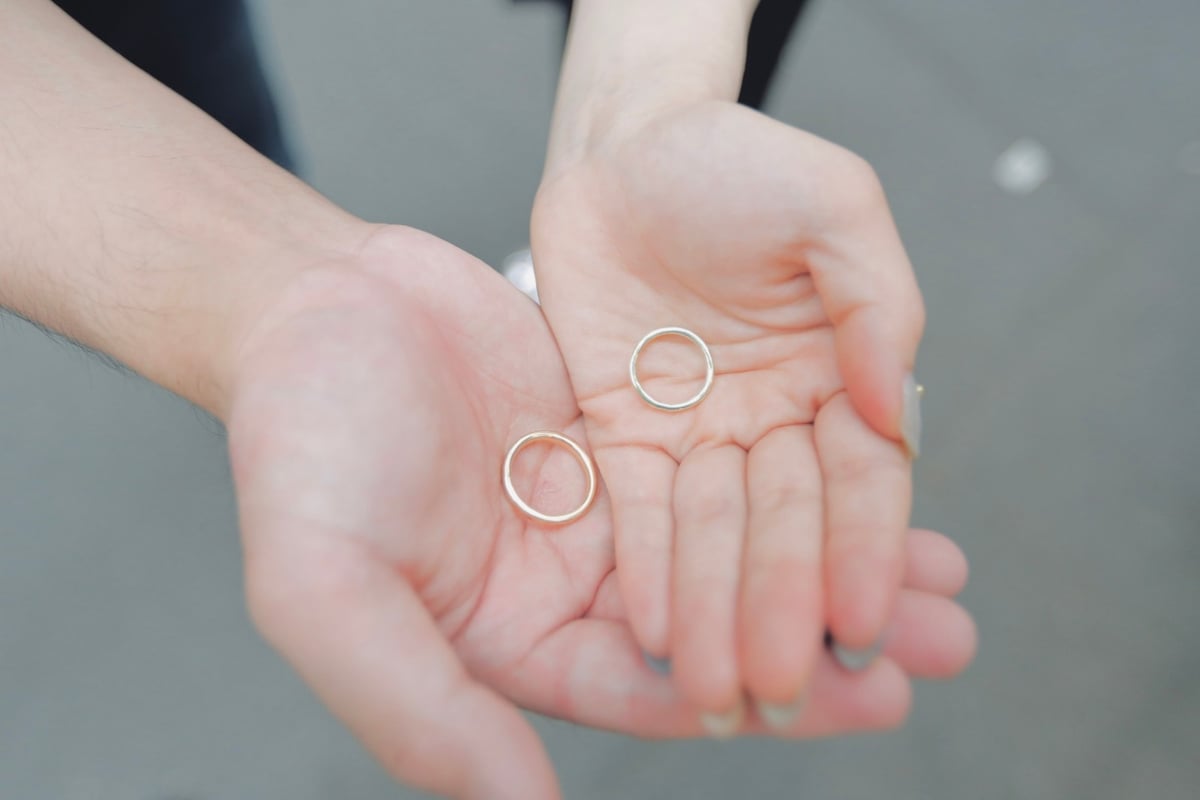
The finished product: a pair of hammered rings made in the Asakusa workshop, ready to wear home. Photo: YoNihon
Ring prices confuse people because two workshops can quote very different numbers for what sounds like the same thing. Four things drive the price, at almost any studio:
So when you compare workshops, compare like with like: same metal, same width, and check whether stones and engraving are included or added later.
The Meguro River runs through Nakameguro lined with small cafes, bakeries and independent shops, and the walk along it pairs naturally with Daikanyama, ten minutes uphill, where the bookshop complex and quiet residential streets slow everything down. In late March and early April the canal is one of Tokyo's famous cherry blossom sights. The rest of the year it is simply a pleasant, unhurried part of the city that locals actually use. Cost: nothing but the coffee.
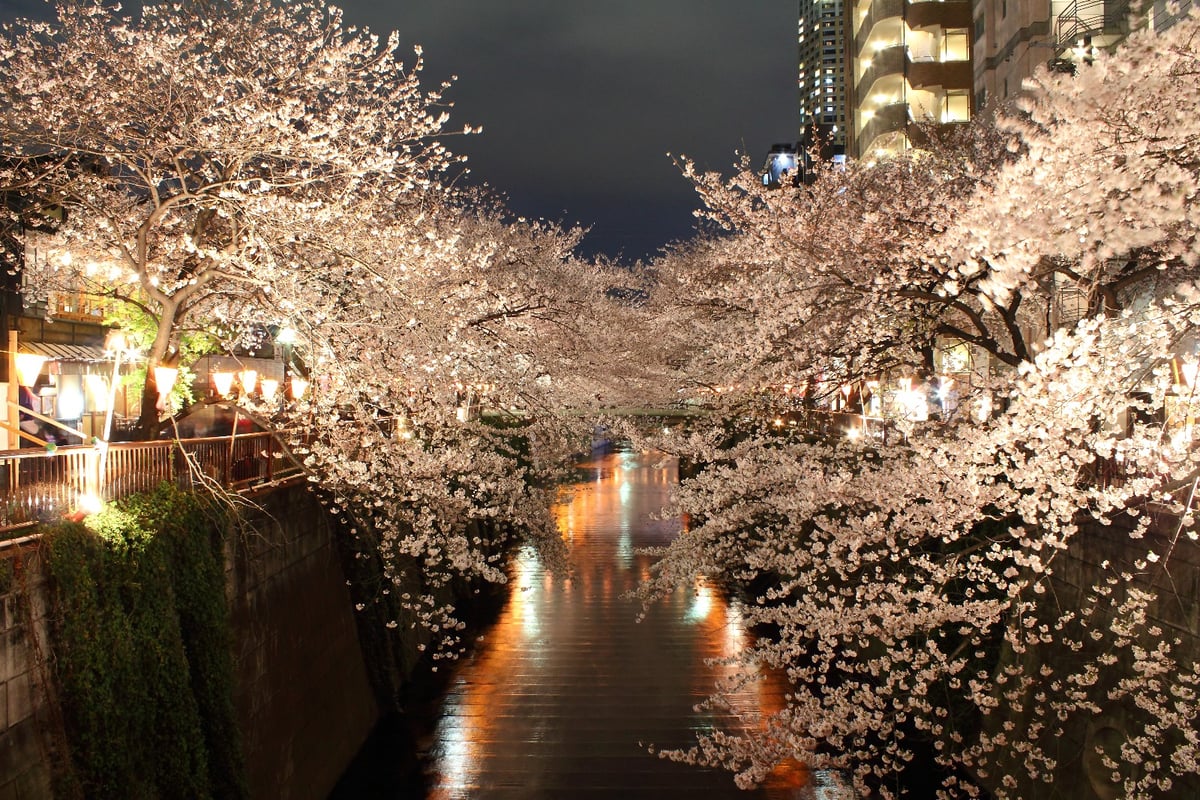
The Meguro River in Nakameguro in cherry blossom season. Outside spring, the same banks are a calm cafe-to-cafe stroll. Photo: Kakidai, CC BY-SA 3.0
Rikugien in Komagome is a landscaped Edo-period garden built around a pond, with paths that wind through pine and maple rather than a lawn you cross in five minutes. It suits couples precisely because it is unhurried: a full circuit takes an hour or so, and the teahouse by the water is a natural pause. Entry is ¥300 per person (¥600 for two), the garden opens 9:00 to 17:00 with last entry at 16:30, and Komagome Station is a seven minute walk away. In late autumn the maples are the draw, and the garden runs evening light-ups on selected dates.
The open-air rooftop on top of Shibuya Scramble Square sits 229 metres up, with the scramble crossing directly below and the whole city laid out past it. It is the one viewpoint in Tokyo where booking is not optional in any practical sense. Tickets are timed, sold online, and released two weeks ahead at midnight Japan time; the late afternoon slots go first.
Prices depend on when you enter. Booked online, an adult ticket costs ¥2,700 for entry before 15:00 and ¥3,400 for entry from 15:00 onwards, so a sunset visit for two is ¥6,800. Buying at the counter costs ¥300 more per person and only works if your slot has not already sold out online, which at sunset it usually has. Two warnings: there is no fixed leaving time, so entering in the last of the cheaper slots and staying for sunset is a legitimate tactic in winter when the sun sets early; and the rooftop can close at short notice in strong wind or rain, so keep a flexible backup for that evening.
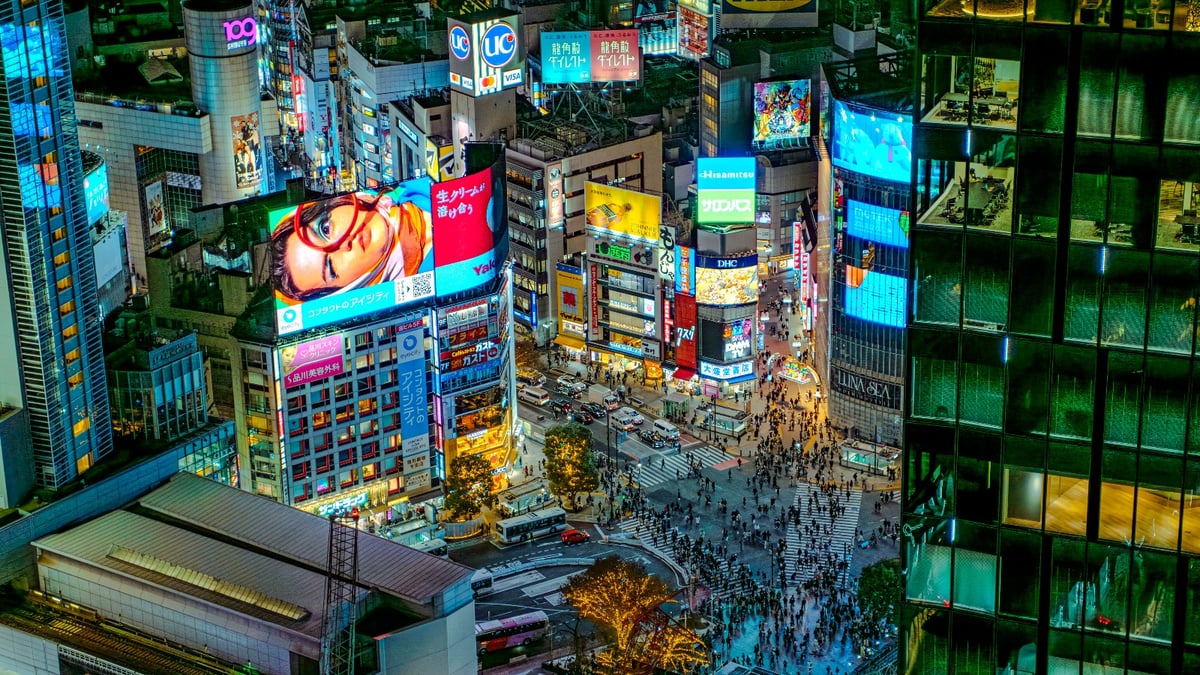
The scramble crossing from above. From Shibuya Sky you watch it from 229 metres, close enough to see the pattern, far enough to skip the crowd. Photo: David Kernan, CC BY 4.0
Skytree's Tembo Deck, 350 metres up, works best as the second half of an Asakusa day: the tower is a short walk or one train stop from the old town, and the view takes in the river you have just been walking beside. Since April 2026 the tower has used variable pricing, with online Tembo Deck tickets starting from ¥1,800 per adult (from ¥3,600 for two) and rising on busy days. Tickets are date and time specific, and buying at the fourth floor counter adds a ¥500 fee per ticket, so book online. For what to do at ground level before you go up, our Asakusa guide (https://yonihon.com/travel-guide/best-things-to-do-in-asakusa/) covers the temples, food and workshops in the area.
The most relaxed way to cross Tokyo as a couple is not to cross it at all, but to float down it. Tokyo Cruise runs water buses from Asakusa down the Sumida River and across the bay to Odaiba. The direct boats, the silver Himiko, Hotaluna and Emeraldas, take roughly 50 to 70 minutes and cost ¥2,000 per person one way (¥4,000 for two). A cheaper leg runs from Asakusa to Hinode Pier for ¥1,000 per person in about 40 minutes, passing under the river's bridges with Skytree behind you.
Practical points: the boats are a daytime and late afternoon service, not an evening one, so check the timetable for your date rather than assuming a sailing will suit; some routes can be booked online in advance, and the operator recommends booking ahead for Asakusa to Odaiba; sailings can be cancelled in bad weather. Arriving in Odaiba by boat, with Rainbow Bridge in front of you, sets up the evening nicely, and the Yurikamome line brings you back over the bridge when you are done.
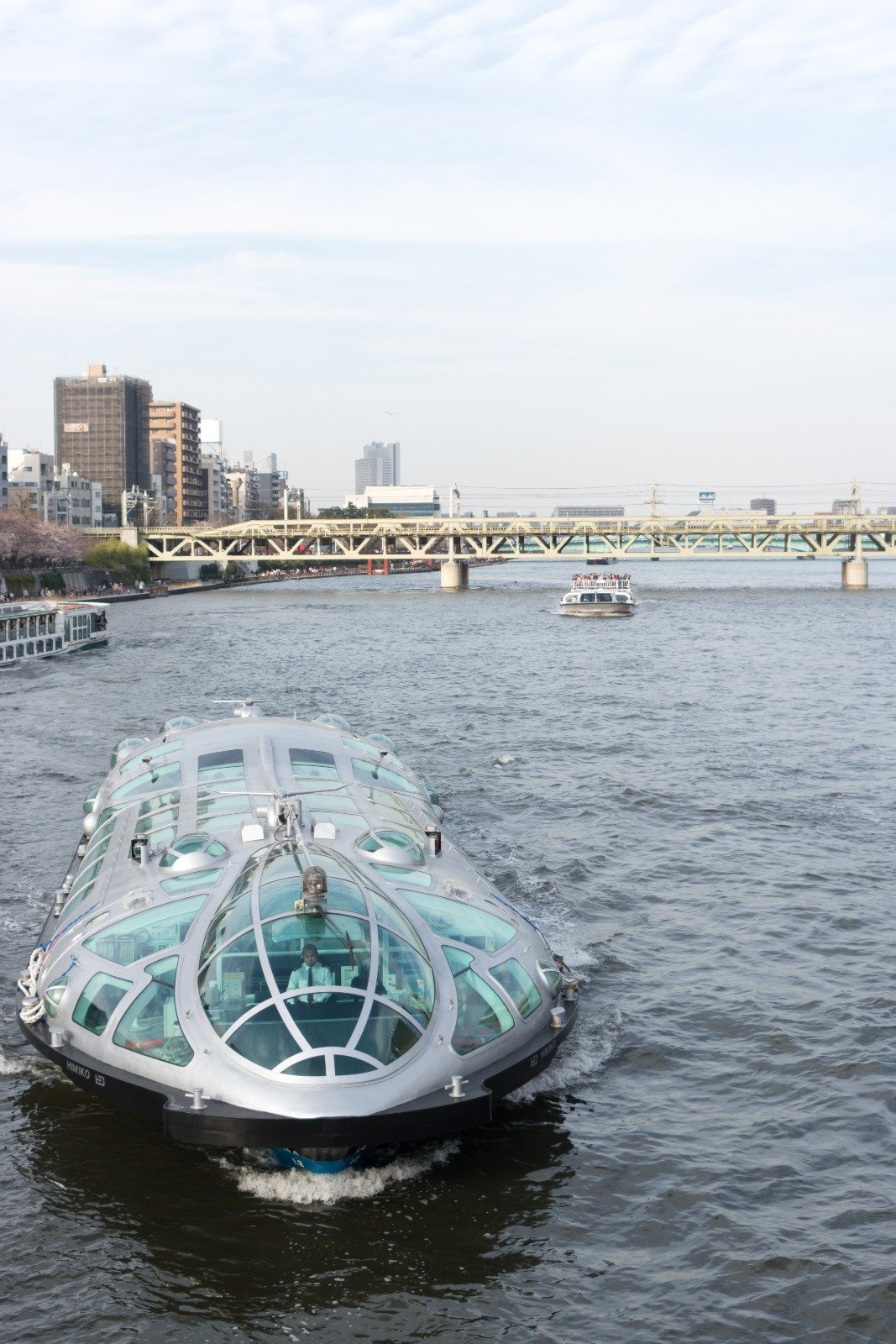
A water bus on the Sumida. The Asakusa to Odaiba crossing is the slowest route between the two, and easily the best. Photo: Yoshikazu Takada, CC BY 2.0
Not every food date needs a reservation and a dress code. Three formats work reliably in Tokyo:
Rain does not cancel a Tokyo date; it just moves it indoors. Three reliable options:
teamLab Planets, Toyosu. The strongest rainy day pick in the city. You walk barefoot through water and mirrored rooms of light, and it is a genuinely shared experience rather than a look-at-things museum. Tickets are timed, sold online only (there are no ticket sales at the door), and use dynamic pricing, with adult tickets starting from ¥3,800, so from ¥7,600 for two. Book several days ahead for weekends. Wear trousers you can roll to the knee, because some rooms have water that deep, and the venue advises against skirts, as several floors are mirrored. Allow one and a half to two hours. Its sibling, teamLab Borderless in Azabudai Hills, runs on the same timed-ticket system if Planets is sold out.
A workshop. Ring-making and most other craft classes are indoors by definition, which makes them the easiest rainy day swap. Book the slot and the weather stops mattering.
Museums and aquariums. Tokyo is well stocked with both, and a rainy afternoon is the right time for the big ones you might otherwise skip for the streets. Most take walk-ins, though special exhibitions increasingly sell timed tickets online.
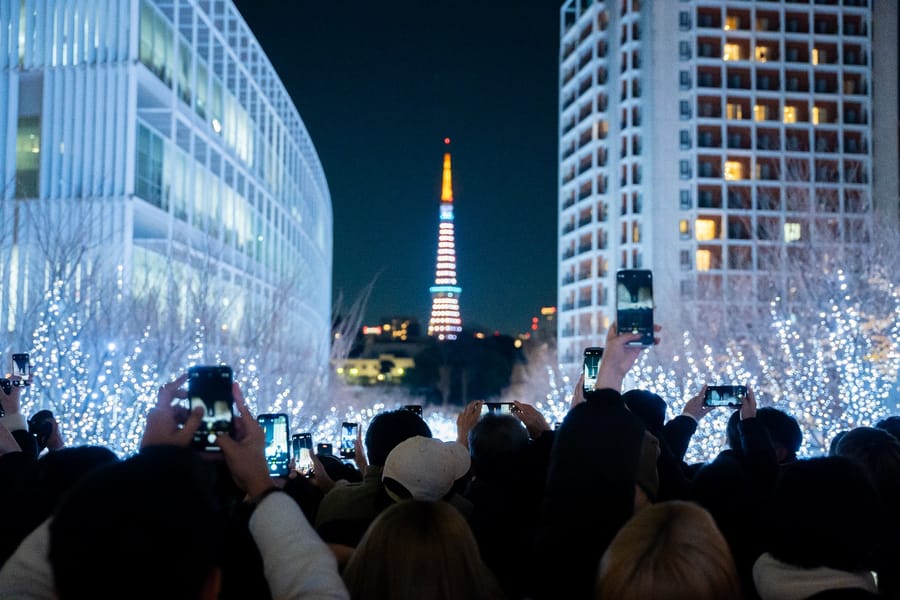
And one seasonal exception to the indoor rule: in winter, the city's illuminations are worth getting slightly cold for. Our winter illuminations guide (https://yonihon.com/travel-guide/tokyo-winter-illuminations-2026-2027/) picks the ones worth an evening.
| Activity | Area | Approx. duration | Indoor or outdoor | Cost basis for two |
|---|---|---|---|---|
| Ring-making workshop | Asakusa | About 1 hour | Indoor | ¥7,700 (¥3,850 each) |
| Nakameguro and Daikanyama walk | Nakameguro | 1.5 to 2 hours | Outdoor | Free, plus coffee |
| Rikugien Gardens | Komagome | 1 to 1.5 hours | Outdoor | ¥600 (¥300 each) |
| Shibuya Sky | Shibuya | 1 to 1.5 hours | Both | ¥5,400 before 15:00, ¥6,800 from 15:00 |
| Tokyo Skytree Tembo Deck | Oshiage | 1 to 1.5 hours | Indoor | From ¥3,600 (from ¥1,800 each) |
| Water bus, Asakusa to Odaiba | Asakusa to Odaiba | 50 to 70 minutes | Both | ¥4,000 one way (¥2,000 each) |
| teamLab Planets | Toyosu | 1.5 to 2 hours | Indoor | From ¥7,600 (from ¥3,800 each) |
| Depachika picnic | Citywide | About 1 hour | Both | Your choice of spread |
This route strings the best of the above into a single afternoon in and around Asakusa, with nothing rushed and only two things to book.
14:00, ring-making (booked ahead). Start at the workshop in Asakusa and spend an hour making your rings. Booking note: reserve this first, before anything else, because it anchors the afternoon; the session is private, so the slot is yours alone.
15:15, a slow hour at ground level. Coffee and cake in a local kissaten, or a wander down to the river. The full run of temples, street food and quieter lanes is in our Asakusa guide (https://yonihon.com/travel-guide/best-things-to-do-in-asakusa/), so pick one or two things rather than the whole list.
Around 16:00, the boat to Odaiba (booked ahead). Walk the few minutes to the Asakusa pier and take a direct water bus across to Odaiba, 50 to 70 minutes on the water as the light changes. Booking notes: sailings are daytime and late afternoon only and the exact times change with the season, so check the timetable for your date and book the sailing that fits; if no boat fits your day, swap this leg for Skytree at sunset instead, which is 15 minutes away and follows the same book-online rule.
Early evening, Odaiba. Get off the boat with Rainbow Bridge in front of you, watch the lights come on from the waterfront, and eat in Odaiba or ride the Yurikamome back across the bridge for dinner elsewhere. Total booked cost for the two anchor activities: ¥11,700 for two (¥7,700 rings plus ¥4,000 boat), before food.
