Here is the lovely thing about Tokyo in winter: the best show in the city costs nothing. From early November, whole streets switch on at dusk and stay lit until late, and you can walk from one to the next with a train ride in between. The catch is that every display runs on its own calendar. Some end on Christmas Day, others glow on until February. This guide covers the ones worth planning around for the 2026 to 2027 season, with the dates and hours checked against the organisers' own announcements.
Roppongi Hills Keyakizaka: the famous one
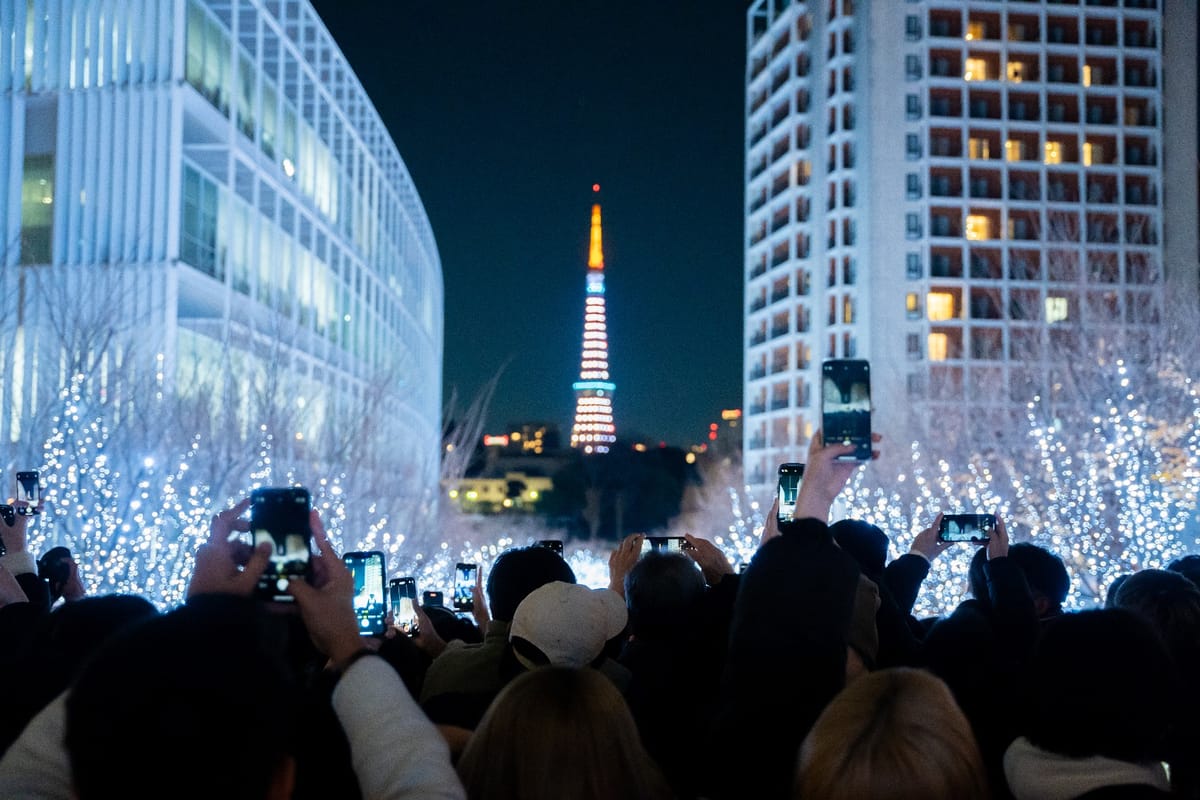
If you see one illumination in Tokyo, make it this one. The zelkova trees along Keyakizaka, the sloping street below Roppongi Hills, are wrapped in blue and white lights under the name SNOW&BLUE, and Tokyo Tower stands at the bottom of the slope, lit orange, exactly where you would put it if you were designing the view. Cross to the far pavement and look back up the hill for the photograph everyone wants.
Dates: November 5 to December 25, 2026. Lights on 17:00 to 22:00. Free, it is a public street. Nearest station: Roppongi (Hibiya Line, Exit 1C).
Tokyo Midtown: the garden of light
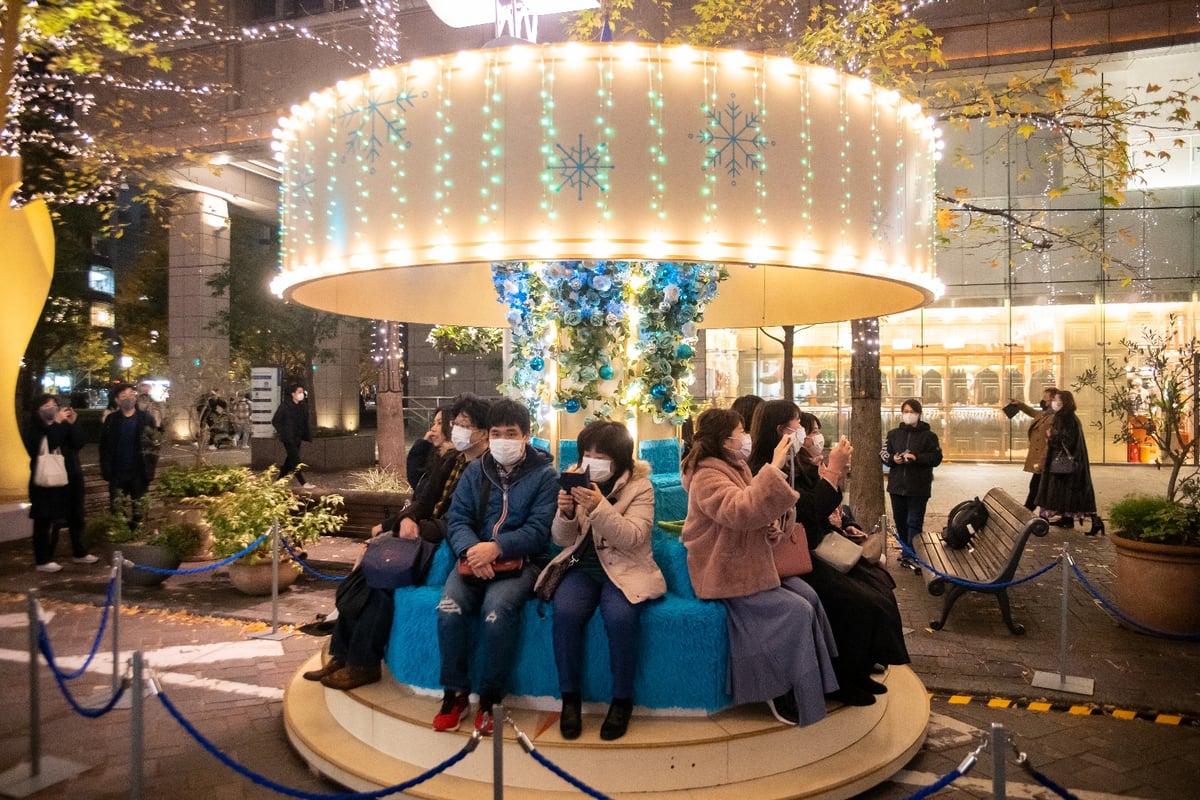
Ten minutes on foot from Keyakizaka, Tokyo Midtown turns its garden into the centrepiece of MIDTOWN CHRISTMAS 2026. The garden lights are the romantic option: a wide lawn of colour that shifts and moves with music, with an ice rink beside it if you want to make an evening of it (the rink is a paid extra, from December 5). The main display ends on Christmas Day, but the garden's Path of Light keeps glowing until February 23, 2027, which makes Midtown a good answer for January and February trips too.
Dates: November 26 to December 25, 2026 (Path of Light to February 23, 2027). Lights on 17:00 to 23:00. Free to view. Nearest station: Roppongi (Oedo Line, Exit 8, direct connection).
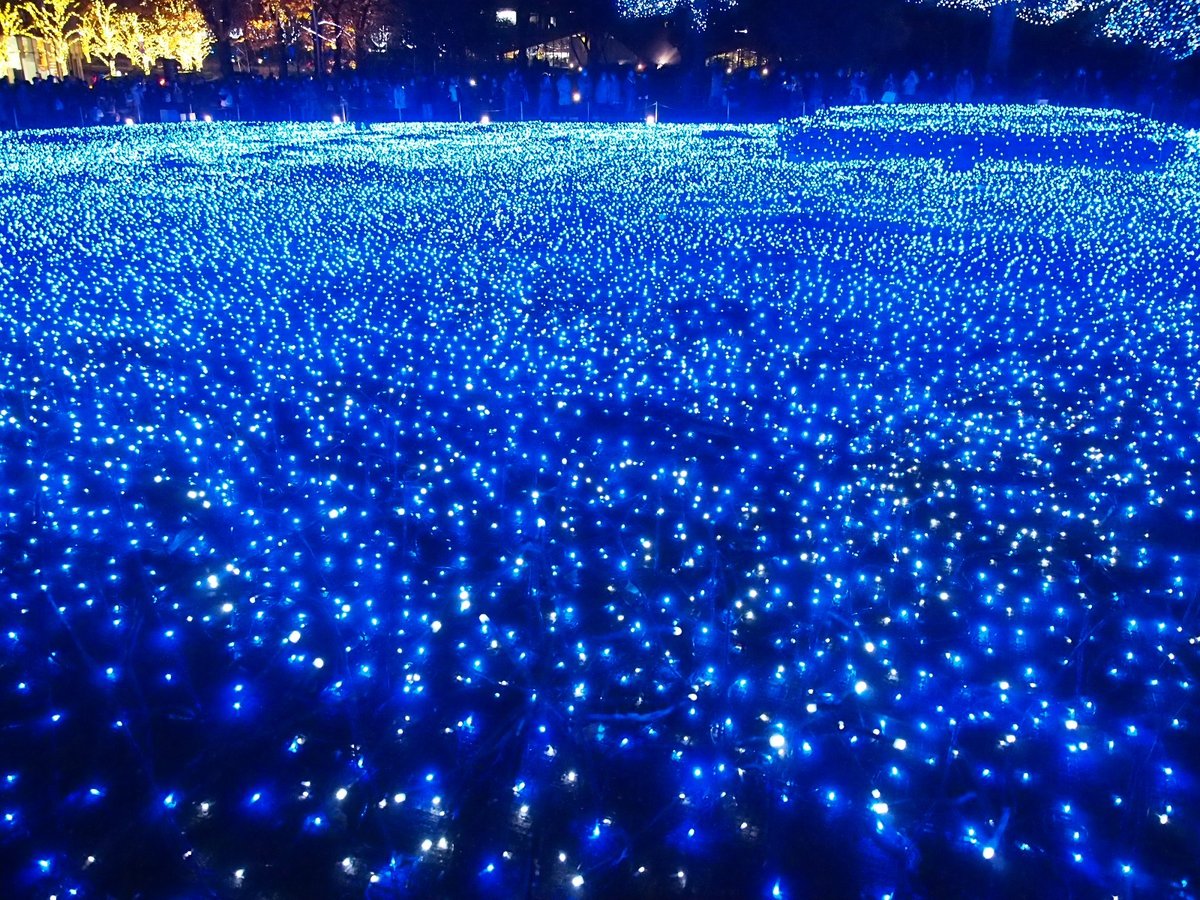
Tokyo Midtown's garden lights, a short walk from Keyakizaka, so the two pair naturally in one evening. Photo from a previous season. Photo: Kaz Ish, CC BY-SA 3.0, via Wikimedia Commons.
Marunouchi: the elegant one, and the longest season
Around Tokyo Station, the Marunouchi Illumination is now in its 25th year. About 1.2 kilometres of street trees along Marunouchi Naka-dori glow champagne gold, the office workers thin out, and the whole district feels calm and expensive in the best way. It also runs the longest of the central displays, well past New Year into February, and it switches on earliest in the day, which makes it the perfect first stop of an evening.
Dates: November 12, 2026 to February 14, 2027. Lights on 16:00 to 23:00, and until midnight throughout December. Free. Nearest stations: Tokyo (Marunouchi side), Nijubashimae, Yurakucho.
Marunouchi Naka-dori in champagne gold, one of the calmest and prettiest walks in winter Tokyo. Photo from a previous season. Photo: Dick Thomas Johnson, CC BY 2.0, via Wikimedia Commons.
While you are in the area, Hibiya is a five minute walk south: the Hibiya Magic Time Illumination runs November 12, 2026 to February 28, 2027, 16:00 to 23:00, also free. Marunouchi and Hibiya together make an easy, gentle evening on their own.
Shibuya Blue Cave: the short, spectacular one
For just over two weeks in December, an avenue of trees between Shibuya and Yoyogi Park turns deep blue, lights reflecting off a glossy path so the whole street feels underwater. Ao no Dokutsu, the Blue Cave, is the most crowded display on this list and the shortest lived, so go on a weekday and go early in its run.
Dates: December 11 to 27, 2026 (evenings). Free. Nearest stations: Shibuya, Harajuku, or Yoyogi-koen, the display runs between them.
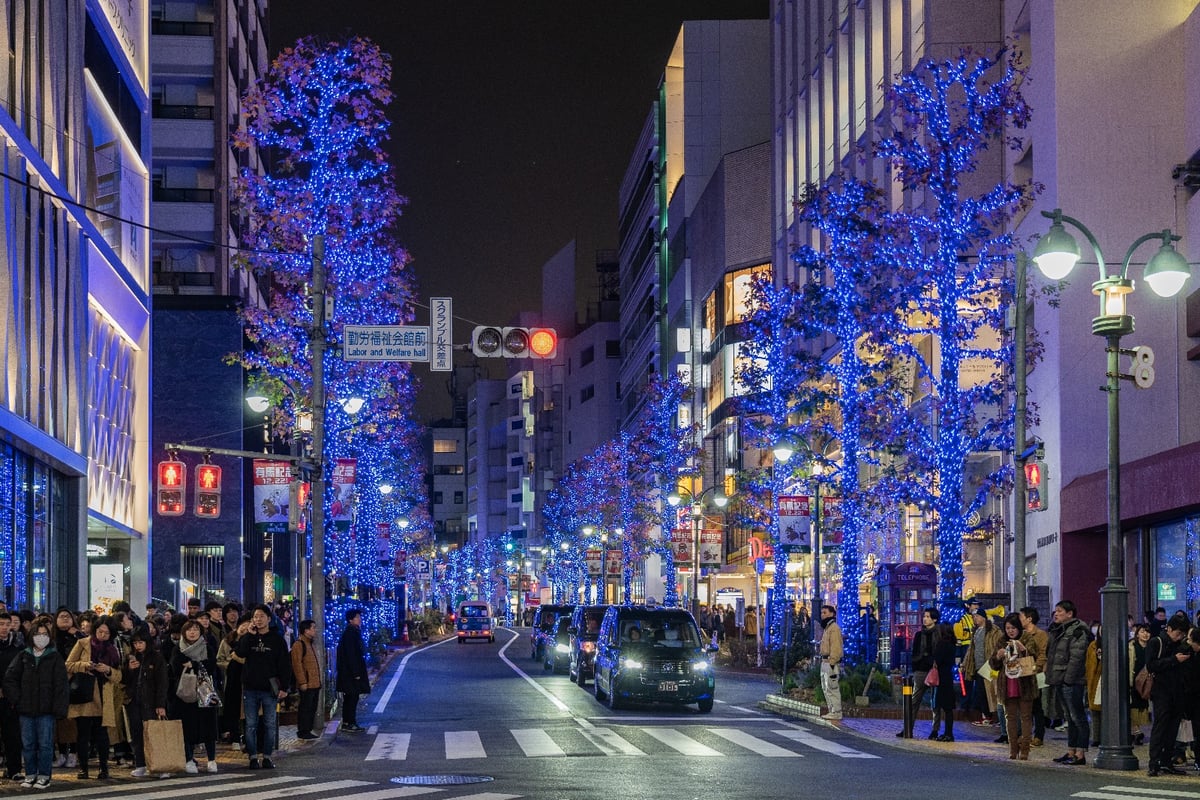
The Blue Cave in Shibuya, deep blue lights over a reflective path, for just over two weeks each December. Photo from a previous season. Photo: Wei-Te Wong, CC BY-SA 2.0, via Wikimedia Commons.
Two more worth knowing about
Tokyo Dome City lights up its whole complex from November 19, 2026 to February 28, 2027, 17:00 to midnight, free to view, and easy to pair with an evening at the Dome or the onsen spa next door. Nearest stations: Suidobashi and Korakuen.
Yebisu Garden Place, one stop from Shibuya at Ebisu, is the grown up choice: a giant Baccarat crystal chandelier under a canopy of warm lights, with restaurants all around for dinner afterwards. Its lights run into late February 2027.
If you have a spare day: Yomiuriland Jewellumination
The one paid display worth the trip out of central Tokyo. Yomiuriland's Jewellumination covers the whole amusement park in jewel coloured lights, and the 2026 to 2027 season runs from October 29, 2026 to April 4, 2027, the longest of all. It is ticketed, so book on the official site, and ride the gondola over the park after dark if you go. About 30 minutes from Shinjuku to Keio-Yomiuriland Station.
One perfect evening, in order
Start at Tokyo Station at 16:00, when Marunouchi switches on, and walk the full length of Naka-dori while the sky is still deep blue. Drift down to Hibiya for its lights and an early dinner. Then take the Hibiya Line from Hibiya to Roppongi (about 10 minutes), walk up Keyakizaka for the Tokyo Tower view, and finish in Tokyo Midtown's garden. Three districts, four displays, one train ride, and everything but dinner is free.
Practical notes
What it costs: every street display in this guide is free. Only Yomiuriland and extras like the Midtown ice rink charge.
Dress properly warm. Tokyo winter evenings sit only a few degrees above freezing, and illumination viewing means standing still outside. Gloves make a real difference.
Beat the crowds: Christmas week is the busiest time of the whole season, and weekends at the Blue Cave and Keyakizaka get packed. Weekday evenings are calmer everywhere.
Mind the end dates: Keyakizaka, Midtown's main display and the Blue Cave all finish around Christmas. If your trip is in January or February, build your evenings around Marunouchi, Hibiya, Tokyo Dome City, Yebisu and Midtown's Path of Light instead.
Planning the rest of your winter trip? Browse YoNihon's Tokyo experiences (https://yonihon.com/experiences/) for the daytime half of the day, and our guide to the best time to visit Japan (https://yonihon.com/travel-guide/best-time-to-visit-japan-a-month-by-month-travel-guide/) if you are still choosing your dates.
All dates and hours checked against organiser announcements and GO TOKYO on November 19, 2026. Organisers occasionally change hours for weather or events, so a quick check on the official page on the day is worth it.
Cover photo: Dick Thomas Johnson, CC BY 2.0, via Wikimedia Commons.
8 minutes · November 23, 2026