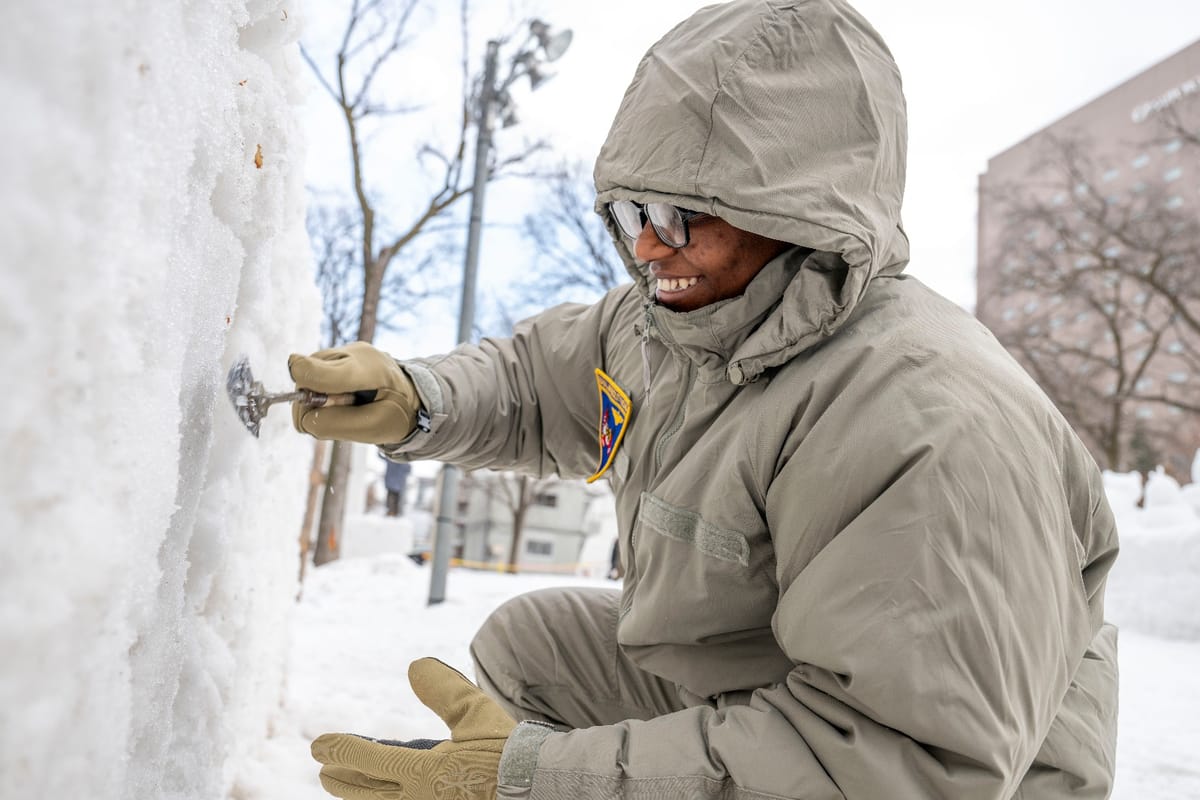
Winter is the season when Japan splits in two, and planning goes wrong when visitors expect one country and get the other.
Tokyo, Kyoto and Osaka in January are cold, dry and mostly sunny, with crisp blue days, bare trees and hardly any snow. Hokkaido, Tohoku and the mountains along the Sea of Japan coast, meanwhile, are some of the snowiest inhabited places on earth, buried under metres of the stuff. A winter trip can be either of these, or a bit of both, but they need different plans and different suitcases. This guide separates them: the snow country highlights first, then the festivals, then skiing, with real prices for a first day on the slopes.
The cities. Tokyo in midwinter averages daytime highs of about 9 to 10 degrees Celsius and lows just above freezing. Rain is rare, the air is clear (winter is the best season for seeing Mt Fuji from the city), and snow falls on a handful of days a year, if that. Kyoto and Osaka run a degree or two colder, and Kyoto's gardens in frost are beautiful, but you are packing for a cold European-style winter, not a ski trip. For what the cities do offer after dark, our Tokyo winter illuminations guide (https://yonihon.com/travel-guide/tokyo-winter-illuminations-2026-2027/) covers the lights season in detail.
The snow country. Cross the mountains to the Sea of Japan side, or fly north to Hokkaido, and the picture flips. Sapporo's January highs hover around freezing and the snow is measured in metres over a season. Mountain towns in Nagano and Niigata, Yuzawa, Hakuba, Nozawa Onsen, sit in the path of moist Siberian air that dumps powder on the Japan Alps. This is where the monkeys, the snow festivals and the skiing live, and it is reached from Tokyo in as little as 75 minutes by train.
The photographs are real: wild Japanese macaques soaking in a steaming outdoor bath, snow settling on their heads, in a forested valley in northern Nagano. Jigokudani Yaen-koen (the Snow Monkey Park) is not a zoo. The monkeys are a wild troop that comes down to the valley, and the bath was built for them. On cold days they pile in. On mild days they may prefer the trees, and the park is honest that bathing is never guaranteed.
Getting there takes a little effort, which keeps it feeling wild:
Prices change on 1 December 2026. Admission rises to ¥1,000 for adults and ¥500 for children (primary to high school age) at the gate. The park's dated web ticket is cheaper, ¥880 for adults and ¥440 for children, and from December to April web ticket holders are admitted ahead of the queue; on the busiest days, visitors without one may have to wait or miss out. Buy the web ticket for your date in advance. Under-sixes are free with an adult.
Winter hours are 9:00 to 16:00 (November to March), so plan to arrive in the morning. The coldest days, when the valley is well below freezing, are when the monkeys bathe longest. Weekends and the New Year stretch are the busiest times; a weekday in January or February is the sweet spot.
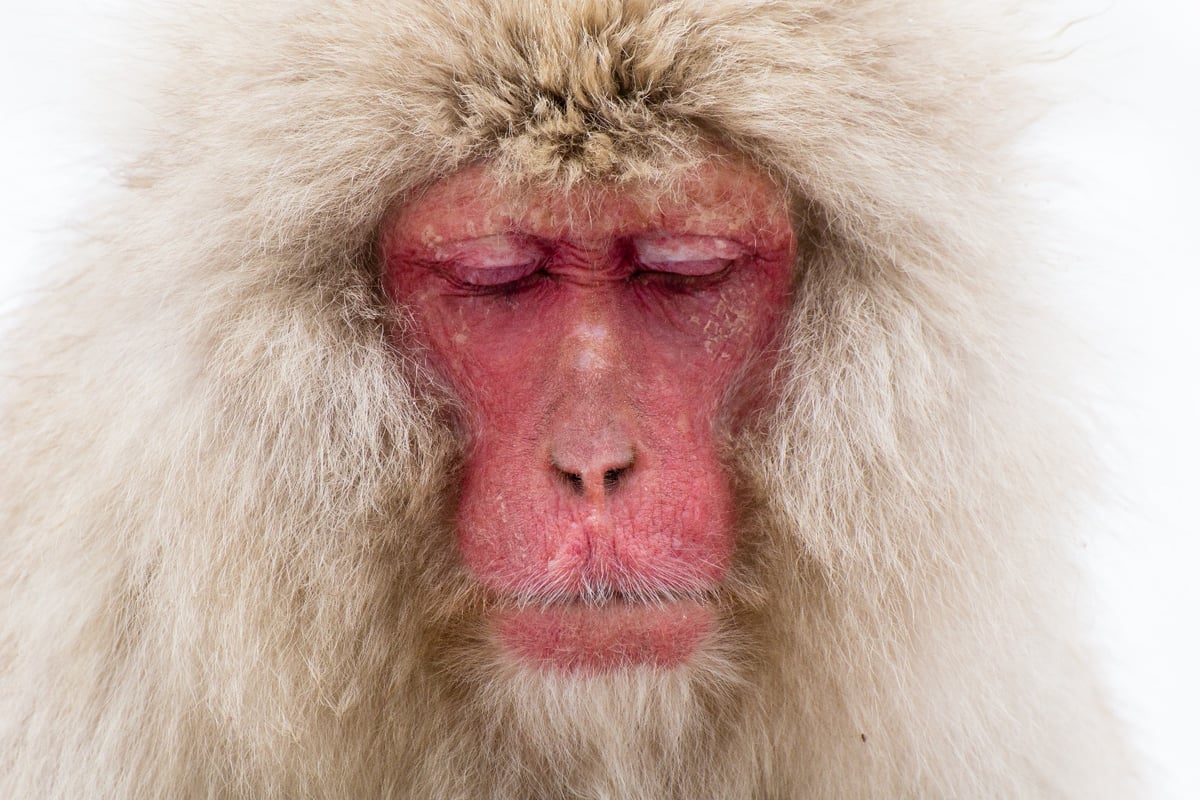
A snow monkey in the bath at Jigokudani Yaen-koen, Nagano. Photo: Daisuke tashiro, CC BY-SA 2.0
The biggest winter event in Japan, and the one to build a Hokkaido trip around. For eight days, from Thursday 4 to Thursday 11 February 2027, Sapporo fills Odori Park with snow sculptures the size of buildings, carves ice statues along the Susukino nightlife streets, and opens a family snow-play site at Tsudome. Entry to all three sites is free. It is the festival's 77th edition, and it draws around two million visitors, so the practical rule is simple: book Sapporo hotels and flights early, because the city fills up.
If you are there that week, the smaller Otaru Snow Light Path runs 6 to 13 February 2027 in the canal town of Otaru, about 40 minutes away by train, where snow lanterns and candles line the water after dark. The two pair up naturally.
The thatched farmhouses of Shirakawa-go, a World Heritage village in the Gifu mountains, lit from within on a snowy night: it is one of the most reproduced winter images in Japan, and one of the hardest to see in person. In 2027 the light-up runs on just four evenings, 11, 17, 24 and 31 January, from 17:30 to 19:30, and entry is strictly by advance reservation. There are no tickets on the day, and visitors without one are turned away at the gate.
The routes in are limited: a night in the village (rooms for light-up nights were allocated by lottery, with applications closing on 31 October 2026; any leftover rooms go on sale first come, first served from 26 November 2026), a reserved parking space if you are driving (the second sale opens 1 December 2026, at ¥7,000 per car for one to five people), or a light-up bus tour, for example from Takayama at roughly ¥13,000 to ¥16,000 per person. If none of those work out, the village in daytime snow needs no reservation at all and is still very much worth the trip.
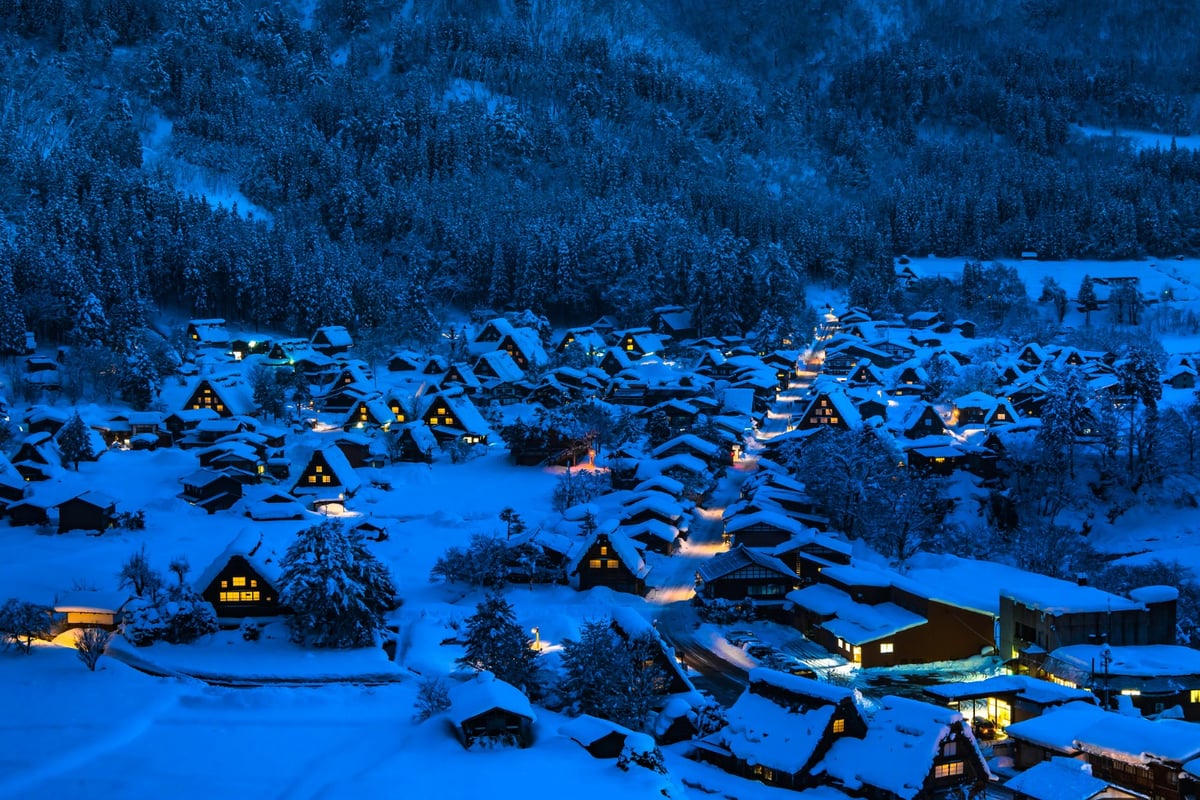
Shirakawa-go after dark in winter. The January light-up evenings are reservation only. Photo: Yoshiyuki Ito, CC BY-SA 3.0
Japan's powder is famous, but a first ski day here does not need a famous resort. It needs a gentle slope, rental gear that fits, and a train home. Here are the realistic options, from easiest to most committed.
GALA Yuzawa in Niigata is built for exactly this. Its own Shinkansen station sits inside the ski centre: the fastest trains from Tokyo take about 71 minutes, and you step off the platform into the rental hall. The 2026 to 2027 season runs from 19 December 2026 to 5 May 2027.
What a first day costs, at 2026 to 2027 prices:
Book a lesson if it is truly your first day. It costs extra, and it is the difference between a fun day and a bruising one. The beginner areas sit right above the gondola station, so nobody has to conquer the mountain to learn.
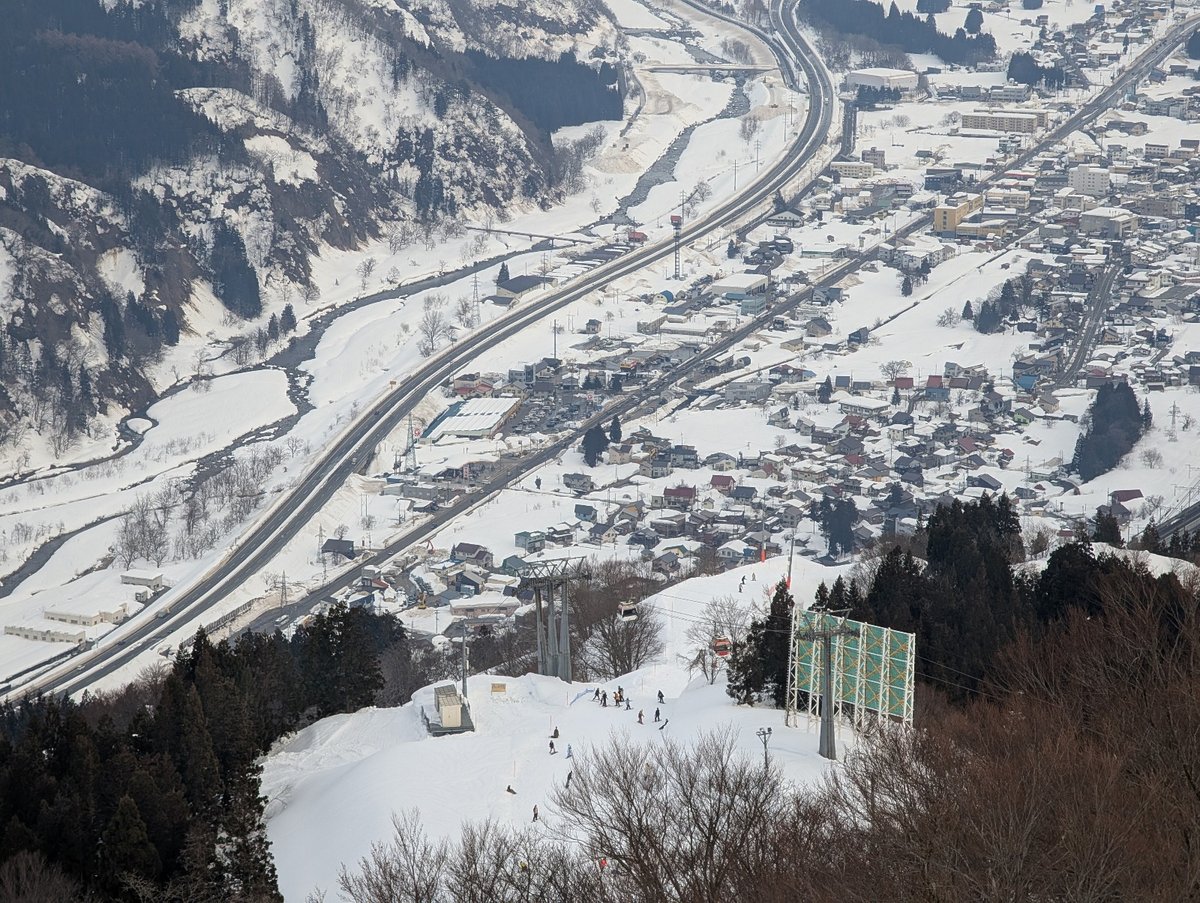
The slopes above Yuzawa, Niigata, a Shinkansen ride from Tokyo. Photo: Syced, CC0
Niseko, Hokkaido. Four linked ski areas under one All Mountain Pass, ¥12,600 for a day in regular season and ¥13,500 in the peak weeks (24 December to 28 February). The powder is the deepest and most reliable in the country, and the village at Hirafu runs in English. It is a destination, not a day trip: fly to New Chitose and allow around three hours by bus. Give it at least three or four days.
Hakuba, Nagano. Ten resorts in one valley, covered by a Hakuba Valley day pass at ¥11,100 (Happo-one, the biggest single area, is ¥9,800 on its own in peak season). About 70 minutes by bus from Nagano Station. Best for a mixed group, because beginners and strong skiers can each find their mountain.
Nozawa Onsen, Nagano. The gentlest landing of the three: a day pass at ¥7,800, a rental set at ¥5,800, and the slopes rising straight out of a hot spring village, reached by Shinkansen to Iiyama and a 25-minute bus. Ski all day, then walk the lanes between the village's free public bathhouses in the evening. If that combination appeals, our first onsen guide (https://yonihon.com/travel-guide/first-onsen-guide-rules-tattoos/) explains the bathing rules before you go.
For the cities: a proper winter coat, layers you can add and remove (Japanese trains and shops are heated fiercely), a hat and gloves for evenings, and ordinary shoes. You are dressing for cold, dry weather, not for snow.
For snow country and festivals: waterproof boots with tread, because festival ground is packed snow and ice; thermal base layers; a warm hat and gloves you can stand still in. Watching snow sculptures means standing outdoors for an hour or two at below freezing. Dress warmer than feels reasonable, and add slip-on ice grips if your boots are smooth-soled.
For skiing: rent the hardware and the outfit (skis or board, boots, helmet, jacket and trousers) at the resort. Bring or buy the personal layers: a thermal top and leggings, proper ski socks, gloves, and a neck warmer. Sunglasses are not a substitute for goggles on a snowy slope.
One last piece of timing advice. Winter is peak season in the snow country and low season in the cities, so a trip that pairs three or four Tokyo days with a few days in Nagano or Hokkaido gets you quiet museums at one end and deep snow at the other. For how winter fits the year as a whole, see our month-by-month guide to the best time to visit Japan (https://yonihon.com/travel-guide/best-time-to-visit-japan-a-month-by-month-travel-guide/).
8 minutes · November 23, 2026
9 minutes · November 23, 2026
13 min · November 21, 2026
