Almost everyone planning a first onsen visit has the same two worries. The first is doing something wrong while naked in front of strangers. The second, if you have a tattoo, is being turned away at the door.
Both worries are manageable. The bathing rules are a short, logical sequence that takes about two minutes to learn, and the tattoo picture in 2026 is more varied, and in a few famous towns far friendlier, than the old blanket warnings suggest. This guide walks through the sequence first, then gives you the tattoo situation exactly as it stands, town by town.
An onsen is a bath fed by natural hot spring water, heated underground and rich in minerals. Japan has thousands of them, from grand hotel bath halls to tiny wooden bathhouses in mountain villages. The water is the point: each spring has its own mineral mix, its own colour and smell, and its own local reputation.
A sento is different. That is a neighbourhood public bath filled with heated tap water, part of everyday city life rather than a trip out. The bathing manners are nearly identical, so everything below applies to both.
Baths are separated by sex, with a noren curtain at each entrance (usually blue for men, red for women, marked with the kanji 男 and 女). Mixed bathing exists but is rare and usually in remote outdoor baths. Children young enough to need a parent can usually go in with either parent; the age limit varies by prefecture.
You will see everyone around you doing exactly this, in this order. Once is enough to learn it.
Shoes off at the entrance. Step out of your shoes at the door, put them in a locker or on the shelves, and pad inside in socks or bare feet. Some bathhouses ask you to carry a locker key on a wristband.
Pay, then find the right curtain. Day baths charge at a counter or a ticket machine. Keep your wallet and phone in the changing room locker; both stay out of the bathing area, and photography is banned anywhere near the baths.
Undress completely. Everything comes off in the changing room, including swimwear, which is not worn in a standard onsen. You take in just one thing: a small hand towel, usually provided at hotels or sold or rented at day baths for a few hundred yen.
Wash before you get in. The bathing area has rows of shower stations, each with a low stool, a bucket, a mirror and taps. Sit down, and wash your whole body and hair properly with soap and shampoo. Rinse every trace of suds off. This is the rule that matters most: the big bath is for soaking, not washing, and everyone shares the water.
Tie up long hair. Hair stays out of the water. Bring a hair tie or a clip, or twist it up under your small towel.
Enter slowly. The water is hot, often 40 to 42 degrees Celsius, and some famous springs run hotter. Sit on the edge, ease in, and give yourself a minute. First soaks of ten to fifteen minutes are plenty; you can get out, cool off on the edge, and go back in.
Keep the towel out of the water. Your small towel never goes in the bath. Fold it on your head, Japanese style, or leave it on the side. No swimming, no diving, no dunking your head under.
Wipe down before you leave. When you are done, use the small towel to wipe most of the water off your body before you step back into the changing room, so the floor stays dry for everyone else.
Dry off and hydrate. Back at your locker, dry properly, dress, and drink something. Bathhouses famously stock vending machines with coffee milk and fruit milk for exactly this moment, and your hotel room's kettle does the same job.
That is the whole performance. Staff are used to foreign visitors, nobody is grading you, and a smile covers any small slip.
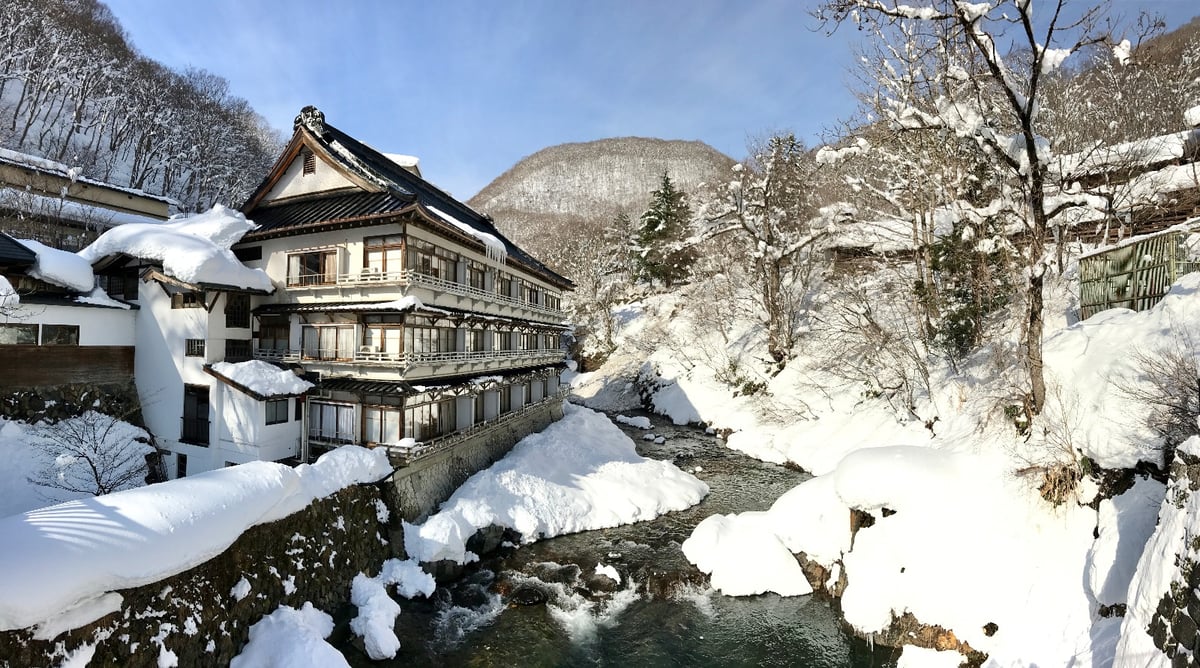
An outdoor rotenburo at Takaragawa Onsen, Gunma. Sitting outside in hot water is the part people remember. Photo: kallerna, CC BY-SA 3.0
Two towels. A big towel for drying off afterwards, which stays in the changing room, and the small one you carry in. Ryokan provide both in your room. At day baths, bring your own or rent a set.
The stool and bucket. Rinse the stool and bucket with hot water before and after you use them, and put them back neatly.
Strong water, short soaks. Very acidic or sulphurous water (Kusatsu is the famous example) is hard work in the best way. Short dips, a rinse afterwards, and stop if you feel dizzy.
Alcohol and bathing do not mix. A drink after the bath is a pleasure. A drink before it is a fainting risk, and visibly drunk bathers get refused.
After your soak, a rinse is optional. Many people leave the minerals on their skin. With strongly acidic water, rinsing off is the kinder option.
Here is the short version: there is no national law, and no single rule. Every bath decides for itself, and in 2026 the answers genuinely differ by place.
The background is worth knowing. Tattooing in Japan has a long association with yakuza organised crime, and bathhouses that served local neighbourhoods kept tattooed bathers out so that ordinary customers would not feel intimidated. That is the origin of the ban, and many facilities, especially big hotel chains and city super sento, still refuse tattoos in their shared baths today. If you assume a shared bath says no and check before you go, you will rarely be caught out.
But the picture has been shifting for a decade. The Japan Tourism Agency has encouraged flexibility since the mid 2010s, visitor numbers have done the rest, and some of Japan's best onsen towns now state their welcome in writing.
Kinosaki Onsen, Hyogo. The clearest answer in Japan. All seven of Kinosaki's public bathhouses (the soto-yu you stroll between in a yukata) accept tattoos of any size, with no covering required; the town's official visitor site says so plainly in its FAQ. One practical note: Satono-yu, the largest bathhouse, is closed for long-term renovation, so six of the seven are open. A one-day pass to all of them costs ¥1,500 for adults, and guests staying at Kinosaki ryokan get a free pass at check-in. The baths inside individual inns can have their own rules, so if your ryokan's own bath matters to you, ask when you book.
Kusatsu, Gunma. Kusatsu's three town baths, Otaki-no-yu, Goza-no-yu and the big open-air Sainokawara Rotenburo, each state in their official FAQs that people with tattoos are not refused entry or bathing. Entry is ¥1,200, ¥900 and ¥800 respectively, and a three-bath pass covering one visit to each costs ¥2,100. Private ryokan in Kusatsu still set their own rules; the welcome applies to the three town baths.
Beppu, Oita. Beppu, the huge hot spring city in Kyushu, takes a municipal approach: the city-run baths accept tattooed bathers, and the city's official tourism site tags tattoo-friendly facilities so you can check before you go. The historic Takegawara Onsen in the city centre charges just ¥300 for its main bath, with the famous sand bath (you are buried in warm sand) at ¥1,500 on top.
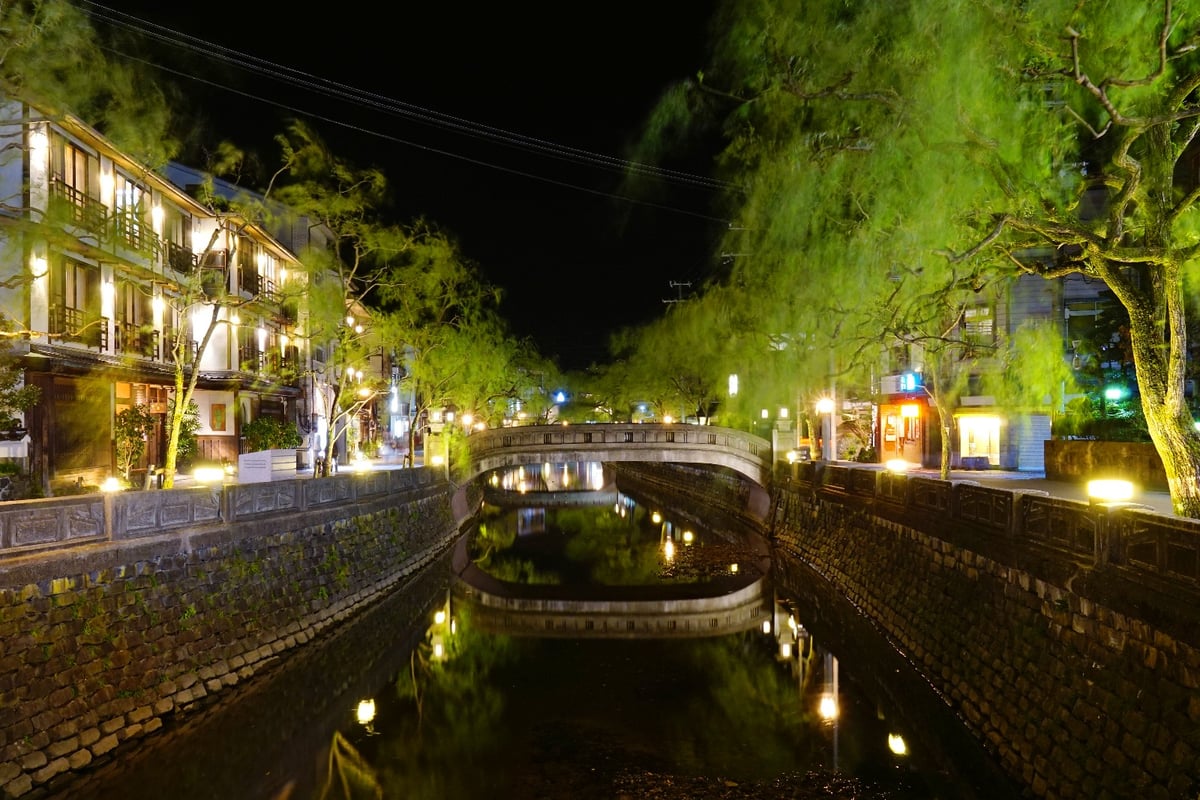
Kinosaki's canal street at the heart of town. All seven public bathhouses here welcome tattooed bathers. Photo: 663highland, CC BY 2.5
If the place you want refuses tattoos in its shared bath, or if you simply want the water to yourselves, a private bath ends the discussion. These are called kashikiri baths or kazoku-buro (family baths): a room with its own bath, rented by the hour, open to anyone who books it.
At day-use facilities, expect roughly ¥1,500 to ¥3,000 for 45 to 60 minutes, with smarter ryokan charging more. Beppu's Hyotan Onsen, for example, rents private baths from ¥2,400 for an hour. Private baths also solve two other common problems: couples who want to bathe together, and anyone who is simply nervous about the shared-bath choreography on a first visit. Book ahead at weekends, because the slots go.
Waterproof tattoo cover seals and patches exist, and some baths allow tattoos that are covered by one. They only help with small tattoos, and they only help where the facility's rule is "covered is fine". Some baths ban covers as well. Treat a seal as a backup for a small piece, check the facility's own wording first, and never rely on one at a bath whose rules you have not read.
Look for a tattoo policy on the facility's own website, in the FAQ or the bathing information page. Kinosaki, Kusatsu and Beppu all publish theirs.
If there is no written policy, email or ask your hotel to call. A polite enquiry gets a straight answer, and it is far better than a refusal at the desk.
If you are booking a ryokan mainly for its bath, confirm the bath rules at booking, not at check-in.
For an easy day trip from Tokyo: Hakone. Ninety minutes or so from Shinjuku, dozens of day-use baths, and plenty of private baths to rent by the hour. It is the gentlest possible introduction, and you can be back in Tokyo for dinner. Our day trips from Tokyo guide (https://yonihon.com/travel-guide/best-day-trips-from-tokyo/) covers how Hakone compares with Kamakura, Nikko and Yokohama as a day out. Hakone has also loosened on tattoos in the last couple of years: Hakone Yuryo, one of the best-known day baths near Hakone-Yumoto Station, lifted its tattoo restriction in April 2025, though its private rooms remain the surest bet for couples.
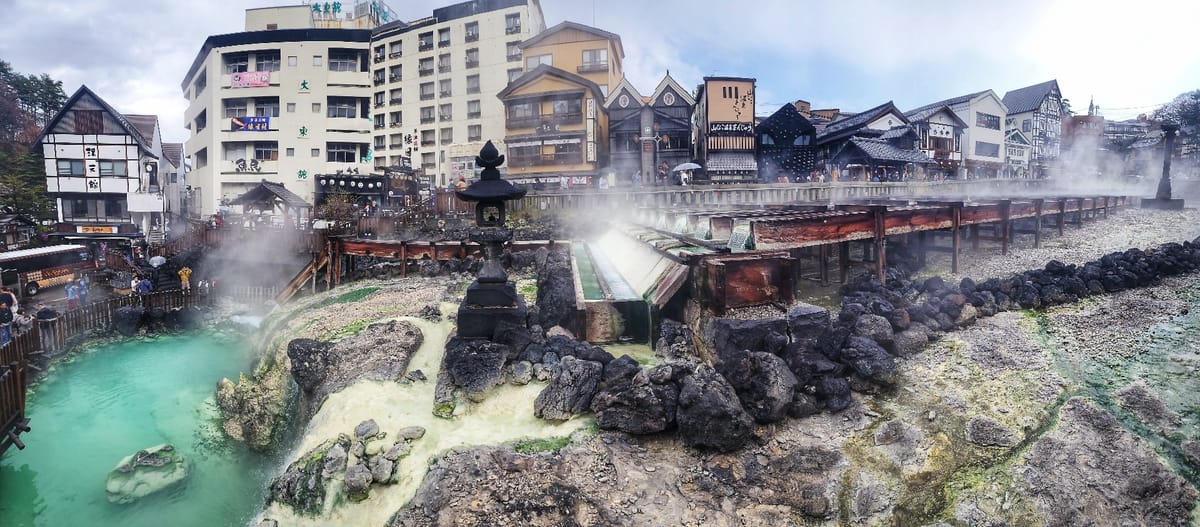
For the full old-Japan atmosphere: Kusatsu, as an overnight. The journey is longer (a direct bus from Shinjuku takes about four hours), which is exactly why it works better with a night in a ryokan. The Yubatake, the steaming hot-water field at the town's centre, glows after dark, the water is famously strong and acidic, and the three town baths give tattooed visitors a written welcome.
For tattooed travellers, and for the yukata stroll: Kinosaki, with a Kansai trip. Kinosaki is about two and a half hours by limited express train from Kyoto or Osaka, too far for a Tokyo day trip but perfect inside a Kansai itinerary. You stay in a small ryokan, change into a yukata and wooden geta sandals, and spend the evening walking the willow-lined canal between bathhouses. With all seven public baths open to tattoos, it is the least complicated onsen town in Japan for tattooed guests.
For sheer variety on a budget: Beppu, with a Kyushu trip. Eight hot spring areas in one steamy city, municipal baths from ¥200, sand baths, steam baths and mud baths, and a city government that publishes which baths welcome tattoos. If your trip already includes Kyushu, Beppu is the onsen stop to make.
Town and municipal public baths: ¥200 to ¥1,200 per bath, cash is safest.
A day pass: Kinosaki's pass to all its public baths is ¥1,500; Kusatsu's three-bath pass is ¥2,100.
A private bath: roughly ¥1,500 to ¥3,000 for 45 to 60 minutes at day facilities, more at upmarket ryokan.
Towels: free at ryokan; at day baths, bring your own or expect a few hundred yen to rent or buy a small towel.
However you do it, the pattern is the same: wash, soak, slow down. The rules exist to protect the shared water, and once you have done it once, the second visit takes no thought at all.
9 min · November 24, 2026
