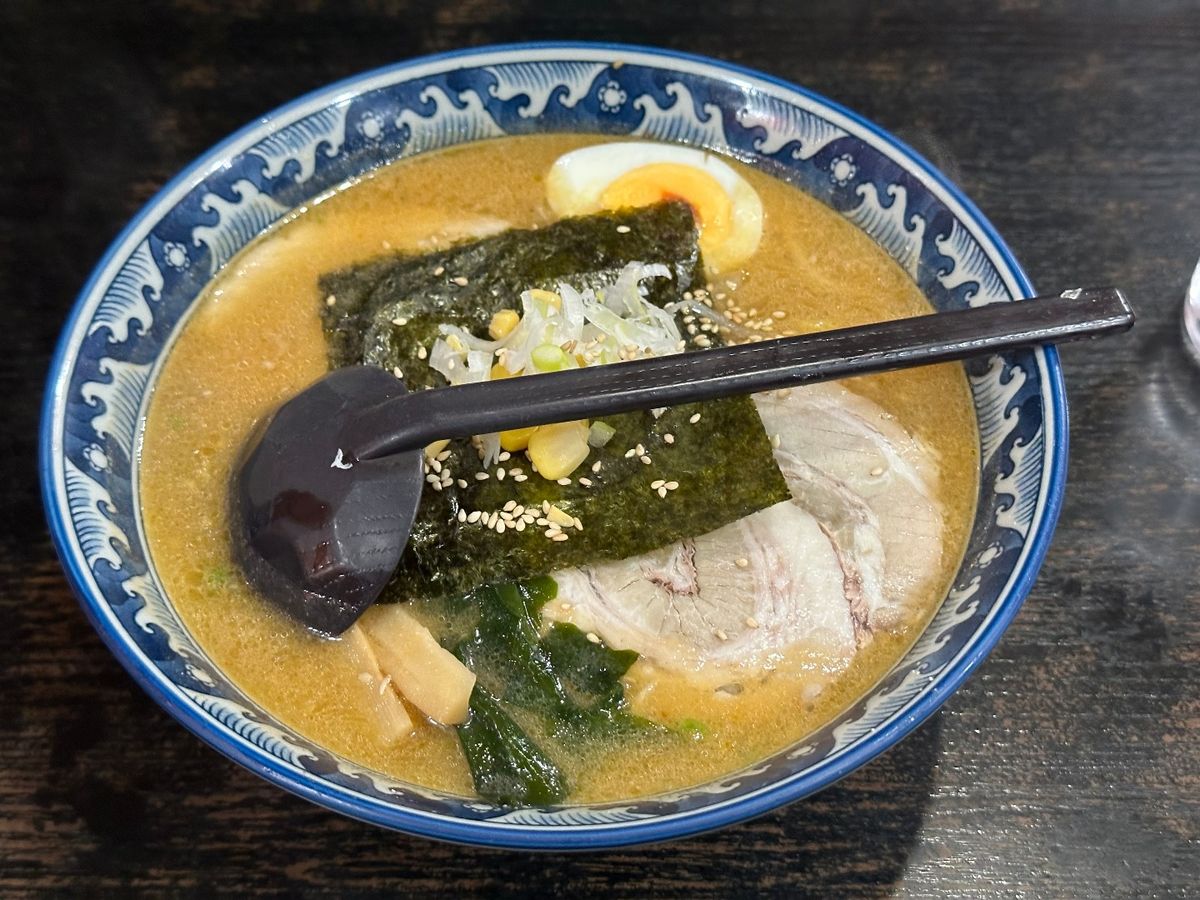
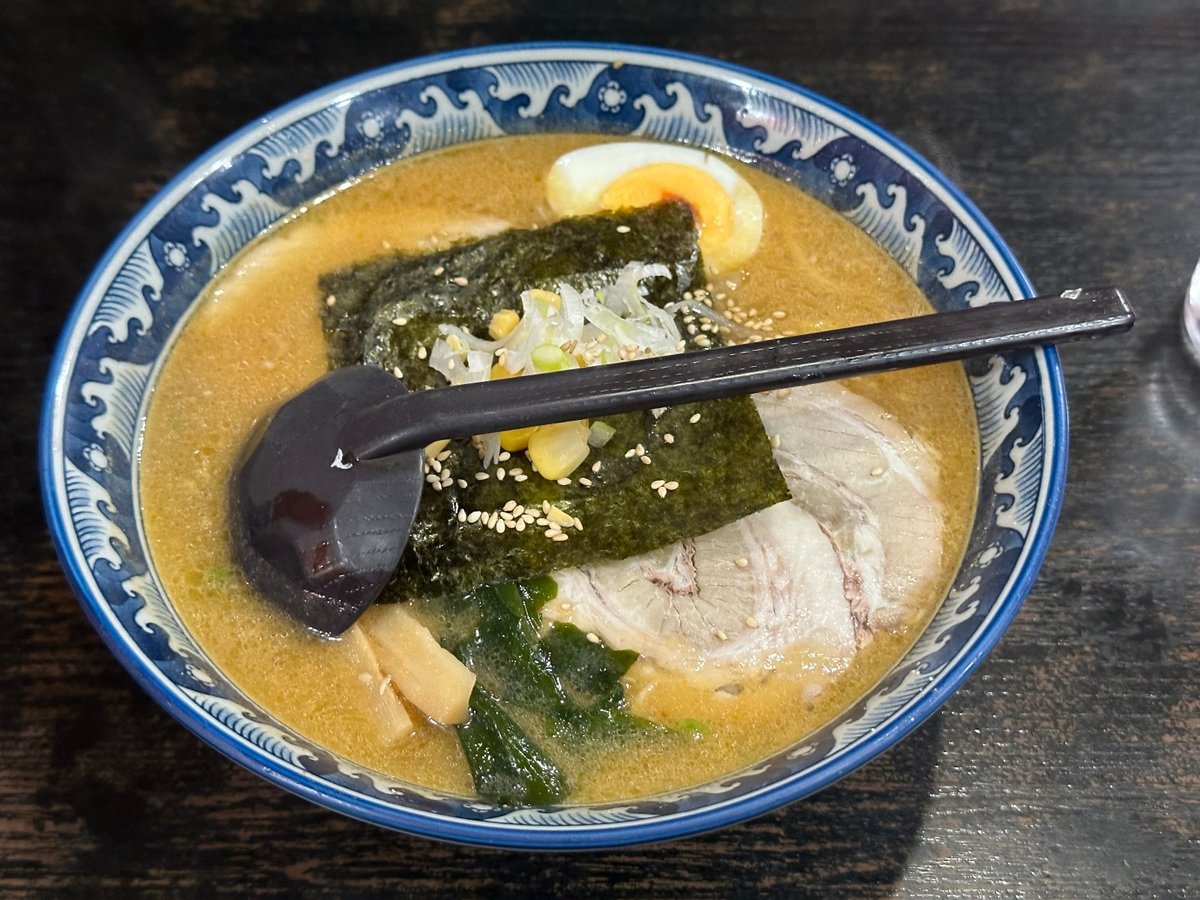
Miso ramen, Sapporo style: nori, chashu and egg on a deep, savoury bowl. Photo: ノボホショコロトソ, CC BY 4.0
Ramen looks simple from the pavement. A counter, a curtain, steam, a queue. Inside, though, the menu runs on a vocabulary nobody explains: four flavour names that are not quite four of the same thing, noodles you are expected to have an opinion about, and in many shops a vending machine between you and your lunch.
None of it is difficult once someone decodes it. This guide does that: what the four flavour names actually mean, the regional bowls worth a detour, what a bowl should cost in 2026, and the ticket machine routine, step by step. For the wider menu, start with our guide to what to eat in Japan https://yonihon.com/travel-guide/what-to-eat-in-japan/, which covers fifteen dishes by name. This page goes deep on just the one.
Every bowl of ramen is two decisions layered together. The first is the soup: a stock simmered from pork bones, chicken, seafood, vegetables, or some combination. The second is the tare, a small amount of concentrated seasoning in the bottom of the bowl that the soup is poured onto. The tare is what gives most ramen its name.
That is why three of the famous four are seasonings and the fourth is not:
Then come the noodles, thick or thin, straight or curly, each matched to its soup, and the toppings: chashu (sliced braised pork), menma (seasoned bamboo shoots), spring onion, nori seaweed and ajitama, the marinated soft egg with a jammy yolk. Learn those five names and you can read almost any ramen menu in Japan.
Sapporo is where miso ramen was created, at a shop called Aji no Sanpei, whose founder Morito Omiya developed the miso seasoned soup in the mid-1950s (Sapporo's own tourism sources give both 1955 and 1958). The noodle mattered as much as the soup: local maker Nishiyama Seimen built an aged, wavy, medium thick noodle to carry it.
A Sapporo bowl today is miso soup with bean sprouts and onion fried in a wok, often with minced pork, under a film of lard that keeps it hot in a Hokkaido winter. The corn and butter on top, which many visitors treat as the definition, arrived a decade later and plenty of good shops skip them. Going north in winter? Our guide to Japan in winter https://yonihon.com/travel-guide/japan-in-winter-snow-monkeys-ski-guide/ covers the Sapporo Snow Festival, the natural excuse for two bowls a day.
Kitakata, a small city in Fukushima with around a hundred ramen shops, eats ramen for breakfast. The custom is called asa-ra, morning ramen, and shops open early for it, a habit traced to shift workers and farm labourers.
The bowl itself is gentle: a clear soy sauce soup, usually from pork bones with niboshi (dried sardines), and a noodle unlike any other in Japan. Kitakata noodles are flat, broad and curly, made with extra water and aged before cooking, so they stay chewy in the soup. Order the chashu-men and it arrives roofed with pork. One of Japan's three great regional ramens, alongside Sapporo and Hakata, and the least known outside the country.
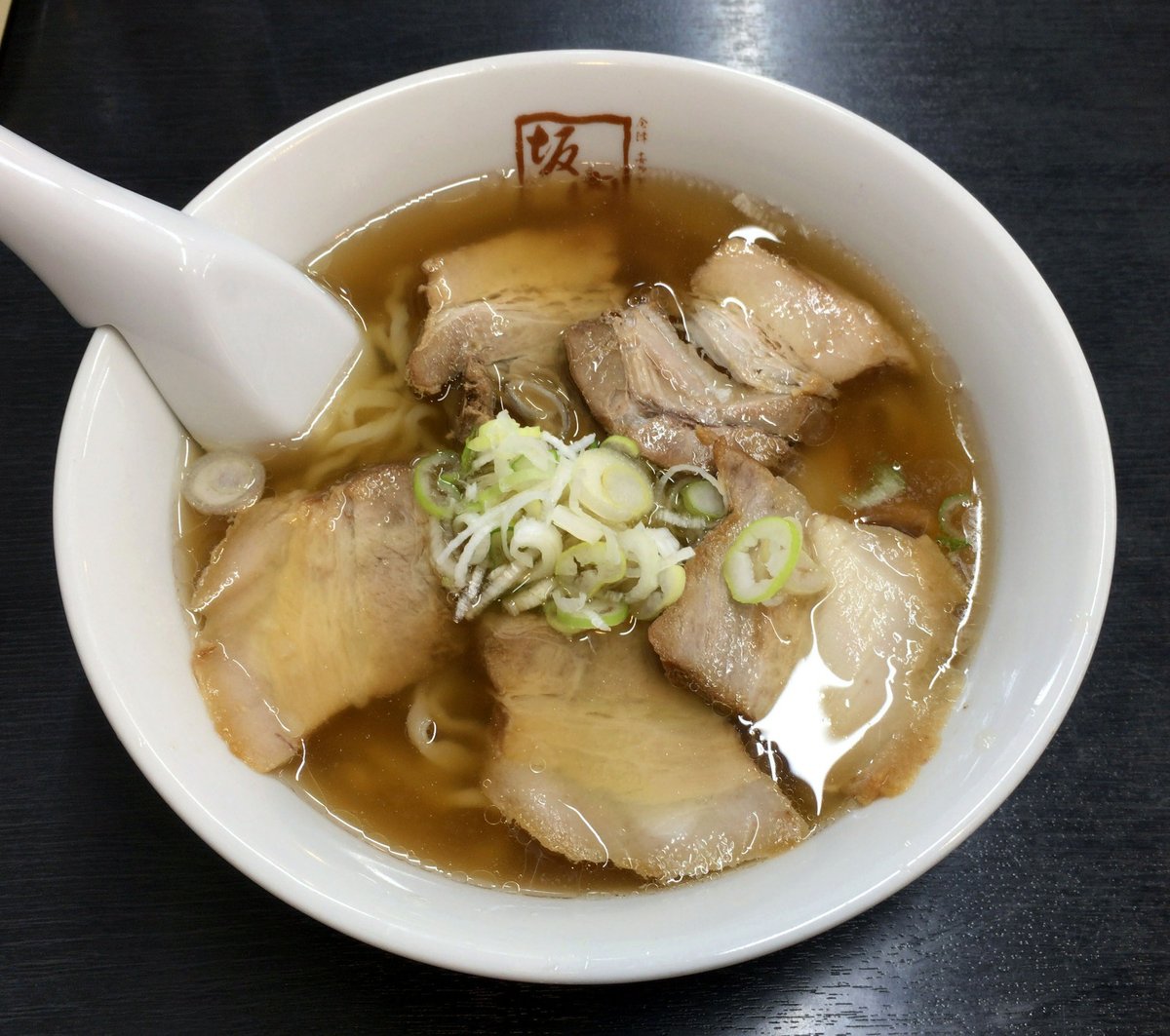
Kitakata ramen at Bannai: clear soy broth, flat curly noodles under the chashu. Photo: 毒島みるく, CC0
Tokyo ramen is the template the rest of the country reacted against. A clear, brown shoyu soup, typically chicken based and sometimes sharpened with dried sardine or bonito, poured over medium thin curly noodles. The classic toppings are chashu, menma, a sheet of nori standing at the rim, spring onion and, in older shops, a pink edged slice of narutomaki fish cake.
It is lighter than the styles that followed, which is the point: a weekday lunch, eaten at speed.
Fukuoka's Hakata ramen pairs that milky tonkotsu soup with extremely thin, straight noodles. The thinness changed everything around the bowl. Thin noodles cook in well under a minute and go soft quickly, so portions are kept small and the shop sells you kaedama instead: a second helping of noodles alone, dropped into the soup left in your bowl.
The system grew up around Nagahama, by Fukuoka's fish market, where port workers needed feeding fast, and it produced the firmness vocabulary below. Tonkotsu itself is older: Fukuoka City's tourism office credits Kurume, in the same prefecture, as its birthplace.
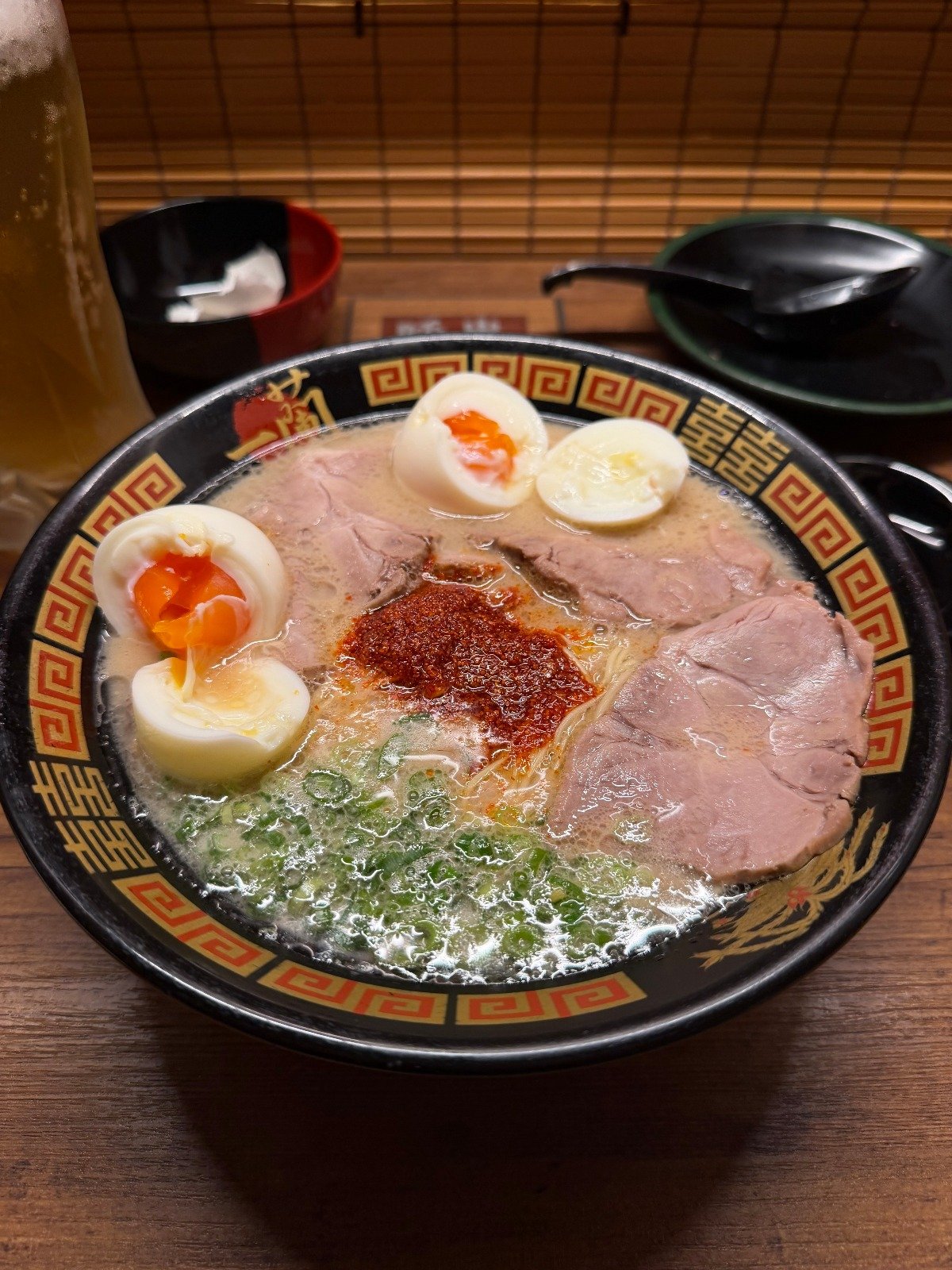
Tonkotsu at Ichiran, the Hakata chain: white pork bone broth, thin noodles, its signature red sauce in the middle. The eggs are an added topping. Photo: Gatorfan252525, CC BY-SA 4.0
One more, for the curious. Toyama Black, from Toyama City on the Sea of Japan coast, is a shoyu ramen so dark it is nearly black: soy sauce simmered down until it dominates the bowl. Created around 1947 at Nishicho Taiki, it was seasoned hard on purpose, because manual labourers rebuilding the city needed the salt, and designed to be eaten with white rice, almost as a side dish. Modern shops have eased the salt back, but with its coarse black pepper and thick noodles it is still the most assertive bowl on this list. Order the rice. That is the original design, not a suggestion.
Ramen is getting more expensive, and Japanese diners have a name for the pain point: the 1,000 yen wall, past which a standard bowl starts to feel like a luxury. The official Retail Price Survey put the national average for a bowl of chuka soba (its benchmark ramen) at ¥721 in November 2025, up from ¥601 five years earlier.
As a visitor in 2026, budget like this:
Price and quality are only loosely related here: some of Japan's best bowls come from eight seat shops at the bottom of these ranges.
Many ramen shops take your order at the door through a machine called a shokkenki: you pay before you sit down. It works like this:
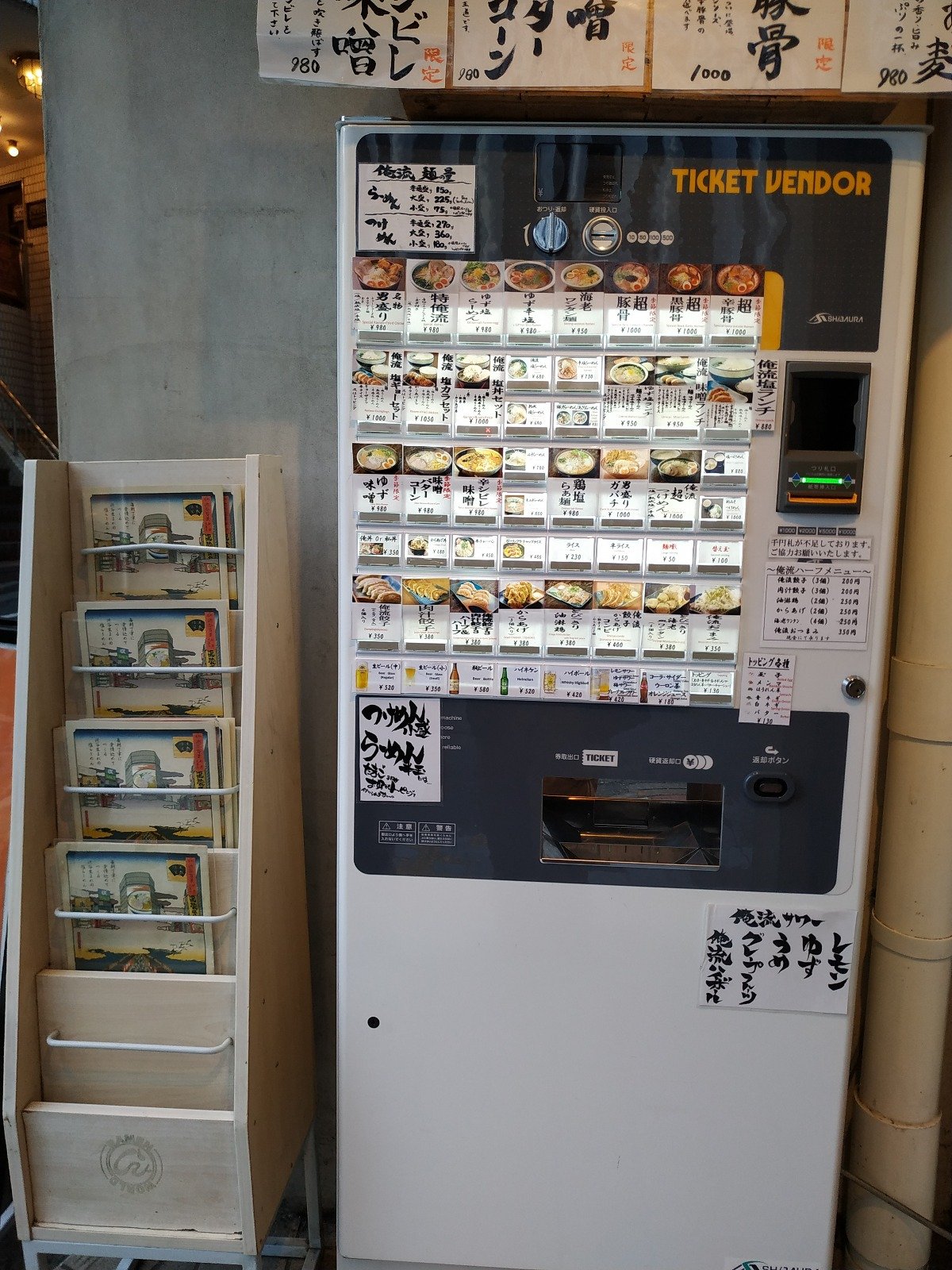
The shokkenki: photos and prices on every button, money in first, tickets out below. Photo: Nikos Roussos, CC BY-SA 2.0
A few shops take a paper order sheet instead. Ichiran is the famous case: buy the basic ticket at the door, then circle your choices at your seat, covering soup strength, richness, garlic, spring onion, chashu, the red sauce and noodle firmness. The sheet comes in English. No strong views? Circle the middle option on every line for the house standard.
At many shops, and at every Hakata style shop, you choose how long your noodles are boiled. The words, from softest to firmest:
Thin Hakata noodles keep cooking in the bowl, which is why locals order a step firmer than they want. With thicker noodles, Sapporo or Kitakata style, firmness is rarely offered and the standard is the right answer.
Toppings are added at the machine or when you hand over your ticket: ajitama, the marinated egg; chashu, extra pork; nori; negi, extra spring onion; moyashi, bean sprouts. Most shops also keep flavour changers on the counter: ground sesame, pickled ginger (beni shōga, the red shreds that belong in tonkotsu), crushed garlic, chilli oil. Add them halfway through, not at the start, so you taste the bowl as the shop made it first.
Kaedama deserves its own warning: decide early. The refill only works while you still have soup, so order when the noodles are half gone, handing over the ticket bought at the door or, at shops without machines, calling out kaedama onegaishimasu. Finish the noodles and half the soup first, and you get hot water with noodles in it, served with sympathy.
Ramen etiquette lists online mix real custom with invention. The ones that hold up:
With tens of thousands of shops, these are the signals that separate the good ones:
Specialisation. The best shops do one style and do it for years. A menu offering tonkotsu, miso, shio, shoyu, tsukemen and tantanmen under one roof is designed for nobody in particular.
A queue of locals at lunch. Not the famous shop with a two hour line of cameras, but the twelve seat counter near a station with office workers waiting at 12:15 on a Tuesday. That queue is a review written in people.
Tabelog, read correctly. Japan's dominant restaurant site scores out of five on a compressed scale: most shops sit between 3.0 and 3.5, and anything at 3.5 or above is genuinely strong. Google ratings run more generous, so a Tabelog 3.6 usually means more than a Google 4.4.
Go where the style lives. Miso in Sapporo, tonkotsu in Fukuoka, the flat noodle bowl in Kitakata if the trip allows. Tokyo serves all of them well, but the hometown versions set the standard. For more neighbourhoods where eating is the sightseeing, see our guide to Tokyo's yokocho alleys and shotengai streets https://yonihon.com/travel-guide/tokyo-yokocho-and-shotengai-guide/.