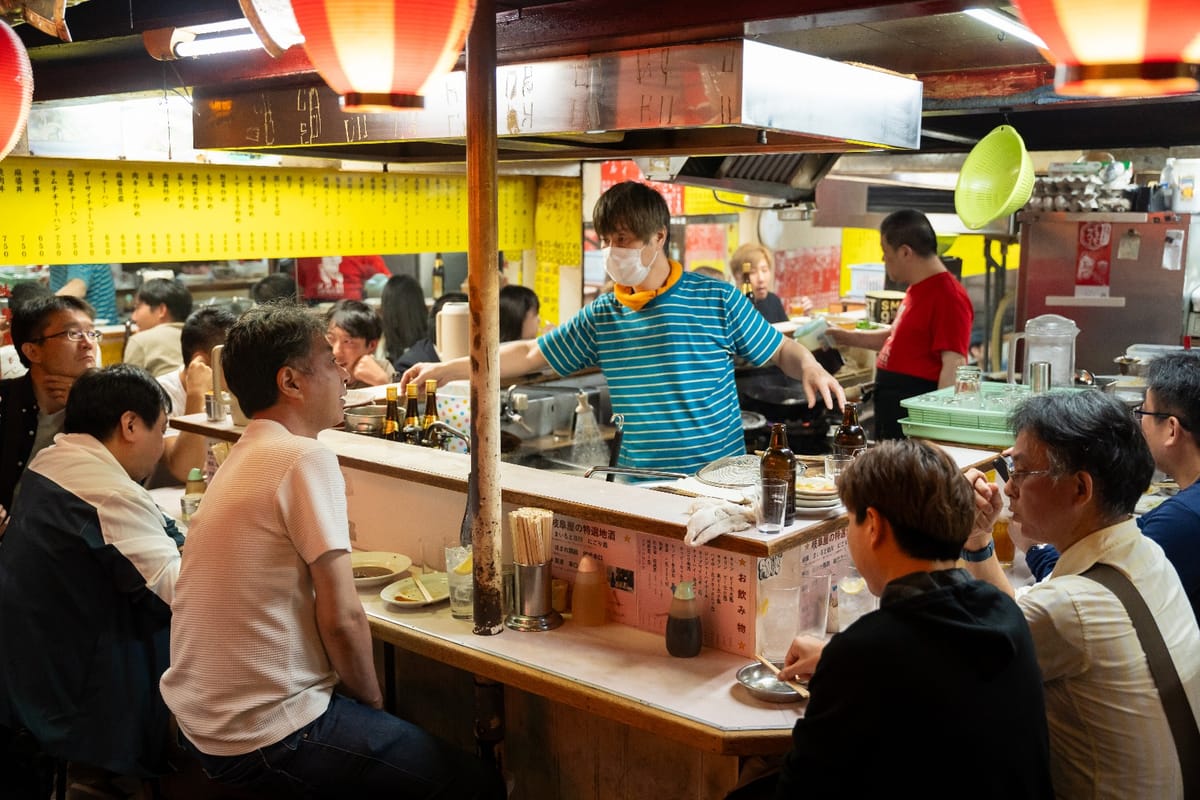
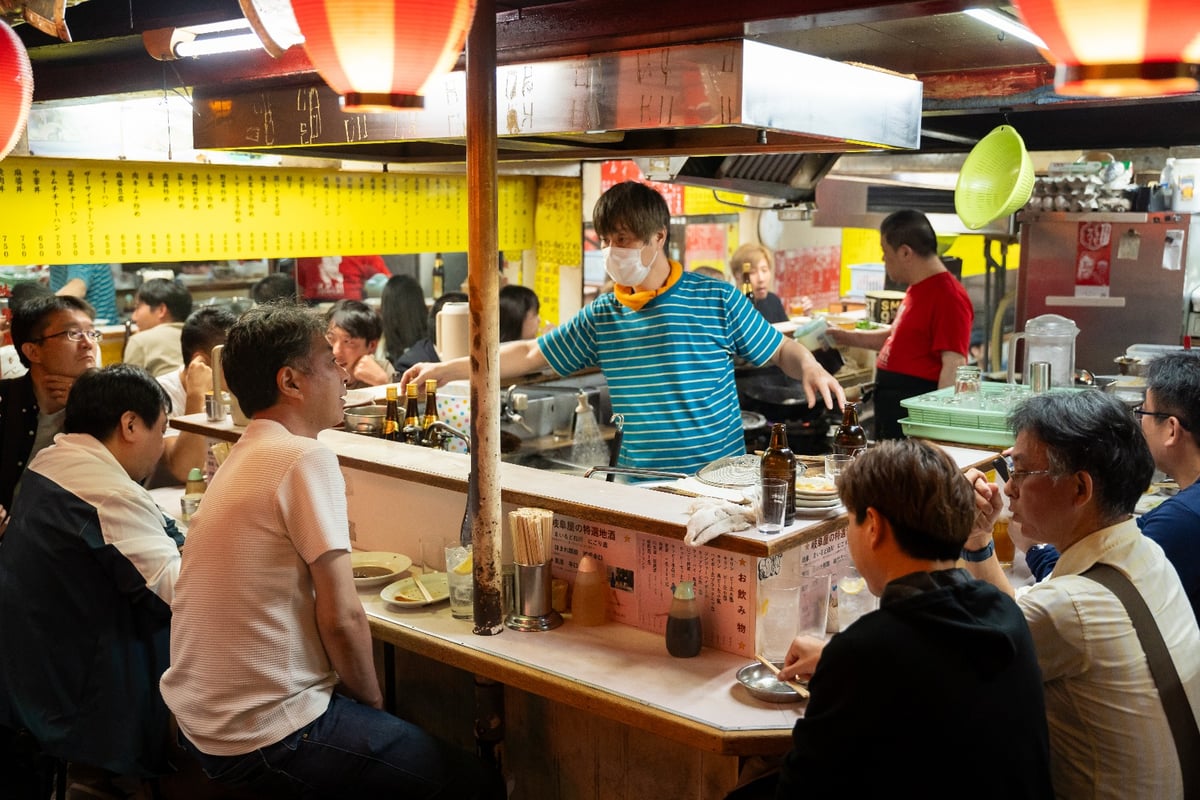
Omoide Yokocho in Shinjuku, where most counters seat five or six people and the grill smoke does the advertising. Photo: Dick Thomas Johnson, CC BY 2.0
You have done the famous Tokyo. The crossing, the tower, the shrine with the tour groups. What is left is the Tokyo that feeds and waters its own neighbourhoods, and it comes in two forms.
The first is the yokocho, a narrow alley of tiny bars and grill counters, most of them seating fewer people than a family car. The second is the shotengai, a shopping street of independent butchers, tea shops, croquette counters and clothing rails that serves the streets around it. One is for the evening, the other for the afternoon. Both grew out of the same post-war scramble, when open-air markets sprang up on bombed land and around stations, and both reward the same approach: go slowly, go in small numbers, and bring cash.
This guide covers four yokocho and three shotengai that are easy to reach and genuinely different from each other, with the practical detail that decides whether a visit works: what it costs, when to turn up, and the small rules that keep the regulars on your side.
The drinking alleys: yokocho
A yokocho is not a food hall. Each shop is its own business, often one cook, one grill and a counter, and each keeps its own hours and its own day off. There is no booking system and no shared seating. You walk the lane, look for a gap at a counter, and sit down. Most places open from around five in the evening, and the good seats on a Friday are gone by seven.
Omoide Yokocho, Shinjuku
Two minutes from the west exit of Shinjuku Station, a green sign and a line of red lanterns mark a knot of lanes that grew from a post-war market. Around 60 bars and eateries are packed into them, most specialising in yakitori (grilled chicken skewers) or motsu-yaki (grilled offal), cooked over charcoal a metre from your elbows.
Order skewers a few at a time rather than all at once, because they are best straight off the grill. At the older counters a single skewer can cost under ¥200, and ¥2,000 to ¥3,000 per person covers a beer and a good run of skewers at most places. Some shops add an otoshi, a small seating charge of a few hundred yen that arrives with a little dish of something. It is standard practice, not a trick.
Two local rules matter here. Smoking is not allowed in the lanes themselves, and the shopping district asks anyone planning filming or a photo shoot to get permission first. Ordinary snapshots are fine, but be discreet about it.
Nearest station: Shinjuku (JR, Odakyu, Keio, Tokyo Metro Marunouchi Line), west exit, 2 minutes on foot.
Best time: 17:00 to 19:00, before the after-work crowd fills the counters.
Nonbei Yokocho, Shibuya
Nonbei means drunkard, and Nonbei Yokocho is two short lanes of wooden two-storey bars running beside the JR tracks, about five minutes on foot from Shibuya Station and a world away from the crossing. GO TOKYO counts 39 bars and eateries here, many serving home-style cooking alongside the usual skewers and sashimi.
It is smaller and quieter than Omoide Yokocho, and the etiquette is stricter for a simple reason: there is no room. Go as a pair, not a group. Order, eat and drink at a reasonable pace, because someone is probably waiting for your seat. The local association also asks people not to visit purely to take photographs, so treat it as a place to drink that happens to look wonderful, not the other way round.
Nearest station: Shibuya (JR and several subway lines), about 5 minutes on foot along the tracks towards Miyashita Park.
Best time: early evening on a weekday, when you stand a chance of a seat without a wait.
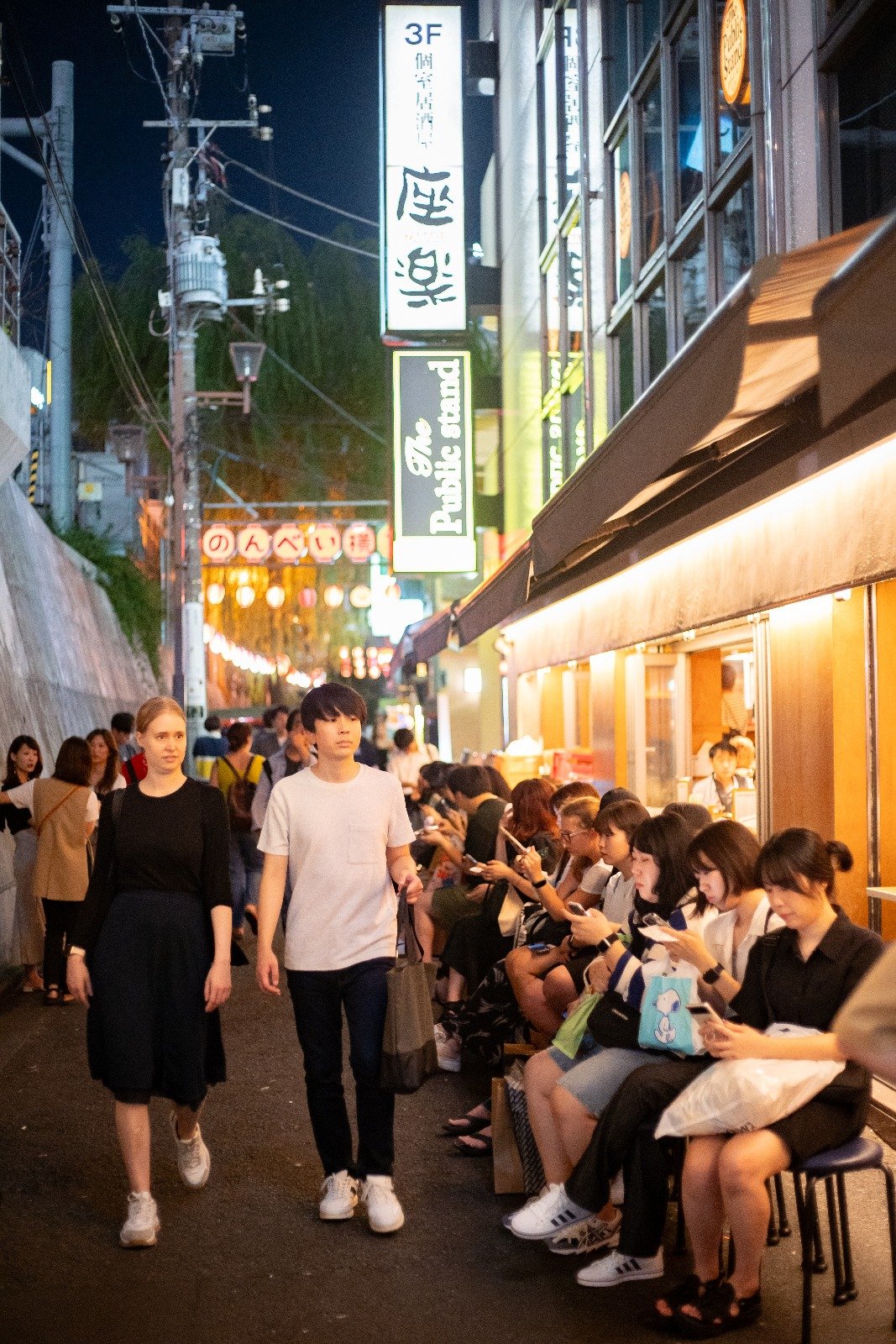
Nonbei Yokocho in Shibuya, two lanes of small bars beside the railway tracks. Photo: Dick Thomas Johnson, CC BY 2.0
Harmonica Yokocho, Kichijoji
Kichijoji sits about 15 minutes west of Shinjuku on the JR Chuo Line, and Harmonica Yokocho begins directly outside the north exit of the station. The name comes from the rows of narrow shopfronts, said to look like the reed slots of a harmonica. More than 100 small shops fill a maze of lanes that began as a post-war flea market.
Harmonica breaks the yokocho pattern in one useful way: parts of it wake up at lunchtime. Alongside the standing bars and yakitori counters you will find Vietnamese pho, Chinese soup dumplings, sushi, ramen and a well-known taiyaki stand (fish-shaped cakes with a sweet filling), plus grocers and clothes shops that serve the neighbourhood during the day. Come for a late lunch, wander, then come back after dark when the standing bars fill up.
Nearest station: Kichijoji (JR Chuo and Sobu lines, Keio Inokashira Line), north exit, about 1 minute on foot.
Best time: late afternoon into evening, so you see both the market and the bars.
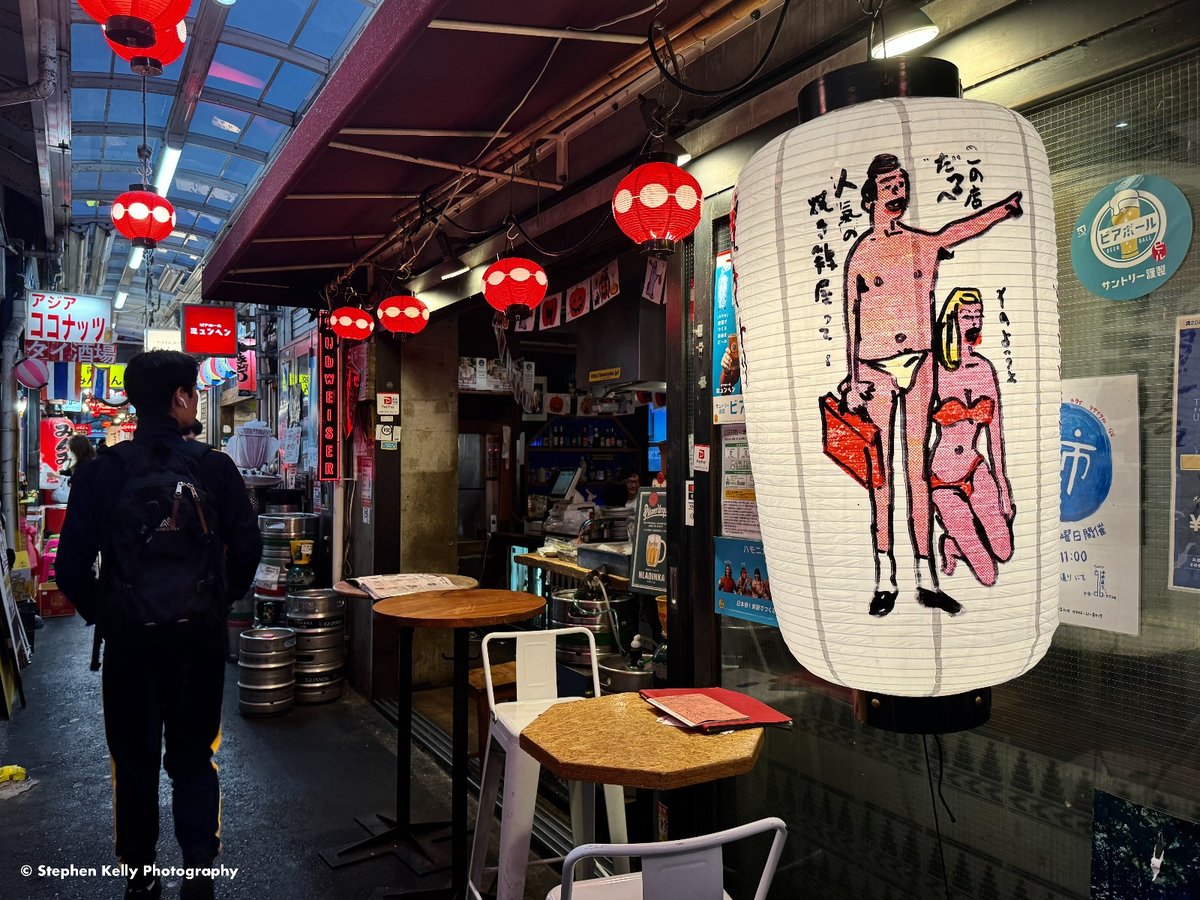
Inside Harmonica Yokocho in Kichijoji, where market stalls and standing bars share the same lanes. Photo: Stephen Kelly, CC BY 2.0
Ameya-Yokocho (Ameyoko), Ueno
Ameyoko is the bridge between the two halves of this guide: a market street with a drinking habit. Roughly 400 shops run for about 500 metres between Ueno and Okachimachi stations, underneath and beside the elevated JR tracks. The name is argued over. It may come from ame, the sweets once sold here, or from the American goods that passed through its post-war black market.
By day it is a working market: fishmongers shouting prices, fruit stalls, dried goods, trainers, cosmetics and luggage at prices below the department stores across the road. Tucked between the shops are open-front counters where you can stand with a beer and a plate of sashimi in the middle of the afternoon. Most shops open around 10:00 and wind down by 19:00 or 20:00, and weekends get very crowded. The busiest days of the year are at the end of December, when half the city seems to be buying food for New Year.
At some stalls, a polite question about the price of several items together can still shave a little off the total. Ask once, with a smile, and accept the answer either way.
Nearest station: Ueno or Okachimachi (JR Yamanote and Keihin-Tohoku lines), a few minutes on foot.
Best time: a weekday late morning, before the weekend crowds.
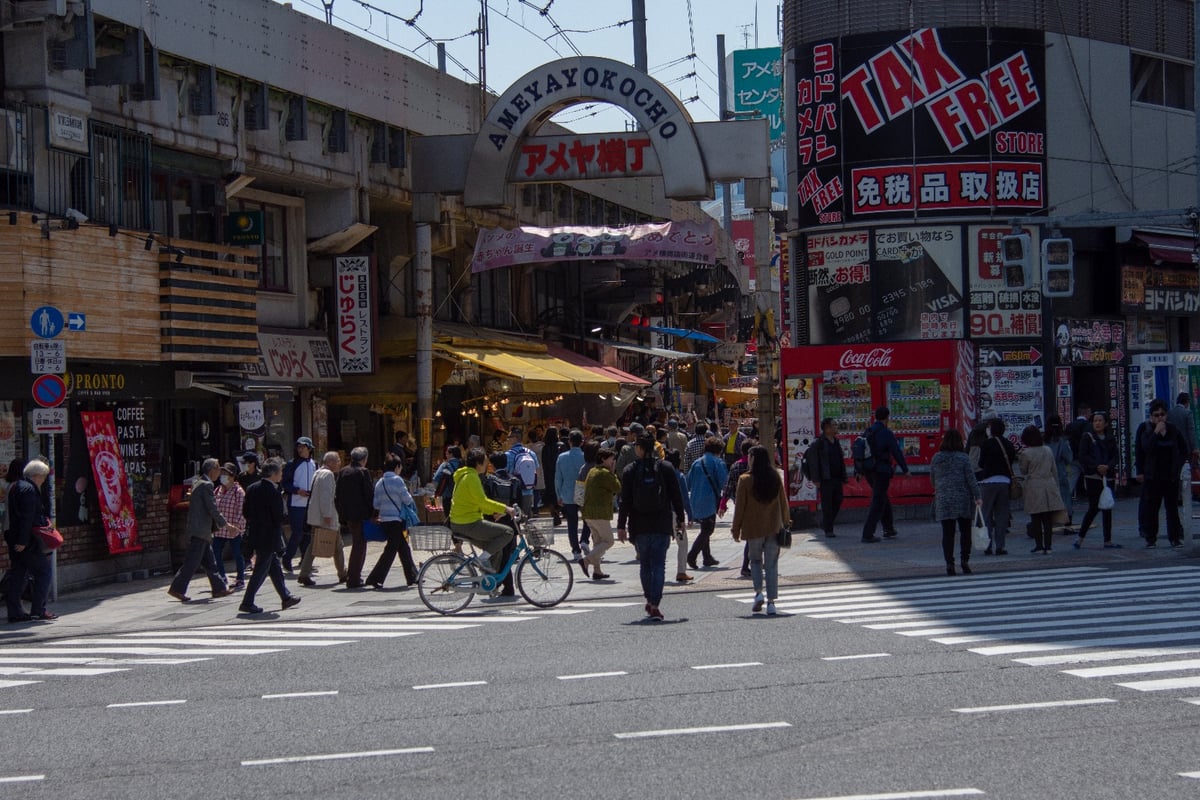
The Ameyoko entrance in Ueno. Behind the sign, about 400 shops run along the tracks towards Okachimachi. Photo: AugustGresh, CC BY-SA 4.0
The shopping streets: shotengai
A shotengai exists to serve the people who live around it, which is exactly why it is worth your afternoon. The shops are small, independent and specialised: one sells only tea, one only fried food, one has repaired shoes for forty years. Several Tokyo shotengai carry the name Ginza, a hopeful borrowing from the famous district. Local legend at Togoshi says the name arrived with paving bricks reused from the real Ginza in the Taisho era (1912 to 1926).
Yanaka Ginza, Yanaka
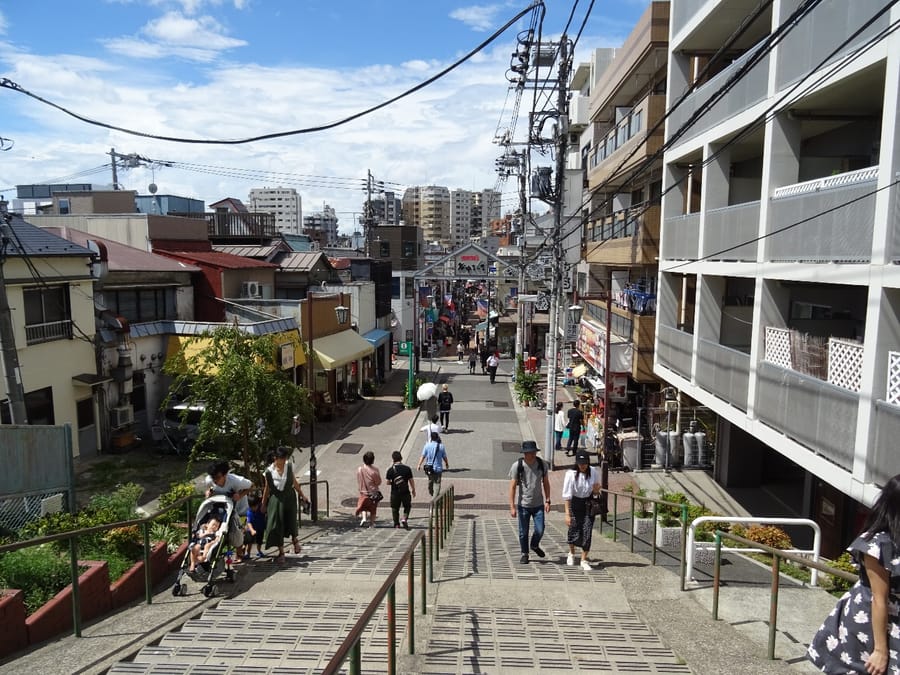
Yanaka Ginza is the shortest street in this guide and the easiest to love. Around 60 shops line about 170 metres in Yanaka, an old temple district that kept its low skyline. You arrive down the Yuyake Dandan steps from the Nippori side. The name means something like sunset steps, and the view down the street at the end of the day explains it.
The shopping here is grazing. Two butchers compete over menchi katsu, a deep-fried patty of minced meat and onion, sold hot for a couple of hundred yen and eaten standing outside the shop. There are sweet shops, a sake shop, tea merchants, bamboo craft and seven carved wooden cats hidden on roofs and signs for children to spot. Most shops open around 10:00 or 11:00 and close by 18:00 or 19:00, each on its own schedule, and several food shops close on Mondays.
Pair it with the rest of Yanesen, the combined Yanaka, Nezu and Sendagi neighbourhoods. Nezu Shrine, with its vermilion gates, is a gentle 15 minute walk from the far end of the street.
Nearest station: Nippori (JR and Keisei lines) or Sendagi (Tokyo Metro Chiyoda Line), each about 5 minutes on foot.
Best time: late morning to mid afternoon, and sunset at the steps if your timing works.
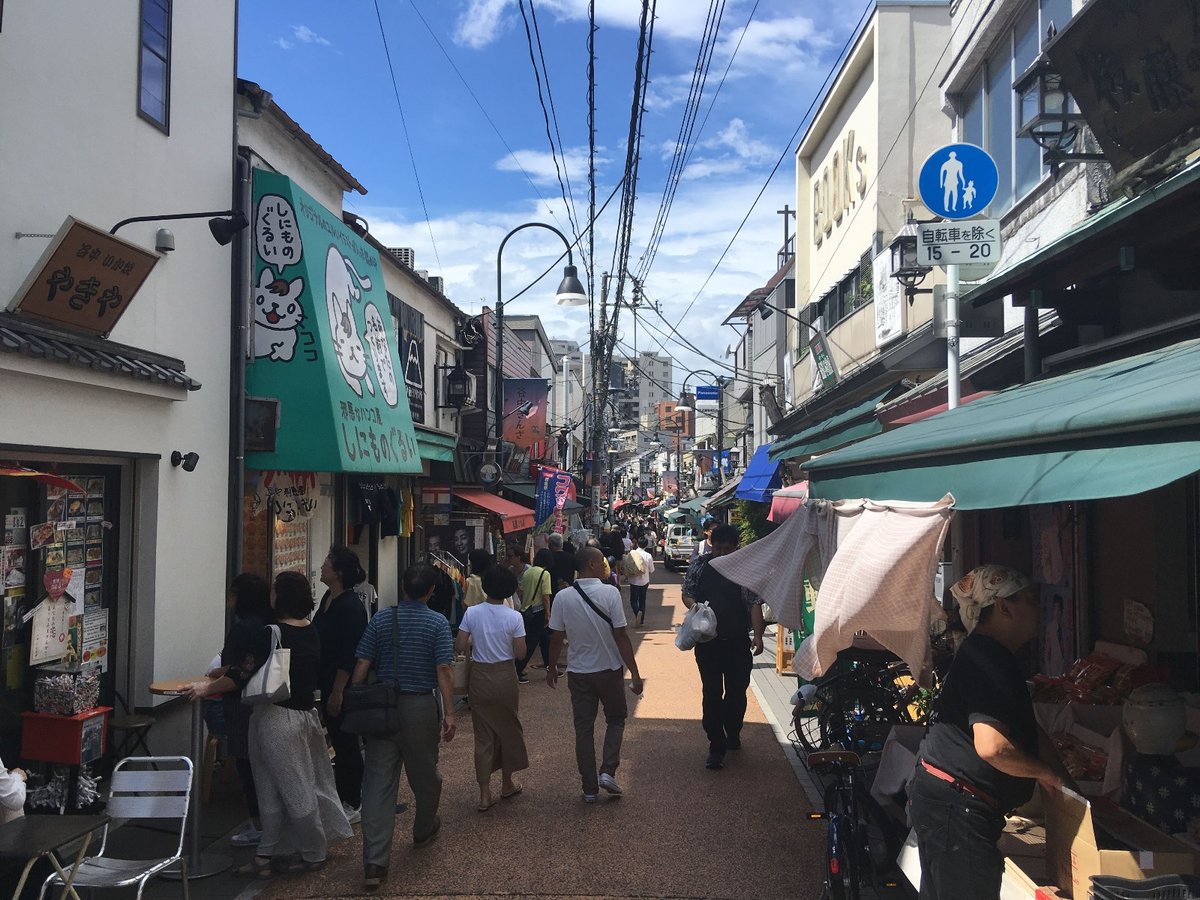
Yanaka Ginza, about 60 shops along 170 metres, most of them small family businesses. Photo: Christophe95, CC BY-SA 4.0
Togoshi Ginza, Shinagawa
If Yanaka Ginza is a snack, Togoshi Ginza is a full meal. At 1.3 kilometres it is the longest shotengai in Tokyo, with more than 400 businesses spread along a straight, open street in Shinagawa ward. It grew up around Togoshi-Ginza Station, which opened in 1927, and it still does the daily shopping for the neighbourhood: fish, meat, vegetables, bakeries, pharmacies and hardware, mixed with newer cafes.
The street has a signature food and a game to go with it. Around 20 shops sell korokke (croquettes), often for little more than ¥100 each, in varieties that run from plain potato to gyoza and oden versions. Pick up a street map at the station and graze your way along. The street closes to cars for three hours each afternoon, which is the best time to walk it, food in hand.
Nearest station: Togoshi-Ginza (Tokyu Ikegami Line, two stops from Gotanda), or Togoshi (Toei Asakusa Line). The street starts at the station.
Best time: the car-free afternoon hours.
Jujo Ginza, Kita
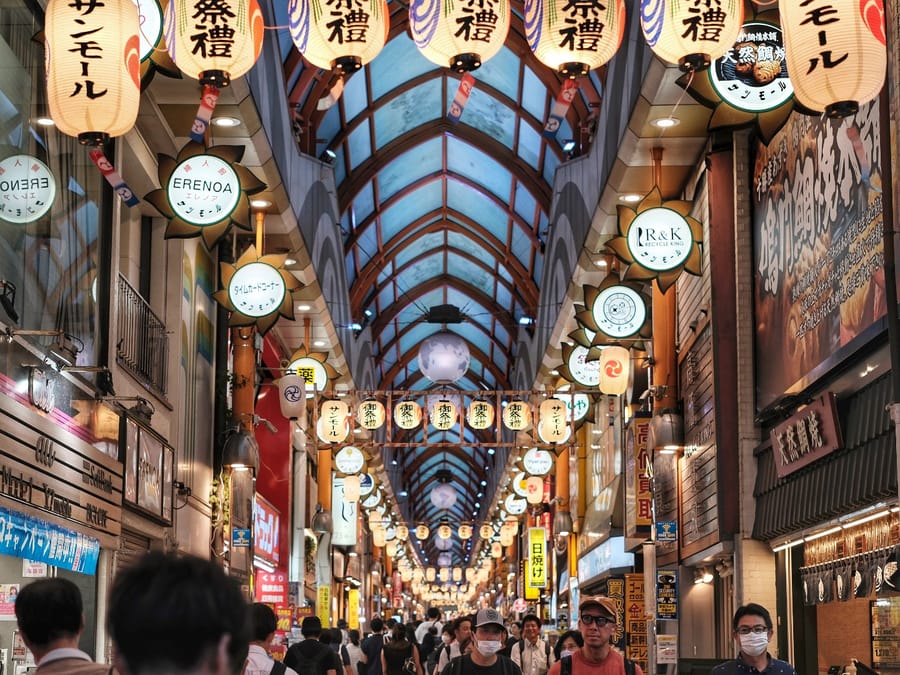
Jujo Ginza is a covered arcade in the north of the city, the largest shopping arcade in Kita City, with roughly 180 shops under its roof. It begins about 30 seconds from the north exit of Jujo Station, which makes it the easiest bad-weather option in this guide.
People come here to eat cheaply and well. The arcade is known for snacks priced for the neighbourhood rather than for visitors, and GO TOKYO notes some treats selling for under ¥100: skewers, meatballs, fried chicken, sweets. It is less polished than Yanaka and less famous than Togoshi, and that is the point. You will shop alongside people buying dinner, not souvenirs. Individual shop hours vary, with the arcade at its liveliest from late morning to early evening.
Nearest station: Jujo (JR Saikyo Line), north exit, about 30 seconds on foot to the arcade entrance.
Best time: late morning to early afternoon on a rainy day, when the roof earns its keep.
The etiquette that actually matters
Carry cash, in small notes and coins. Many yokocho counters and shotengai shops are cash only, and a ¥10,000 note in a six-seat bar is a genuine inconvenience. Get change at a convenience store before you go.
Expect the otoshi. In seated bars, a small charge of roughly ¥300 to ¥500 per person is normal. It comes with a small dish and covers your seat. It is not aimed at tourists.
Go in ones and twos. A group of five cannot be seated together in most yokocho bars and will block a shotengai lane. Split up or choose a bigger izakaya instead.
Order promptly, and keep ordering or move on. Seats and counter space are the business. Linger over drinks by all means, but a counter seat held for an hour over one beer is noticed.
Ask before photographing people. Shopfronts and lanes are fair game in most places, but photograph the cook, not just the food, only with a nod first. Some districts are stricter: Omoide Yokocho's association requires permission for organised shoots, and Nonbei Yokocho asks visitors not to come solely for photos.
Mind the smoke and the rubbish. Smoking rules vary by street and are signposted; Omoide Yokocho's lanes are non-smoking. Public bins are rare everywhere in Tokyo, so carry a small bag and take your skewers sticks and cans away with you, or hand them back to the shop.
A little Japanese goes a long way. Pointing at the grill and asking "osusume wa?" (what do you recommend) will feed you well in places with no English menu. Translation apps handle the rest.
Nothing here needs booking. These are walk-in streets. What they need is timing: shotengai in the late morning or afternoon, yokocho from five, and the good seats taken early.
Three easy ways to combine them
A slow afternoon in Yanesen. Start at Nippori around 11:00, walk down Yuyake Dandan into Yanaka Ginza, graze on menchi katsu and sweets, then continue to Nezu Shrine. Finish in Sendagi and take the Chiyoda Line home.
A Kichijoji day. Harmonica Yokocho for a late lunch, the afternoon in Inokashira Park next door, then back into the lanes after dark for a standing bar and one more plate of something grilled.
Markets by day, alleys by night. Ameyoko late morning, the museums of Ueno Park in the afternoon, then cross the city to Shinjuku and end the evening at a six-seat counter in Omoide Yokocho.
At a glance
Omoide Yokocho — Yokocho, Shinjuku west exit (2 min), 17:00 to 19:00
Nonbei Yokocho — Yokocho, Shibuya (about 5 min), Weekday early evening
Harmonica Yokocho — Yokocho, Kichijoji north exit (1 min), Late afternoon to evening
Ameyoko — Market street, Ueno or Okachimachi, Weekday late morning
Yanaka Ginza — Shotengai, Nippori or Sendagi (5 min), Late morning to afternoon
Togoshi Ginza — Shotengai, Togoshi-Ginza or Togoshi, Car-free afternoon hours
Jujo Ginza — Shotengai, Jujo (about 30 seconds), Late morning, any weather
9 min · November 24, 2026
9 min · November 24, 2026
