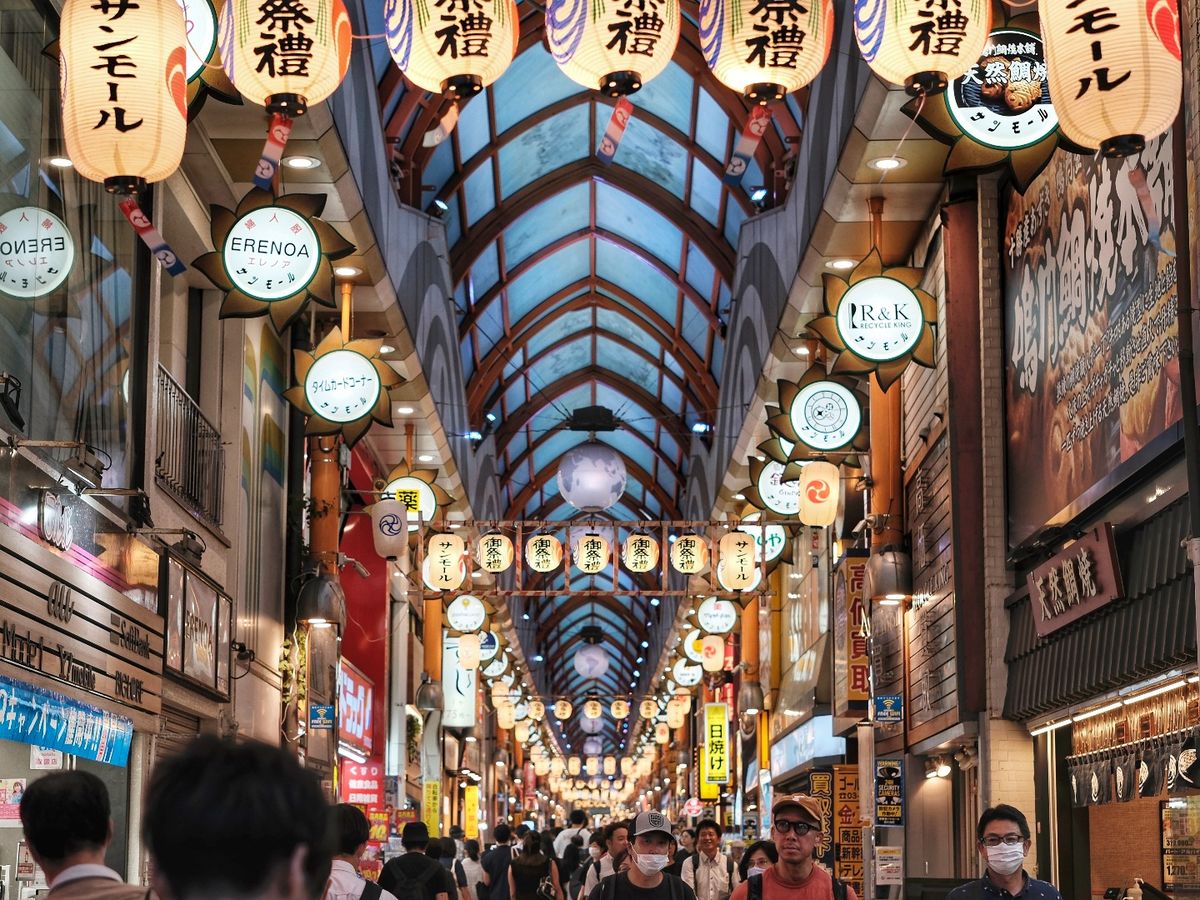
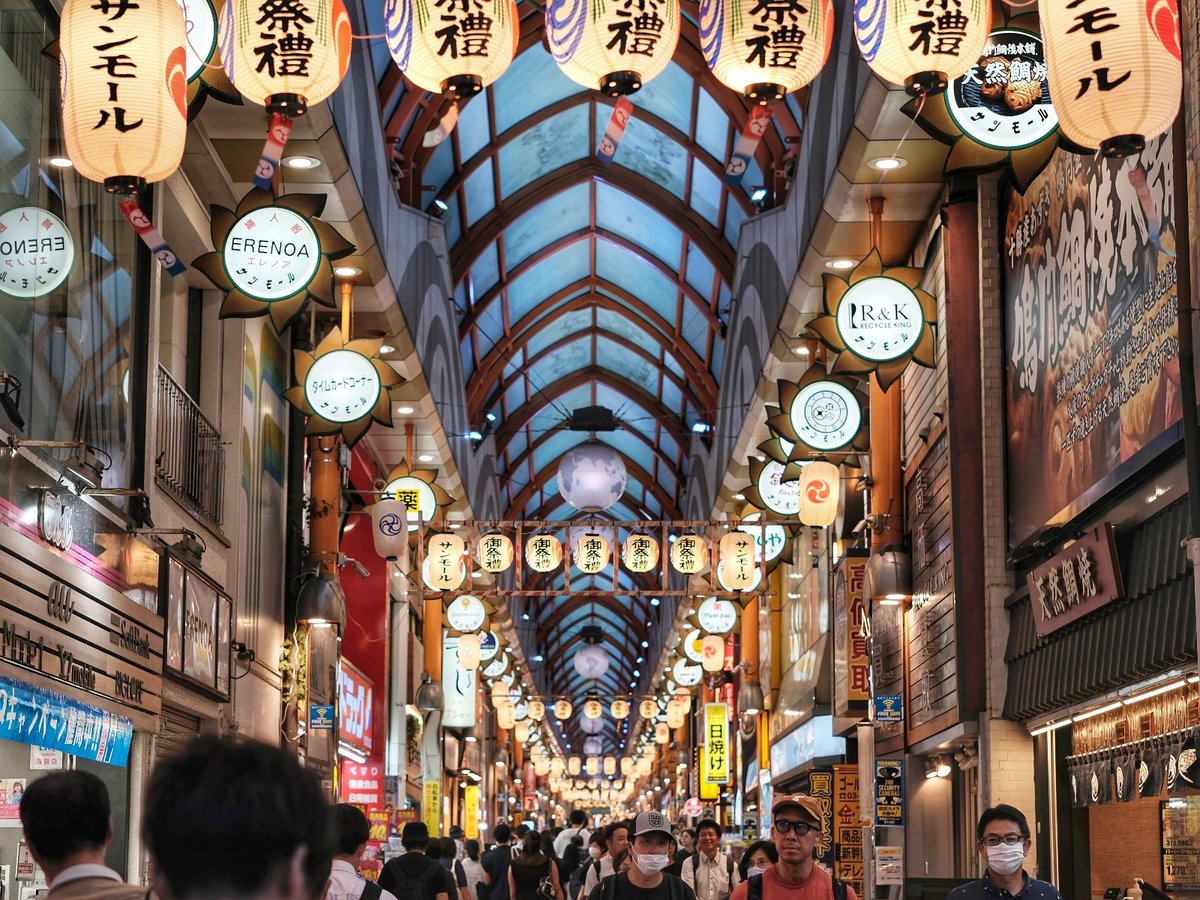
Nakano Sun Mall, the covered arcade that runs from Nakano Station to Nakano Broadway. Photo: Charlie fong, CC BY-SA 4.0
Shinjuku is where visitors shop. Two stops west on the Chuo Line, Nakano and Koenji are where Tokyo shops for itself, and the goods are stranger, older and cheaper.
Nakano has Nakano Broadway, a 1960s shopping building that quietly became one of the best hunting grounds in the world for second-hand manga, figures, retro games and vintage watches. Koenji, one stop further, does the same job for clothes: street after street of used clothing shops, with covered arcades, cheap bars and small live music venues folded in between.
Neither neighbourhood asks much of you. There are no tickets and no single famous sight. You turn up after lunch, wander, and dig. This guide explains how each place actually works,, because both have quirks that catch first-timers out, and how to fit the pair into one afternoon.
Leave Nakano Station by the north exit and you are facing Nakano Sun Mall, a covered shopping arcade that runs 224 metres straight ahead to the doors of Nakano Broadway. Around 110 shops line it: ramen counters, bakeries, drugstores, clothes shops and cafes, busy with local shoppers from mid-morning.
Walk it slowly rather than treating it as a corridor. Fujiya Camera, partway along, is one of Tokyo's best-known dealers in second-hand cameras and lenses, with cabinets of film cameras that collectors fly in for. The side streets off the arcade are worth a look too, especially in the evening, when their small izakaya and restaurants fill with people who live nearby.
Nearest station: Nakano (JR Chuo Line, JR Chuo-Sobu Line, Tokyo Metro Tozai Line), north exit. About 5 minutes from Shinjuku by rapid train.
Best time: from late morning. The arcade wakes up well before the Broadway shops do.
Nakano Broadway opened in 1966 as a combined shopping centre and apartment building, and the flats are still there above the shops. That odd mix explains the place. The commercial floors run from the basement to the fourth floor, and each has a different job.
The basement is the neighbourhood's food floor: a supermarket, greengrocers, fish and meat counters, noodle shops and snack stalls, plus a soft-serve counter, Daily Chico, locally famous for stacking its ice cream high.
The ground floor is general shopping: phone and computer shops, camera shops, game arcades and the first Mandarake store, called Mon, on your right as you enter from Sun Mall.
The second and third floors are the heart of it. This is where the specialist shops cluster: manga by the shelf-load, anime figures in glass cases, trading cards, retro video games, cosplay outfits, model trains, dolls and production artwork from old anime. Shops are small, often a single room, and each one buys and sells within its own narrow speciality.
The fourth floor leans oldest: Showa-era toys, tinplate and vinyl figures, antiques and vintage oddities, plus more specialist counters. If your interest is the Japan of the 1960s and 1970s rather than this year's anime, start at the top and work down.
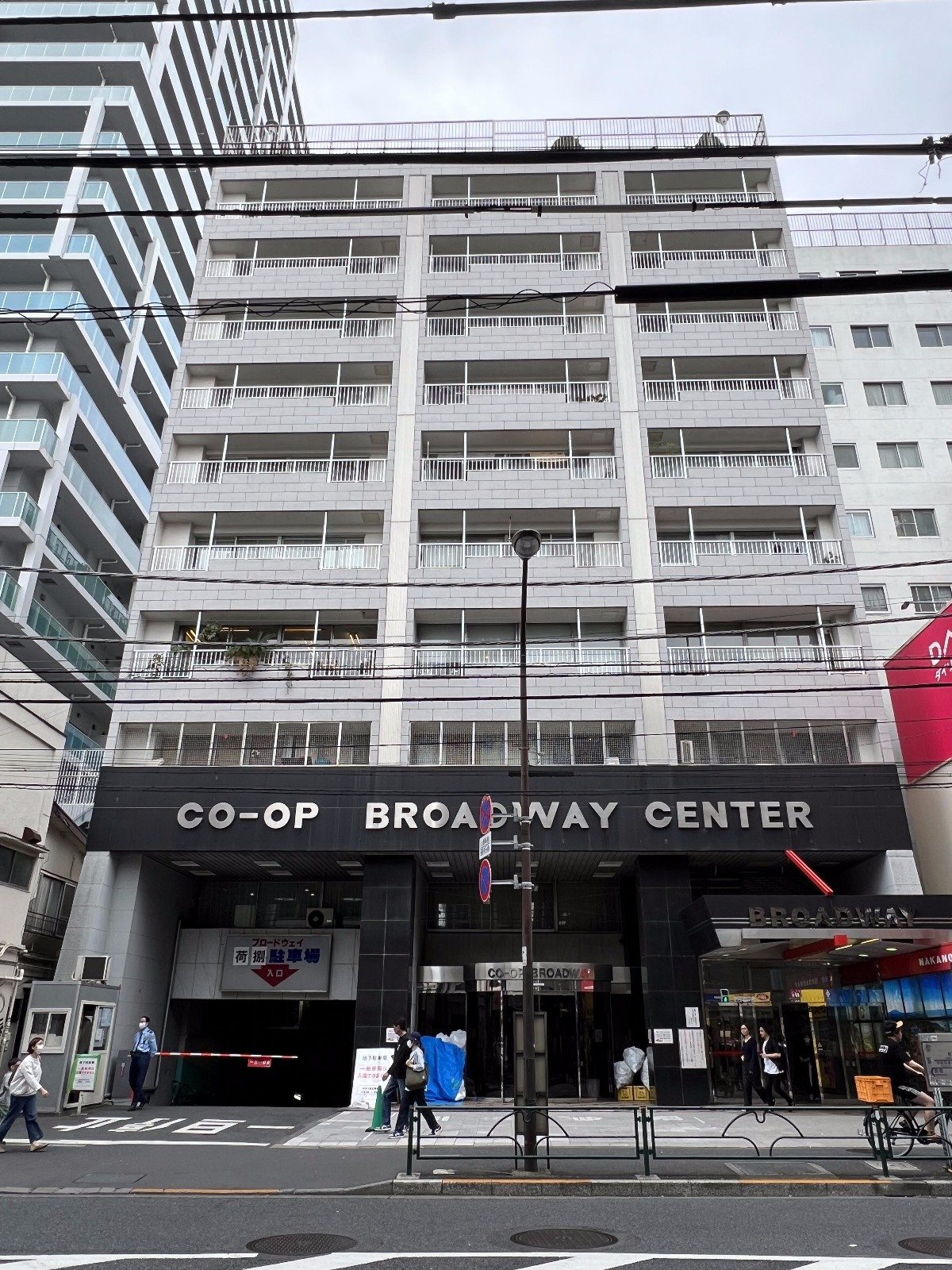
Nakano Broadway from the street. The shopping stops at the fourth floor; the balconies above are people's homes. Photo: Asanagi, CC0
The name you will see most is Mandarake, the second-hand manga and collectibles chain that started in this building. It is not a single department store. Mandarake runs more than 30 separate small shops inside Broadway, each with its own name, counter and stock: one for trading cards, one for cosplay, one for tiny models, one for film posters, several numbered shops for manga and doujinshi, and the main store on the third floor for general stock and the buying counter, where people bring items to sell.
Do not try to memorise the system. Pick the floor that matches your interest, walk every corridor, and ask staff if you are hunting for something specific; Mandarake says its Nakano staff can help in English. Its shops open at 12:00 and close at 20:00, every day of the year, and the buying counter stops taking items at 19:30.
The surprise on the upper floors is the row of second-hand luxury watch dealers, the biggest cluster of them around the third floor. Glass cases hold the sort of Swiss and Japanese watches that sell in Ginza boutiques, priced for collectors who know the market. Browsing costs nothing, staff are used to overseas buyers, and some of the larger shops in the building offer tax-free shopping. Bring your passport if a serious purchase is even a remote possibility, and check how the current refund rules work before you buy https://yonihon.com/travel-guide/japan-tax-free-shopping-2026-airport-refund/
The building's listed hours are 10:00 to 20:00, but every shop keeps its own schedule, and many of the specialist shops that you actually came for do not open until 12:00. Arrive at ten and you will find the supermarket open and the good floors shuttered. Individual shops also take their own days off, so a favourite can be closed on any given day, and the whole building closes on the third Wednesday in February. Late morning is fine for the arcade and the basement; give Broadway itself from noon.
Collectors, obviously: manga readers, figure hunters, retro gamers, camera and watch people. It also suits anyone who likes second-hand shopping as a spectator sport, because the stock is so specialised that half the pleasure is seeing what exists. It is fully indoors, which makes it an easy rainy-day plan. If anime and games leave you cold, though, Koenji below is probably your neighbourhood.
Koenji Station is the next stop west of Nakano, about two minutes by local train. Where Nakano keeps its treasures in one building, Koenji spreads its own across the streets on both sides of the tracks, and the speciality here is second-hand clothes.
From the south exit, the Koenji Pal shopping arcade runs about 200 metres under a glass roof: clothes shops, record shops, cafes and everyday stores in one covered line. Where the roof ends, the street simply carries on as Look Street, heading south towards Shin-Koenji, and this combined run is the densest vintage clothing territory in the neighbourhood.
Around a hundred used clothing shops operate in the streets around the station, and the range is the point. One shop does American workwear, the next military surplus, another nothing but band T-shirts or 1970s dresses. Prices start at a few hundred yen on the bargain rails and climb for archive pieces, and most shops open around midday. There is no technique beyond patience: go in everywhere, check upstairs floors and basement rails, and leave space in your bag.
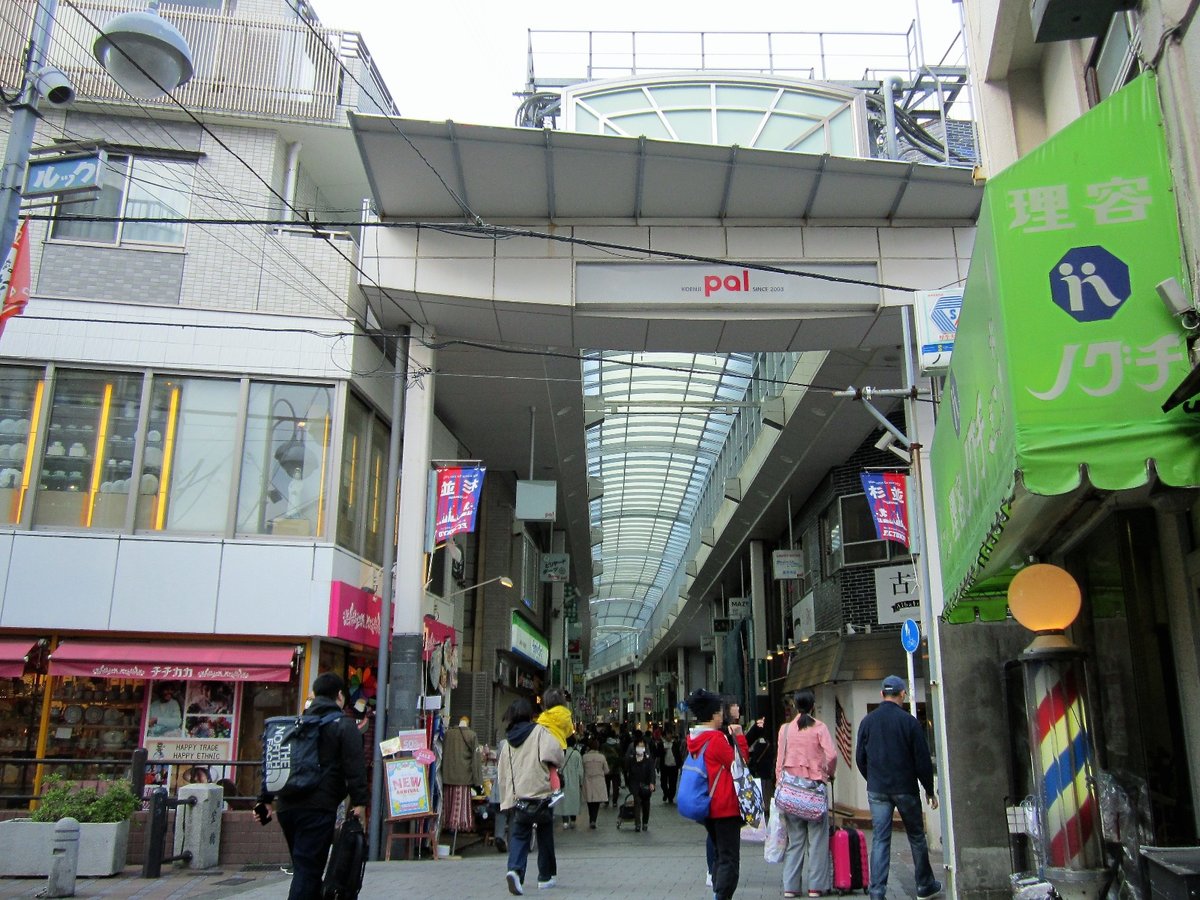
Koenji Pal, where the vintage run begins. The arcade continues south into Look Street. Photo: Suikotei, CC BY-SA 4.0
Cross under the tracks and the mood changes. Koenji Junjo Shotengai, reached from the north exit, is the neighbourhood's everyday shopping street: bakers, greengrocers, tofu shops, cheap lunch counters, second-hand bookshops and a scattering of antique and vintage stores among them. Its name comes from a novel set in Koenji, Shoichi Nejime's Koenji Junjo Shotengai, and it still feels like a street that serves the people who live on it rather than visitors.
Come here for the contrast. The south side is for digging through rails; the north side is for a coffee, a pastry and a slower half hour, with the odd vintage find in between.
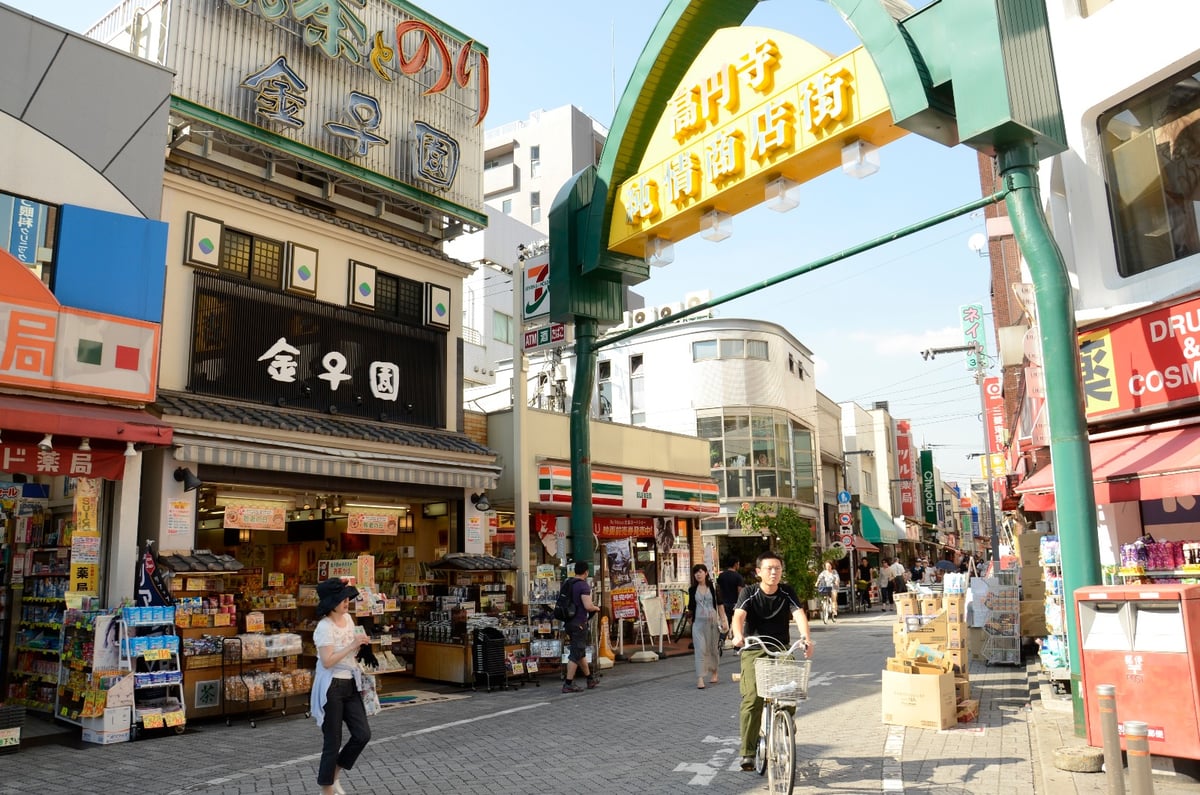
The entrance to Koenji Junjo Shotengai, the everyday shopping street on the north side. Photo: Stephen Kelly, CC BY 2.0
Koenji grew out of the alternative culture of the 1960s and became a centre of Tokyo's punk scene in the 1970s and 1980s, and the music never left. Small live houses are scattered around the station, staging everything from jazz to punk most nights of the week. JIROKICHI, a basement venue a couple of minutes from the station, has been running since 1975 and is one of the city's first live houses. Expect a ticket or door charge plus a drink, a room that holds a hundred people rather than a thousand, and a crowd of regulars.
The lanes under and beside the tracks fill with small bars and izakaya in the evening, most of them cheap. In late August the neighbourhood gives itself over to the Koenji Awa Odori, a dance festival that began in 1957 and is now one of the largest of its kind in Japan. If your trip lands on it, go; if not, the ordinary Koenji evening is reward enough.
The two sit side by side on the same line, so combining them is easy. A rhythm that works:
Start in Nakano around 11:30. Walk Sun Mall, have lunch in or near the arcade, and be inside Broadway as the specialist shops open at 12:00. Give the upper floors two hours, more if you are a collector.
Ride one stop west to Koenji in the mid-afternoon. Work down Pal and Look Street while the vintage shops are all open, cross to Junjo Shotengai for a coffee, then stay for the evening: an early dinner in the lanes by the tracks and a live house if a bill catches your eye.
Mind the weekend trains. This is the one genuine trap. On weekdays, Chuo Line rapid trains stop at Koenji. On Saturdays, Sundays and public holidays they run straight through Koenji, Asagaya and Nishi-Ogikubo without stopping, so at weekends you need a Chuo-Sobu Line local train, which stops everywhere and takes only a few minutes longer from Shinjuku. Nakano, by contrast, is served by rapid and local trains every day. Our guide to trains, IC cards and the JR Pass https://yonihon.com/travel-guide/getting-around-japan-trains-ic-cards-jr-pass/ explains the line patterns if you are new to them.
If you enjoy this kind of street-level Tokyo, our guide to the city's yokocho alleys and shotengai streets https://yonihon.com/travel-guide/tokyo-yokocho-and-shotengai-guide/ covers the drinking alleys and market streets on the other side of the city. And if the digging leaves you wanting to make something rather than buy something, YoNihon's hands-on workshops and experiences https://yonihon.com/experiences/ are the natural next step.
Time it from noon. Broadway's specialist shops and most Koenji vintage shops open late morning or midday. A morning start wastes the trip; an afternoon start catches everything and runs into the evening bars.
Bring cash, and a bag. Many of the smallest shops in both neighbourhoods are cash only or cash preferred, and second-hand shopping generates carrier bags at a rate of one per shop. A tote or a small backpack keeps your hands free for the rails.
Check the upstairs and the basement. In Koenji especially, shops hide on upper floors and below street level, signed only by a board on the pavement. The obvious ground-floor run is maybe half of what is there.
Dressing rooms are small and stock is one-off. If a piece fits and the price is right, buy it. It will not be there tomorrow, and there is no second size out the back.
Ask before photographing inside shops. Street scenes are fine in both neighbourhoods, but individual shops vary, and some collectors' shops in Broadway do not allow photos of their cabinets.
Rain is not a problem. Sun Mall, Broadway and the Pal arcade are all under cover, which makes this one of the most weatherproof half days in Tokyo.
Nakano Broadway: Nakano Station, north exit, through Sun Mall. Building listed 10:00 to 20:00, most specialist shops 12:00 to 20:00, individual days off, building closed the third Wednesday in February. Best for manga, figures, retro games, cameras and second-hand watches.
Nakano Sun Mall: Nakano Station, north exit. Covered arcade, 224 metres, around 110 shops. Best for lunch, Fujiya Camera and an easy start.
Koenji Pal and Look Street: Koenji Station, south exit. Covered arcade running into an open shopping street. Best for vintage clothing, records and military surplus. Most shops from around midday.
Koenji Junjo Shotengai: Koenji Station, north exit. Everyday shopping street. Best for bakeries, coffee, second-hand books and a slower pace.
Koenji live houses: around Koenji Station, both sides. Evening shows most nights, door charge plus a drink. JIROKICHI has been running since 1975.
11 min · November 21, 2026
9 min · November 24, 2026
