
If you shopped tax-free in Japan before November 2026, forget the routine you remember. The discount no longer comes off at the till.
Since 1 November 2026, Japan runs tax-free shopping the way much of Europe does. You pay the full price in the shop, tax included. Then, when you leave the country, Customs confirms that your purchases are leaving Japan with you, and the tax comes back to you as a refund. The saving itself has not shrunk. Consumption tax is still 10 percent on most goods and 8 percent on food and non-alcoholic drinks. Only the timing and the paperwork moved.
The change catches people out in two places: at the shop, where you now need to set up how the refund will be paid, and at the airport, where one step has to happen before you check in your bags. Get those two things right and the rest is easy.
What changed. Tax is no longer removed in the shop. You pay the tax-inclusive price and claim the amount back after a customs check on departure.
What did not change. The minimum spend is still ¥5,000 before tax, at one shop, on one day. The saving is still the consumption tax on what you bought.
The new deadline. Customs must confirm your purchases within 90 days of the day you bought them.
The step that matters. Scan your passport at a tax-free procedure terminal in the departure lobby before you drop your bags. If Customs wants to see your purchases and they are already in the hold, the refund for that receipt is gone.
Under the old system, a tax-free shop took the tax off on the spot and you paid the lower price. Under the new one, called the Refund Method by the Japan Tourism Agency, the shop records your purchase in the national tax-free sales system, charges you the full price, and the refund follows once Customs has confirmed the goods are being taken out of Japan.
Which system applies depends on the purchase date, not your flight date. Anything bought on or before 31 October 2026 was sold under the old rules. Anything bought on or after 1 November 2026 sits under the refund system, whenever you fly home.
One more thing worth knowing: the refund is paid by the shop, or by a refund company the shop appoints. It does not come from the government, and the customs officer never hands you money. Customs only confirms the export. The shop then pays, by the method you registered with them.
The minimum spend survived the change, despite what you may have read. You still need to spend at least ¥5,000 before tax at one shop on one day for the purchase to qualify.
What changed is how the total is counted. The old system split your shopping into general goods (clothes, electronics, bags) and consumables (food, drink, cosmetics), and each category had to reach ¥5,000 on its own. Now the categories are combined. A ¥3,000 jumper and ¥2,500 of skincare at the same shop on the same day clear the line together.
This matters most for edible souvenirs. The regional sweets, tea and snacks you buy as gifts count toward the same ¥5,000 as everything else in the basket. If you are choosing what to bring home, our guide to the dishes and food souvenirs worth your luggage space is a good place to start: What to Eat in Japan: 15 Must-Try Dishes (https://yonihon.com/travel-guide/what-to-eat-in-japan/).
The ¥500,000 cap on consumables has been abolished. Under the old system, food, drink and cosmetics were capped at ¥500,000 per shop per day. There is no cap now.
The sealed bag has gone too. Consumables used to be packed into a special sealed bag that you were not allowed to open in Japan. That packaging rule ended on 1 November. Your purchases are handed over like ordinary shopping.
One condition replaced them, and it is a real one. Consumables must not be consumed in Japan. Eat the biscuits, open the cosmetics or drink the sake before you leave, and those items are no longer eligible when Customs checks. Keep consumables sealed by choice, in your luggage, and there is no problem.
Purchases are also limited to quantities you can personally carry out of the country, and a few things never qualified at all, including gold and platinum bullion.
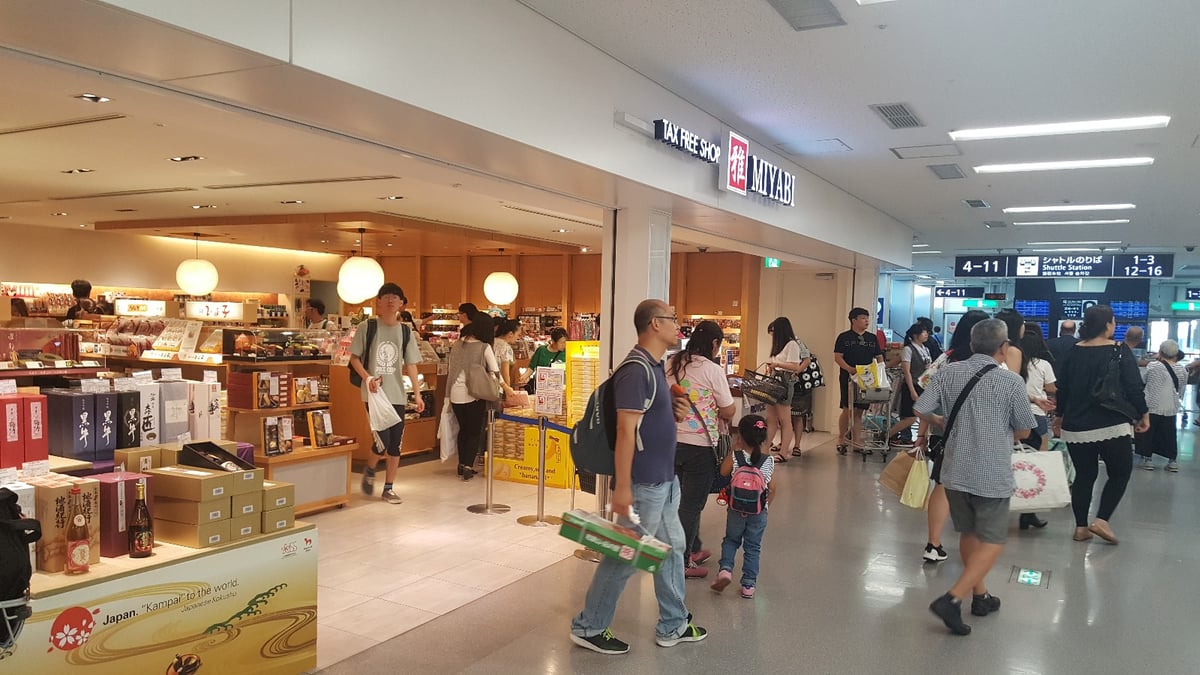
A tax-free shop at Kansai Airport. Shops in town now charge the full price, and the refund follows at departure. Photo: Choi2451, CC BY-SA 4.0
The shop end of the process looks familiar, with one extra job.
anyway.
3. Pay the full price. Tax included. This is the part that feels wrong the first time. It is correct.
Register how the refund will be paid. This is the new step, and the one to take seriously. The method is the shop's choice, not yours or the government's. Shops variously offer a refund to a credit card, a bank transfer, a payment app, or cash arrangements at the departure airport.
Register your details carefully at the till, because a shop is not obliged to chase you if the details you gave cannot be paid. Some shops and refund operators also deduct a handling fee, so the amount that arrives can be a little less than the full tax.
A warning about the passport stamp. If you entered Japan through an automated immigration gate, your passport may not have been stamped. Shops need to see your landing permission to sell to you under this system. If there is no stamp, ask the officer at the inspection area after the gates for one before you pass through Customs on arrival. It is far harder to fix later in the trip.
This is the step the whole refund now hangs on, and its position in the departure hall is the trap. Under the old system, the passport scan happened after security. Now the procedure sits in the public departure lobby, before baggage check-in and before security. Walk past it to the check-in desk first, drop your bags, and you may have a problem.
Here is the order to do things on departure day.
Budget extra time for this on departure day, especially at Narita and Haneda in the first months of the new system, while everyone else in the queue is also doing it for the first time.
At seven airports (Narita, Haneda, Kansai, Chubu Centrair, Fukuoka, New Chitose and Naha) you can skip the kiosk queue and do the customs confirmation online instead. In the departure lobby, before security and before bag drop, connect to the dedicated Wi-Fi network for the procedure and complete it through Visit Japan Web, the government's arrivals service. You need your Visit Japan Web account set up and ready before you start, so sort it out at the hotel, not in the lobby. If the online route fails for any reason, use the kiosk. That fallback always exists.
Visit Japan Web also helps at the shop end. Its tax-free QR code can stand in for your passport at participating shops. You create it by scanning your passport photo page and the QR code on your landing permission sticker. Two cautions: screenshots are not accepted, so you show the live code, and the code is time-limited, so refresh it before a big shopping day.

The tax-free sign to look for at the till. Photo: Naha Mama Pavilionz, CC0
"The ¥5,000 minimum has been abolished." It has not. The minimum is unchanged at ¥5,000 before tax per shop per day. What was abolished is the separate counting of categories, plus the ¥500,000 consumables cap.
"Tax-free shopping in Japan has ended." It has not. The saving is the same consumption tax, paid back at the end instead of taken off at the start. Shops across Japan still operate the scheme, and the tax-free sign still means what it always meant.
"Customs gives you cash at the airport." Customs gives you nothing. Customs confirms that your goods are leaving Japan. The shop, or the refund company it appointed, then pays the refund by the method you registered when you bought the goods. If you skipped registering a method in the shop, there may be nothing for the airport step to release.
Because the money now comes back after the trip, treat the refund as a bonus rather than spending money while you plan. Pay the full price in Japan, and let the refund land when it lands. Our breakdown of what a trip actually costs, budget by budget, will help you set the shopping line realistically: How Much Does a Trip to Japan Cost? (https://yonihon.com/travel-guide/how-much-does-a-trip-to-japan-cost/).
Two habits make the system painless. First, consolidate: one ¥8,000 basket at one shop qualifies, while the same spending split across three shops in a day may qualify nowhere. Second, shop on fewer, bigger trips to tax-free shops rather than dribbling purchases across the whole holiday, because every qualifying purchase carries its own receipt to protect until departure day.
8 minutes · November 23, 2026
10 minutes · November 23, 2026