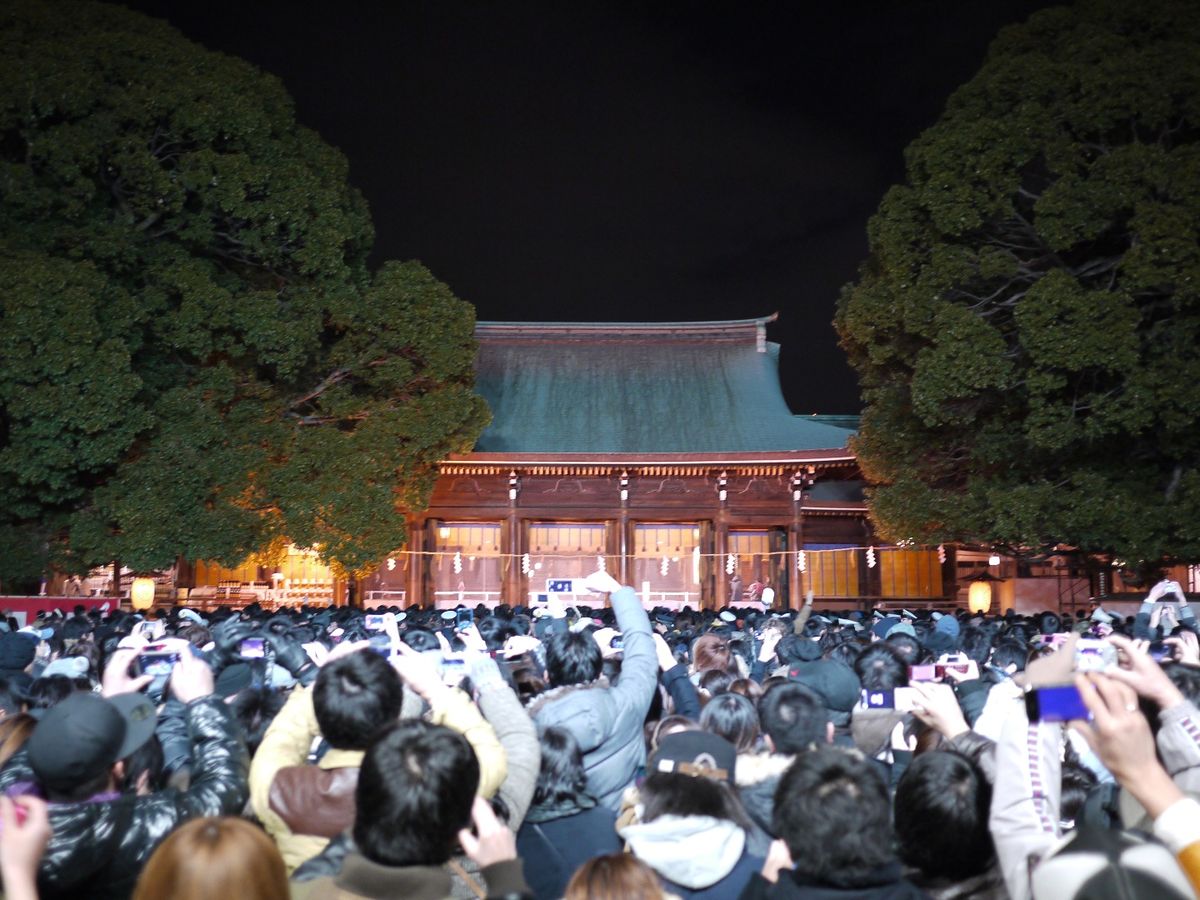
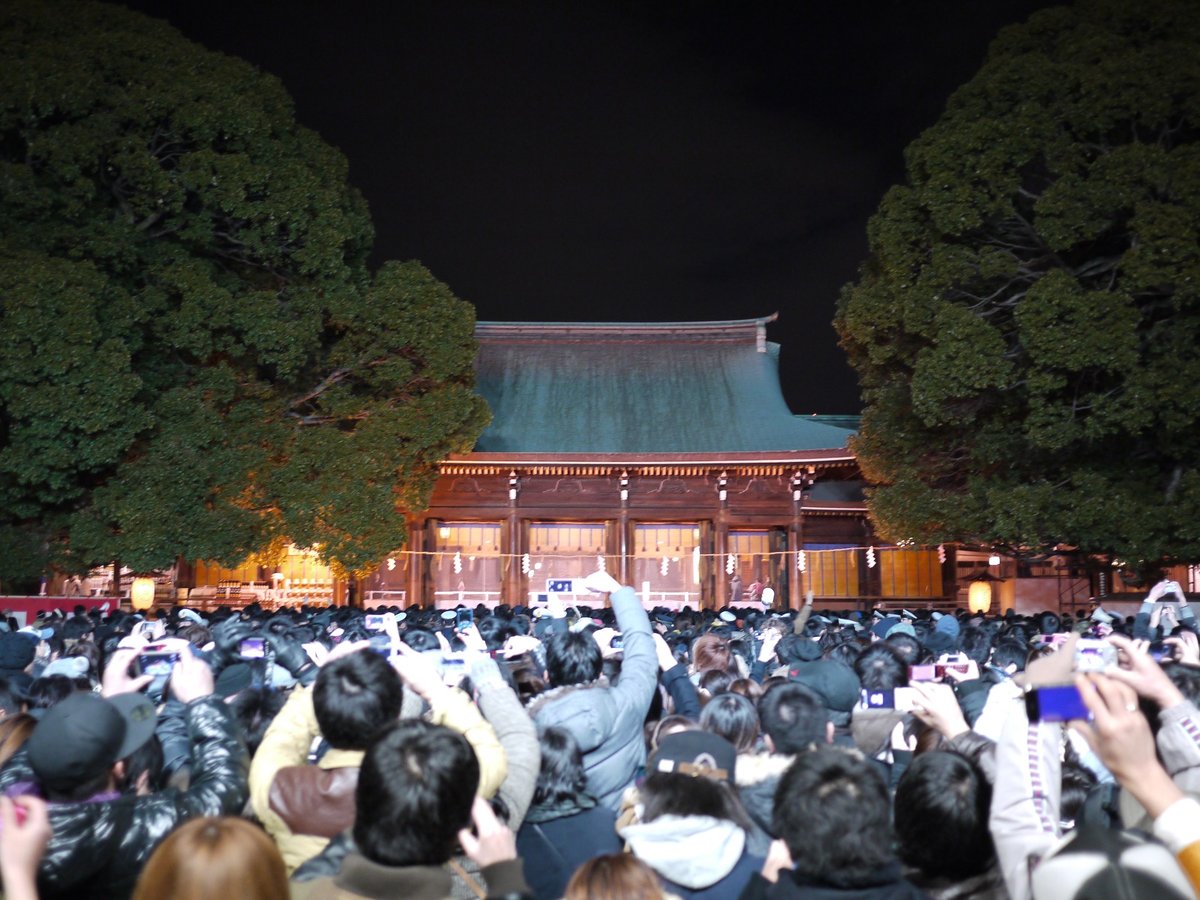
The New Year crowd at Meiji Jingu, Tokyo. Photo: Yoshikazu Takada, CC BY 2.0
At midnight on 31 December, Tokyo does something you might not expect from one of the busiest cities on earth. The parties wind down, the trains fill with people wrapped in coats and scarves, and millions of them head, quietly and on purpose, to a shrine or temple.
That first visit of the year is called hatsumode. People go to say thank you for the year just finished, to pray for the one ahead, and to start January with a clear head. You do not need to be religious, and you do not need to be Japanese. Visitors are welcome, and the whole thing is simpler than it looks once someone walks you through it.
This guide covers what happens, where to go in Tokyo, how to pray without worrying you are doing it wrong, what the lucky items cost, and how to dodge the worst of the crowds.
What hatsumode actually is
Hatsumode is the first shrine or temple visit of the New Year. Most people go between the night of 31 December and 3 January, a stretch of public holidays in Japan often called sanganichi. Some go later in the first week, and that still counts.
The visit has a loose shape. You walk the approach, purify your hands, pray at the main hall, and then spend time at the stalls selling charms and fortunes. Old charms from last year are handed back for ritual burning, new ones are bought for the year ahead, and a paper fortune sets the tone for January.
It is worth knowing that a shrine (jinja, Shinto) and a temple (tera or ji, Buddhist) handle the prayer part differently. The steps below mark the difference where it matters.
Where to go in Tokyo
Meiji Jingu, for the full spectacle
If you want the headline experience, this is it. Meiji Jingu, the shrine in the forest beside Harajuku Station, is the most popular hatsumode spot in Japan. GO TOKYO puts the number of visitors in the first three days of January at more than three million.
The crowds are real, but the grounds are huge. A wide gravel approach runs through woodland planted a century ago, and the queue shuffles forward under some of the largest wooden torii gates in the country. The approach becomes one-way over the New Year period, and police and shrine staff keep the flow moving.
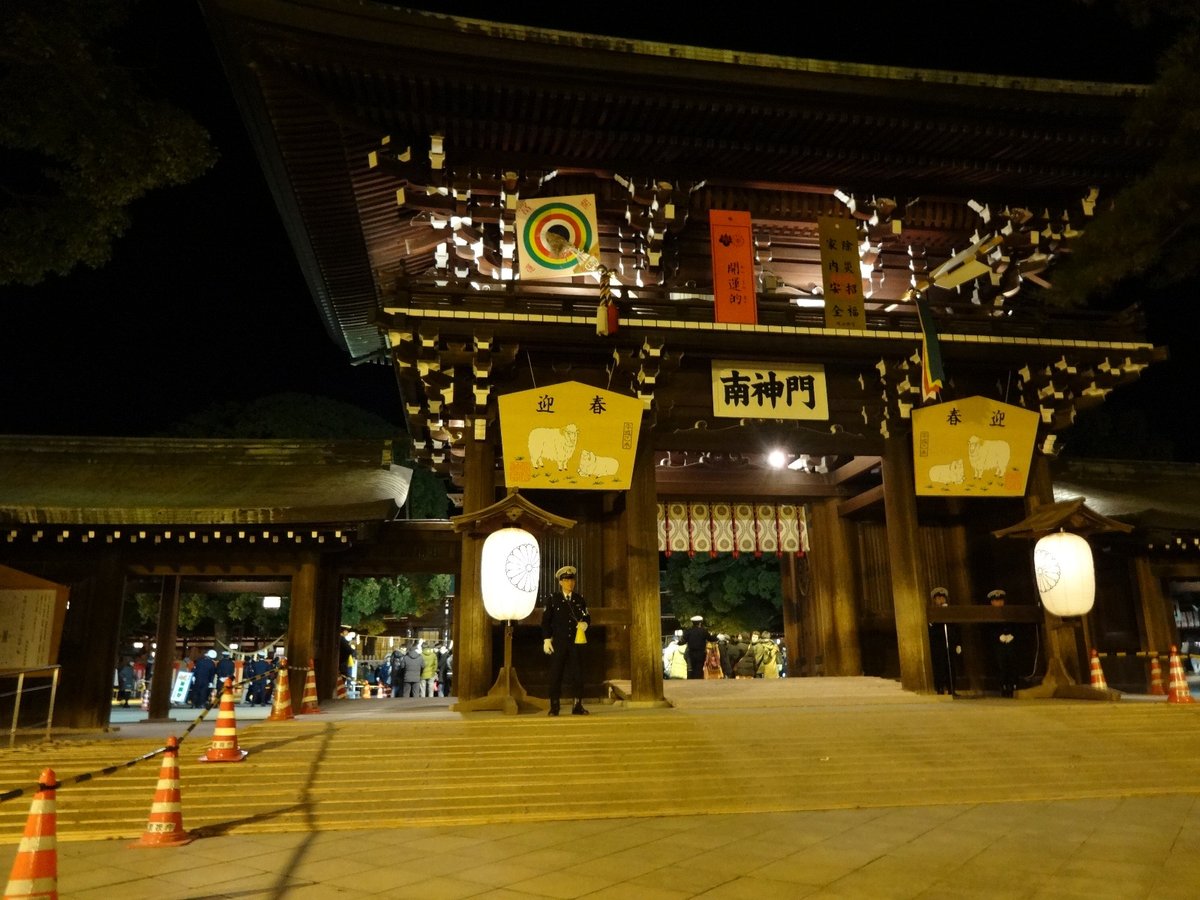
The south gate torii at Meiji Jingu, photographed on 1 January. Photo: Ccgxk, CC0
One lovely detail: the omikuji fortune here is called Omigokoro, and it is not a luck ranking at all. You draw a short waka poem written by Emperor Meiji or Empress Shoken, with an explanation. An English version has been offered since 1968.
Access: JR Harajuku Station is about a minute from the south entrance. Meiji-jingumae (Harajuku) Station on the Chiyoda and Fukutoshin lines serves the same entrance. Entry is free.
Senso-ji, for atmosphere and the midnight bell
Senso-ji in Asakusa is Tokyo's oldest temple, and its New Year has a different energy. At midnight the temple bell on Benten-yama, the small hill in the grounds, is struck 108 times to ring out the old year. The cheers from the crowd in front of the main hall are part of the fun.
The temple counts its hatsumode period as 1 to 7 January, with special New Year prayers held in the main hall throughout that week. Visitor estimates for the first days run to roughly two and a half to three million, and the Nakamise shopping street between the gates becomes one-way at peak times. Expect the street stalls and snack shops to be part of the visit, not an afterthought.
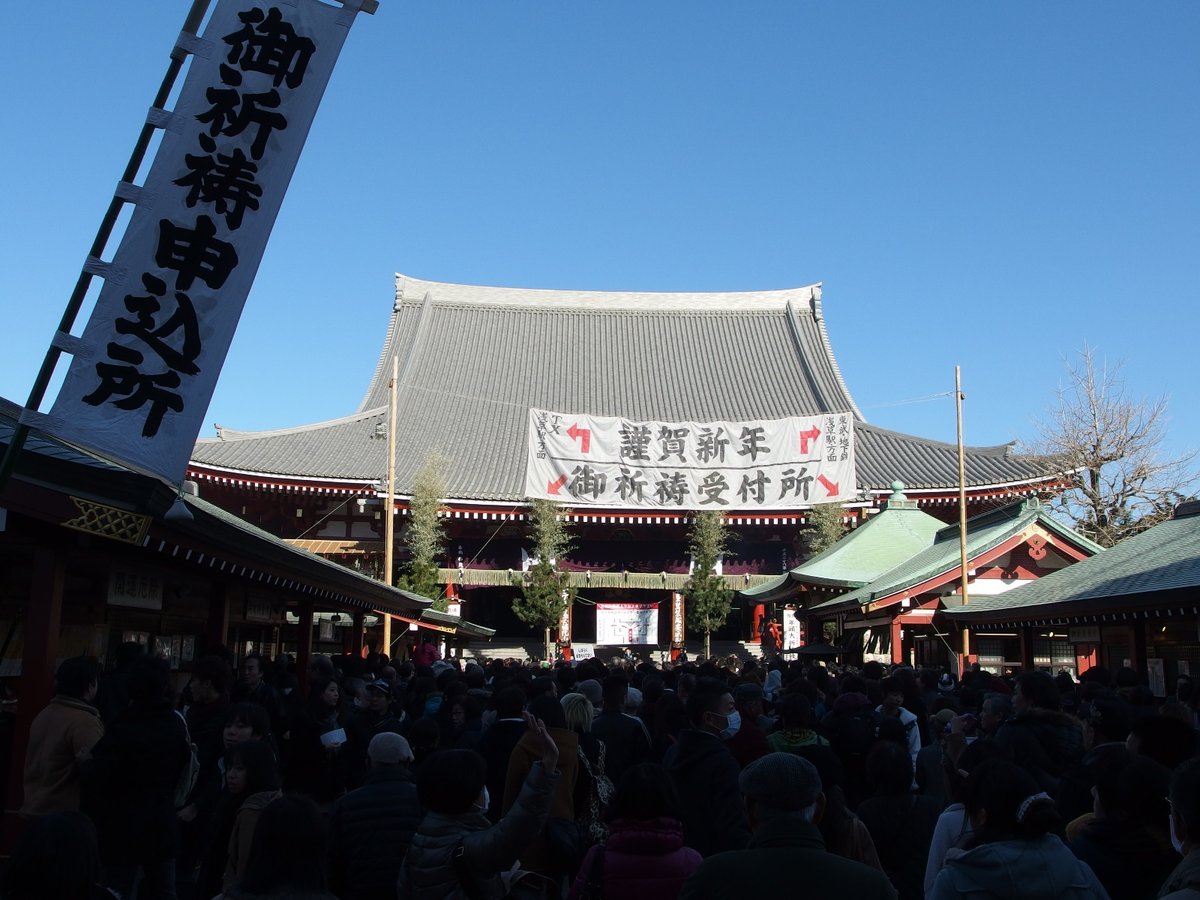
New Year at Senso-ji, Asakusa. Photo: Guilhem Vellut, CC BY 2.0
Two things to know. Senso-ji is a temple, so there is no clapping when you pray (the temple section below explains). And its omikuji, which costs ¥100, uses an old set of fortunes with a reputation for blunt results. A bad fortune is not a curse. Tie it to the racks provided in the grounds and walk away lighter.
Access: Asakusa Station (Ginza Line, Asakusa Line, Tobu Skytree Line, Tsukuba Express), about five minutes on foot. Entry is free, and the grounds are open around the clock, though the main hall keeps set hours outside the New Year period.
Nezu Shrine, for a calmer first visit
If the thought of three million people puts you off, go small. Nezu Shrine in Bunkyo City sits in a quiet residential neighbourhood in the Yanesen area (Yanaka, Nezu and Sendagi), and it is genuinely beautiful. The shrine buildings date from 1706 and are designated Important Cultural Properties, and a short pathway of small vermilion torii gates winds up the slope to a secondary shrine in the grounds.
There are food stalls at New Year and a proper festive feel, but the queue is measured in minutes rather than hours. Pair it with a wander through Yanaka afterwards.
Access: Nezu Station on the Chiyoda Line, about five minutes on foot. Todaimae Station on the Namboku Line also works. Entry is free.
Yushima Tenjin, if exams loom
Yushima Tenjin (officially Yushima Tenmangu) enshrines Sugawara no Michizane, the deity of learning, so it fills with students praying for exam success in the run-up to entrance exam season. Go if someone in your life has a big test in spring, and pick up one of its study charms. The shrine sits on a hill above Yushima, with a steep set of stone steps (the Otokozaka) and a gentler slope route if you prefer.
Access: Yushima Station on the Chiyoda Line, Exit 3, a few minutes on foot. Entry is free.
How to pray, step by step
You will see thousands of people do this in front of you, so you can copy the person ahead. Here is the sequence anyway.
That is the whole thing. Nobody scores you, and small mistakes go completely unnoticed in a crowd of millions.
The lucky items, and what they cost
The stalls and counters after the prayer are half the pleasure. Prices vary a little by shrine, but these are the usual ranges.
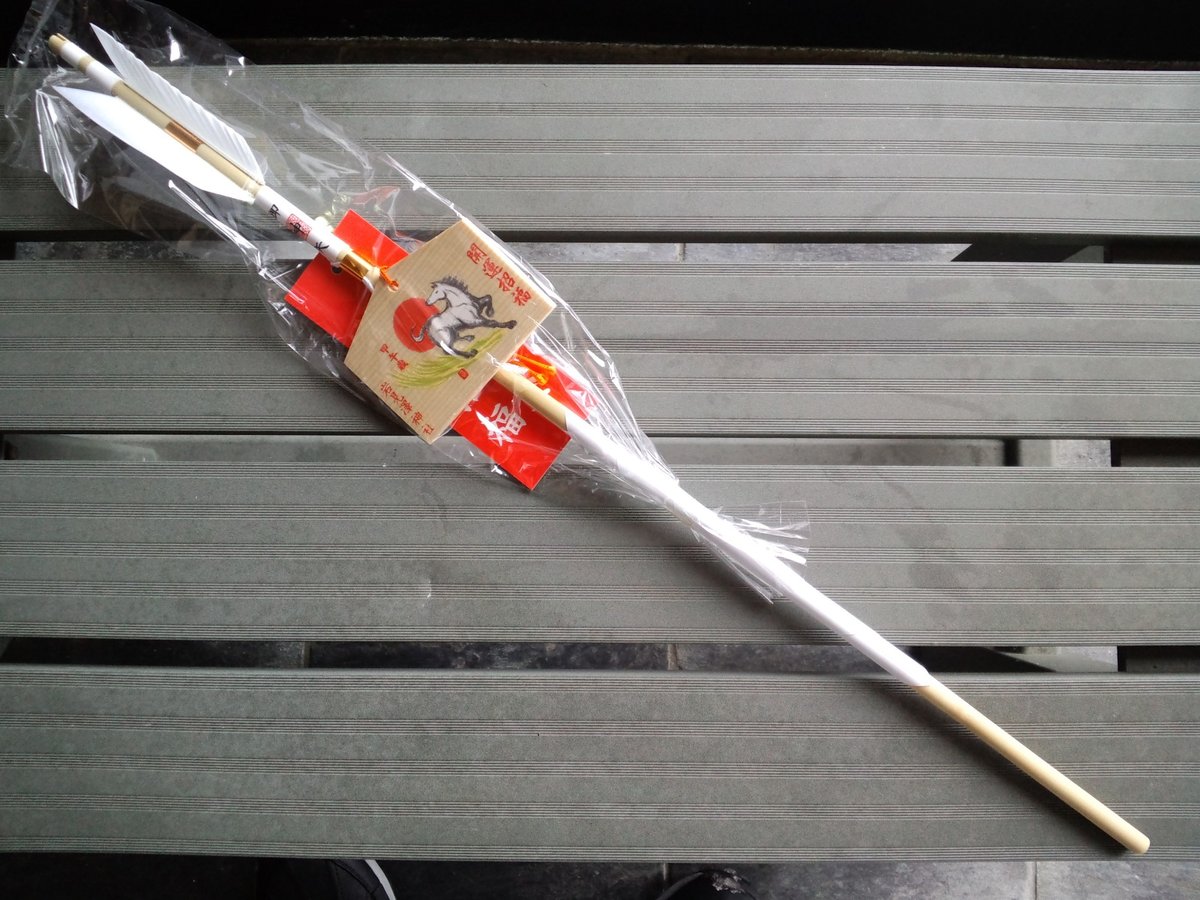
A hamaya, the demon-breaking arrow sold at shrines over the New Year. Photo: SelEle-MS, CC BY-SA 3.0
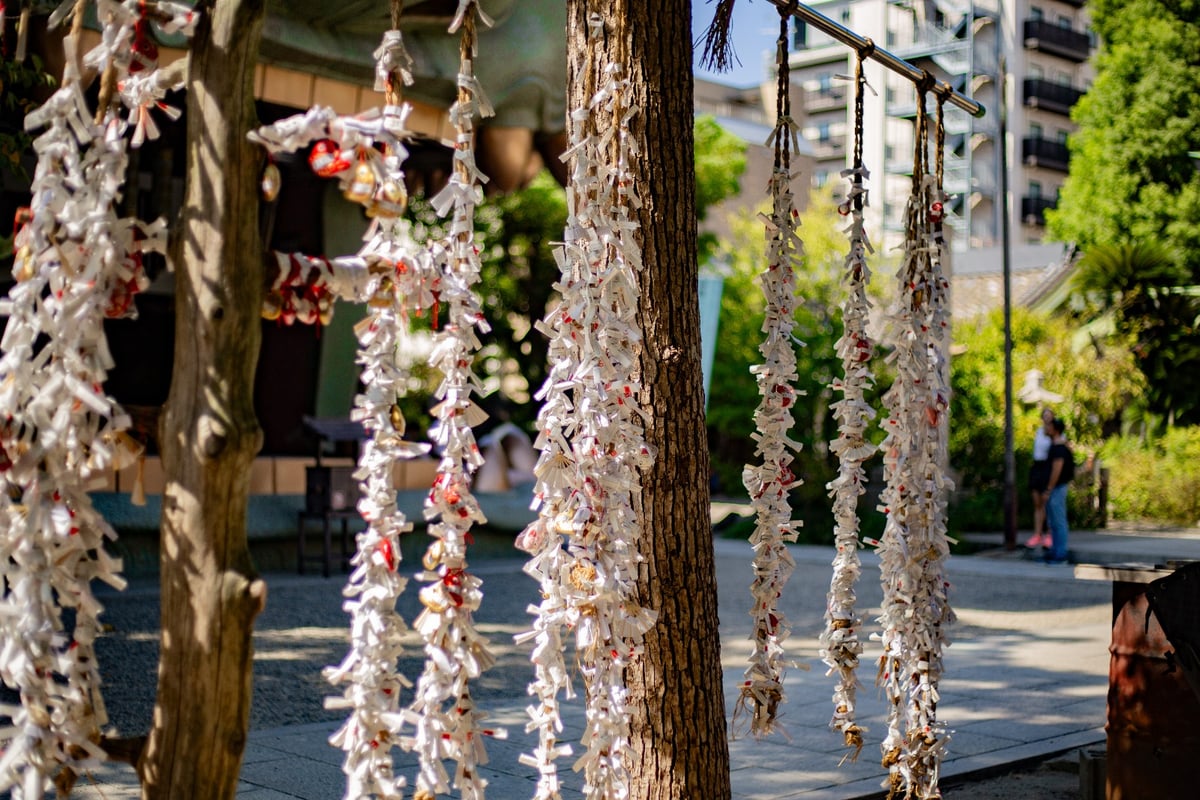
Omikuji fortunes tied up at a shrine. Leaving a bad fortune tied like this is said to leave the bad luck behind. Photo: Ian G Shingler, CC BY-SA 4.0
A practical warning: bring cash, in coins and small notes. Shrine counters are largely cash only. Meiji Jingu's amulet office, for one, does not take credit cards.
Food stalls and the walk back
Big hatsumode spots line their approaches with yatai food stalls over the first days of January, and Senso-ji's Nakamise adds its permanent snack shops to the mix. The greatest hits are warming things you eat standing up: amazake (sweet, usually non-alcoholic sake served hot), grilled corn, yakisoba, taiyaki, and at Asakusa, ningyo-yaki cakes and freshly baked senbei rice crackers.
Budget ¥500 to ¥1,000 per snack stop, in cash. Bins are scarce at Japanese festivals, so carry a small bag for your rubbish and take it with you.
Crowd tactics that actually work
The crowds are the price of the spectacle, but you can choose how much of them you get.
Getting around over New Year
Transport runs on a holiday timetable from late December into early January, and many trains finish earlier than usual on 31 December. In recent years JR East has run extra late-night trains on some Tokyo lines on New Year's Eve for hatsumode crowds, but subway arrangements vary by year, so check the operators' New Year notices before you rely on a train home at 3am.
A few more notes. Many shops and restaurants close on 1 January, and banks and ATMs in branches often shut for the first three days, so carry more cash than usual. Convenience stores stay open and are your friend. Taxis are scarce around the big shrines at midnight; plan to walk to a station a stop or two away from the main gate if the nearest one is restricting entry, which Asakusa Station sometimes does at peak moments.
A simple plan, if you want one
Stay near Asakusa on 31 December. Eat toshikoshi soba (the year-crossing noodles) early in the evening, walk to Senso-ji by 23:00, hear the bell at midnight, pray, draw your ¥100 fortune, and eat something hot from a stall on the way back. Sleep. Then, on the morning of 2 or 3 January, take the train to Harajuku and walk the forest approach to Meiji Jingu before the midday rush, draw a poem fortune, and buy the charm you actually need for the year.
Two visits, two completely different moods, and you have done New Year the way Tokyo does it.
8 minutes · November 23, 2026
9 min · November 24, 2026
