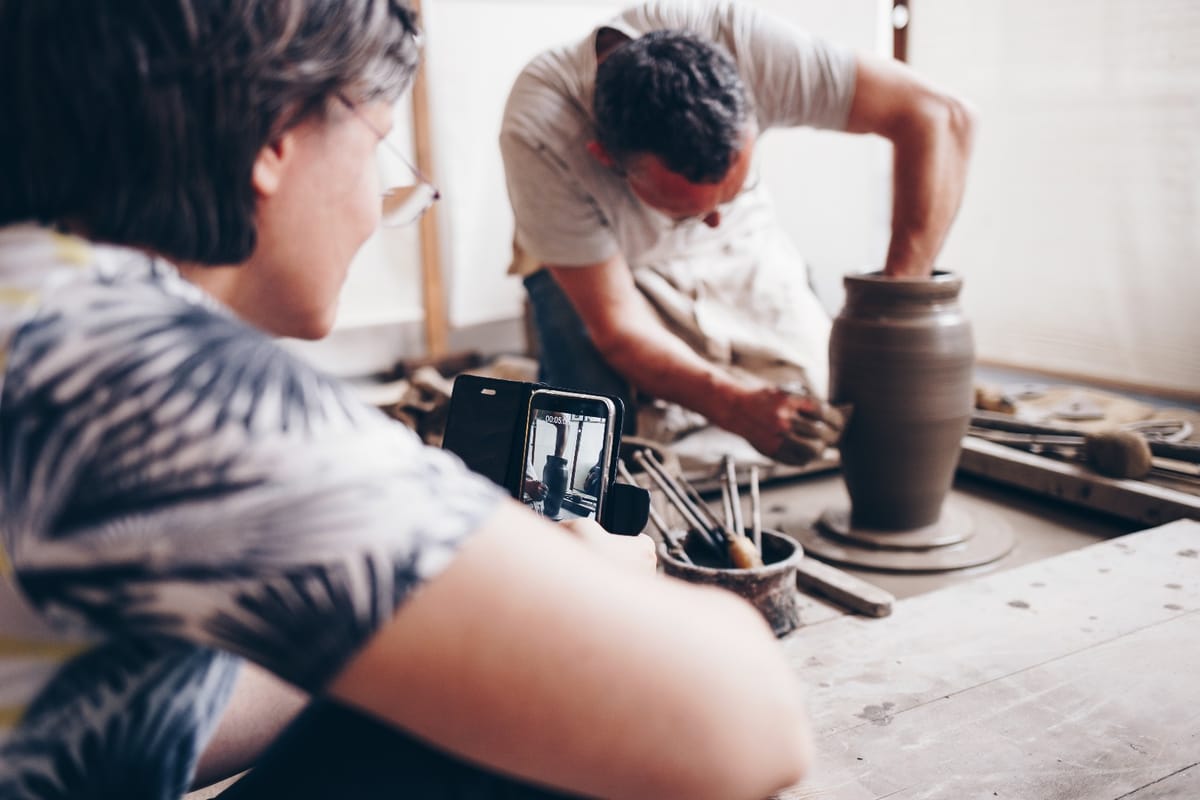
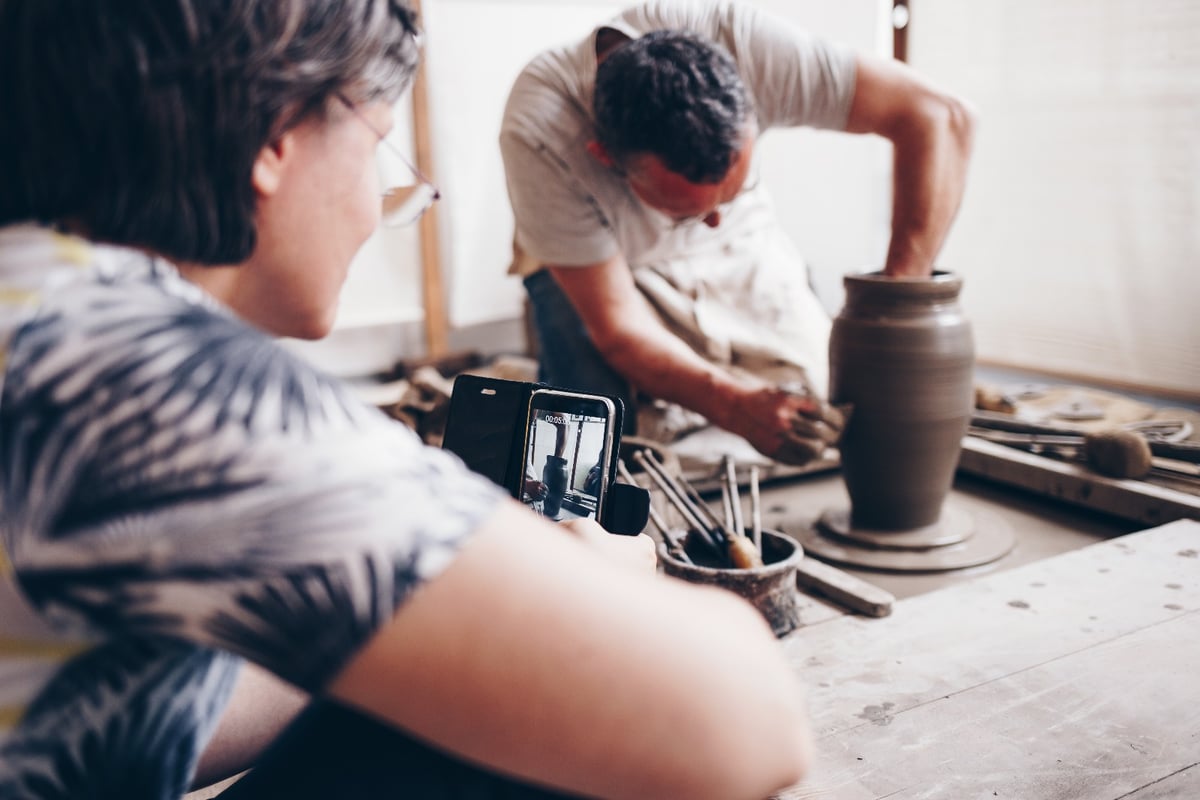
A pottery session in Japan is mostly your own hands on the clay, with the teacher stepping in at the moments that matter. Photo: Lodz Design, CC BY 2.0
There is a particular kind of travel souvenir that no shop can sell you: the slightly imperfect thing you made yourself, in a small studio, with a teacher correcting your grip. Japan runs more of these workshops than almost anywhere else, because so many of its crafts are still practised in the towns where they began. Knife makers teach in Sakai, indigo dyers in Tokushima, potters in Mashiko and Kyoto, and Tokyo has quietly filled with studios offering everything from gold-mended bowls to hand-hammered rings.
This guide is about the format itself rather than a list of addresses. How long a session really takes, what the teacher does and does not do for you, what the price bands mean, and the one question that catches people out: whether your finished piece goes home in your suitcase that day, or arrives by post two months later. For a place-by-place list to browse afterwards, see our round-up of 15 hands-on experiences across Japan https://yonihon.com/travel-guide/unique-things-to-do-in-japan/.
Almost every beginner workshop in Japan follows the same three-part shape. First, a short demonstration, where the teacher makes the thing once, start to finish, while you watch. Second, your turn, with the teacher circulating, adjusting hands and rescuing mistakes early enough that they stay charming rather than fatal. Third, a finishing stage that is sometimes yours and sometimes the studio's: polishing, firing, drying or boxing, depending on the craft.
Session lengths cluster tightly. Quick formats such as indigo dyeing a handkerchief or painting a small ceramic take 30 to 40 minutes. The standard craft session, ring making, wagashi making, a turn on the potter's wheel, runs 60 to 90 minutes. Anything involving real blades, natural lacquer or several stages stretches to around two hours. If a workshop advertises half a day, it is usually a private lesson or a multi-piece course, priced accordingly.
Group sizes are smaller than visitors expect. Shared classes in city studios typically take four to twelve people per teacher. In craft towns, the common pattern is one group at a time, so a booking for two people can mean the studio to yourselves. Private tuition exists almost everywhere and costs noticeably more, but it is the version with full English explanation rather than demonstration and gestures.
English support sits on a spectrum, and honest listings say where. At one end are Tokyo and Kyoto studios that teach entirely in English. In the middle are Japanese-led sessions with English leaflets, translated instruction cards or a teacher used to guiding by showing. At the far end, some craft-town workshops are Japanese only, with a paid interpreter plan if you want one. Craft travels surprisingly well without a shared language, because every stage is demonstrated before you attempt it, but if the story behind the craft matters to you as much as the object, book the English-led version.
Kintsugi repairs broken ceramics with lacquer and dusts the seam with gold or gold-coloured powder, so the break stays visible and becomes the point of the piece. Traditional kintsugi uses urushi, natural lacquer, and takes weeks because each layer must cure. A beginner workshop therefore works one of two ways: a simplified same-day method using modern adhesives and powders, or a studio-prepared vessel where the slow early stages are already done and you complete the joining, filling and gold work yourself.
Expect about 90 minutes for a same-day Tokyo session, from around ¥6,600, and up to two hours for a small class using natural urushi and real gold, at around ¥20,000. Your piece goes home with you the same day in both cases. Studios set minimum ages for the real-lacquer sessions, commonly 12, because urushi can irritate skin.
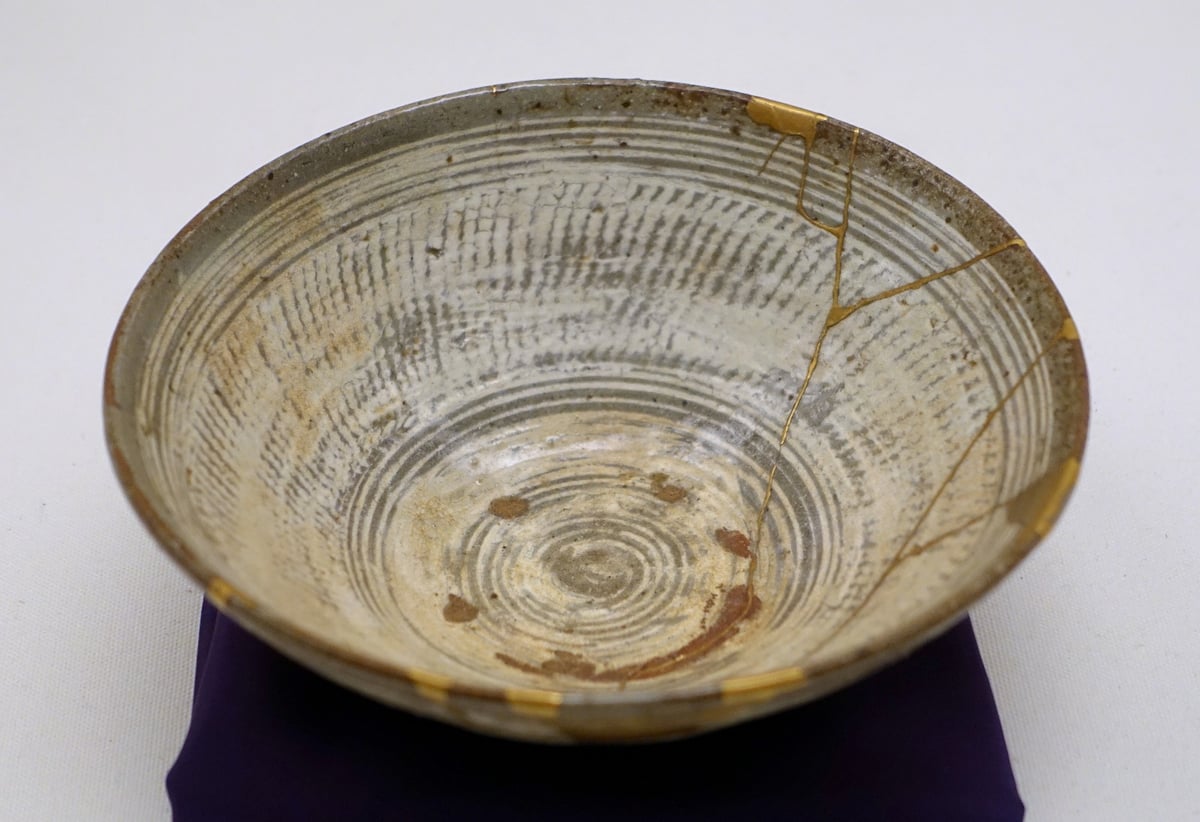
The gold seam is the whole idea: the repair is highlighted, never hidden. Photo: Daderot, CC0
Sakai, in Osaka Prefecture, has forged blades for centuries, and its visitor format is more honest than most: you do not forge a knife from raw steel in an afternoon, and any workshop promising that is selling theatre. Booked through the Sakai Tourism and Convention Bureau, the city's standard session pairs you with a craftsman to finish a real knife instead, sharpening your chosen santoku, deba or sashimi blade on whetstones and fitting its handle. What you learn is the skill you will actually use at home, which is how to keep an edge.
The session runs about 90 minutes and costs around ¥16,500 to ¥18,000 including the knife, which goes home with you. Book at least three days ahead, most sessions need a minimum of two people, and tuition is in Japanese unless you pay for the interpreter plan. It is an adult experience, and the finished knife travels in checked baggage only.
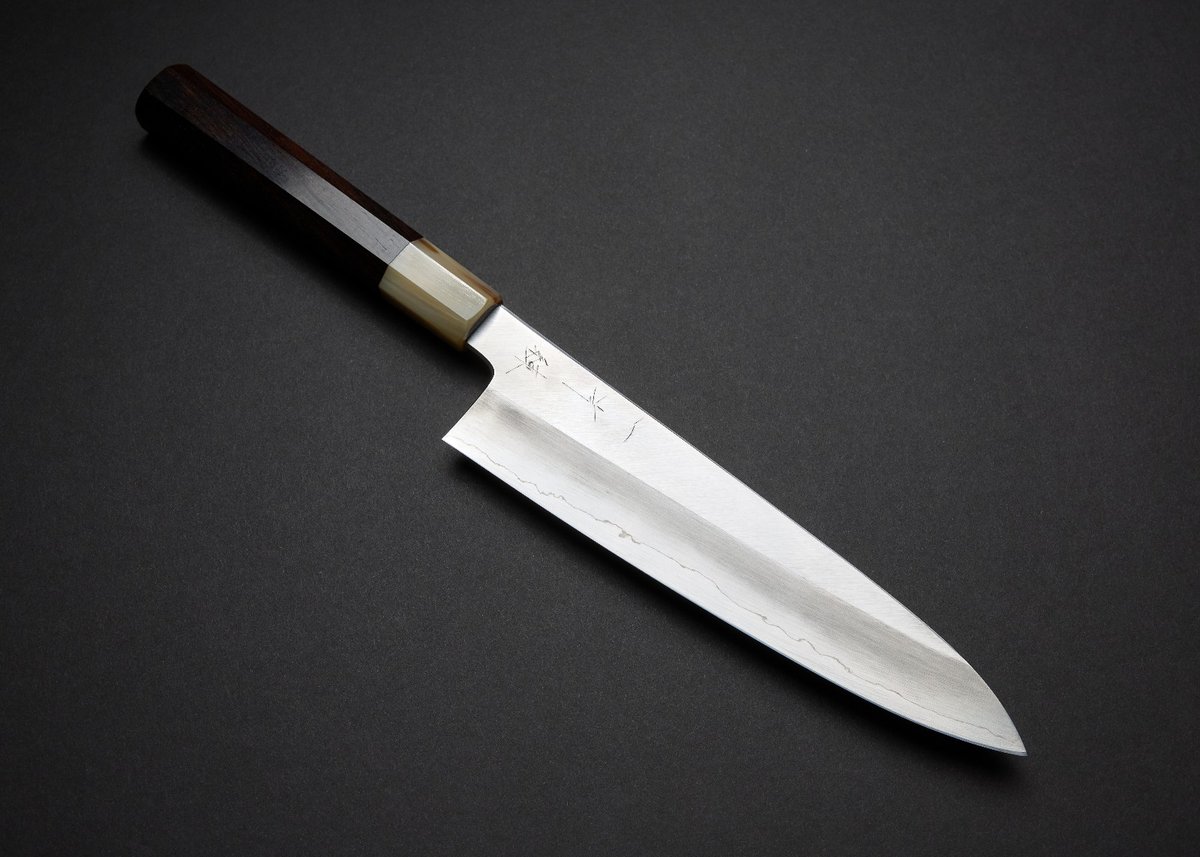
The end product of the Sakai format: a real working knife, sharpened and handled by your own hands. Photo: Frank Schulenburg, CC BY-SA 4.0
The gentlest metal workshop, and the one couples book most. You choose the material, width and finish, then hammer, bend and shape a metal band into a ring with the maker guiding each step, a technique called tankin. The studio usually does the final polish. Sessions run about an hour, groups are small or private, and the ring leaves on your finger the same day, which makes this the safest craft to book near the end of a trip.
Prices in Tokyo generally sit between ¥3,850 and around ¥10,000 per person depending on material and whether the session is private. The Asakusa session in YoNihon's own programme, covered below, is at the accessible end of that range.
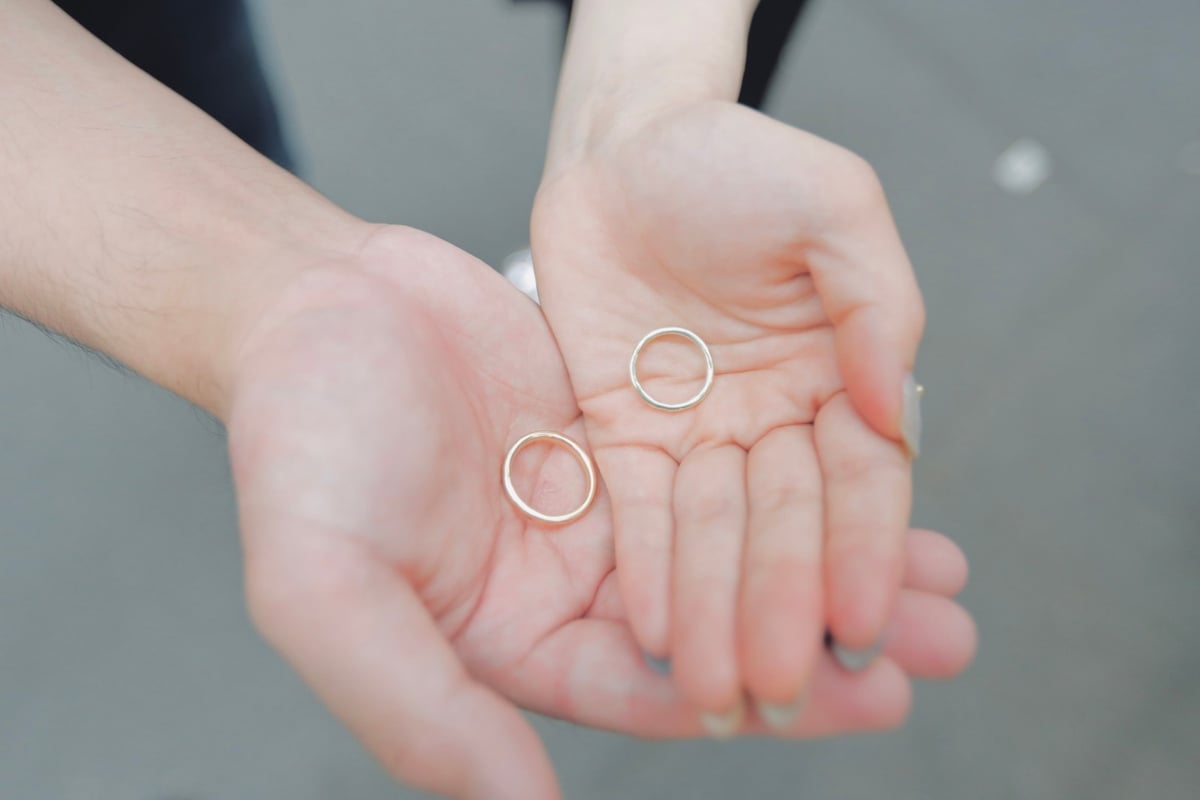
Finished rings from the Asakusa workshop in YoNihon's programme, ready to wear out of the door. Photo: YoNihon
Wagashi are the small sculpted sweets served with matcha, and the beginner format centres on nerikiri, a pliable dough of sweet bean paste and mochi flour that you colour, shape and mark with traditional tools into a seasonal motif: a plum blossom, a chrysanthemum, a maple leaf. Classes last about an hour, you usually make two or three pieces, and the ending is the best of any workshop on this page: you eat one of your sweets with a bowl of matcha, then box the rest.
Kyoto is the natural home of the craft. Group classes there start from ¥1,870 for a 65-minute session making two nerikiri, and a long-established confectioner's own class costs ¥3,000 per adult for about an hour, with online booking at least two days ahead and a two-person minimum. Fully private lessons taught in English start from around ¥10,000 per person. Fresh wagashi are perishable, so whatever you do not eat is for the same evening, not for the flight home.
Aizome, indigo dyeing, rewards patience in a way visitors can watch happen. Cloth is patterned by binding, stitching or clamping, dipped into a vat of fermented indigo where it comes out greenish, and then turns deep blue as it meets the air. At Ai no Yakata in Aizumi, Tokushima, a preserved indigo merchant's house that now works as a museum and dye studio, a handkerchief takes about 30 to 40 minutes and costs from ¥1,000, plus museum admission of ¥300 for adults. Individuals can simply walk in; only groups of ten or more need to reserve.
Dyeing has one quirk to plan around: the cloth needs to dry and be rinsed. Some studios hand you the piece the same day, slightly damp and well wrapped. Others, including the shibori hall in Arimatsu near Nagoya, finish and post the work to you, which takes days within Japan and longer overseas. Ask which system applies before you book, especially if you are leaving the town the next morning.
Pottery is the workshop with the longest tail. Throwing or hand-building takes 40 minutes to two hours depending on the studio: in Mashiko, Tochigi, the kiln cooperative's wheel class runs an hour at ¥4,070 including materials, and small studios there teach in English from ¥3,000. Kyoto's Kiyomizu-yaki classes start from around ¥2,900 per piece. Then your part ends and the kiln's begins. Pieces are dried, glazed and fired by the studio and posted to you, usually about two months later, with firing and postage charged on top of the class price.
That delay is not a flaw; it is how ceramics work. But it means pottery is a workshop to book early in a long trip or with a clear head about shipping, which brings us to the practical half of this guide.
Workshops divide cleanly into two families. Same-day crafts are rings, simplified kintsugi, wagashi, gold leaf work and most dyeing: you leave carrying the finished thing. Kiln crafts are the exception. Pottery, and some glass and lacquer formats, stay behind for firing or curing and follow you by post.
Before booking any post-it-to-you workshop, settle four things. Does the studio ship overseas at all, since some post only within Japan. What the shipping costs, because international postage on a boxed ceramic can rival the class fee. How long it takes, typically six to ten weeks for fired pottery. And which address to give: a hotel you leave in three days is the wrong one, so use your home address and expect the parcel after you are back. If a studio cannot ship abroad, a few travellers arrange forwarding through their final hotel, but confirm that with the hotel first rather than assuming.
Two more carrying notes. Knives and blades go in checked baggage, never the cabin, and a whetstone is fine in either. Fresh wagashi will not survive as a souvenir, so treat the class itself as the souvenir and eat the evidence.
Across the crafts above, verified prices in November 2026 fall into three bands. Simple, short formats, indigo dyeing, daruma painting, gold leaf on a small object, sit between ¥1,000 and ¥3,500. The standard hour to ninety minutes in a city studio, wagashi, ring making, pottery throwing, simplified kintsugi, runs from about ¥3,000 to ¥9,000. The specialist sessions, finishing a Sakai knife, real-gold kintsugi, private English tuition in almost anything, run from ¥10,000 to ¥20,000. Materials are normally included in the headline price; the extras that appear later are firing and postage for pottery, upgraded metals for rings, and interpreter fees in craft towns. A listing that names its extras up front is a good sign.
For English-led workshops in Tokyo and Kyoto during cherry blossom and autumn colour seasons, one to two weeks ahead is the comfortable window, and the most popular studios fill weekends earlier than that. Outside peak season, two to four days is usually enough. A few formats have hard minimums: Sakai's knife session needs at least three days, and some confectioners close online booking two days out. Genuine walk-in workshops exist, mainly in craft towns on weekdays, but they are the minority, and travelling across a city on the chance of a space is a poor use of a holiday day. Book the workshop you care about; wander into the ones you do not.
Five checks separate a good booking from a disappointing one. First, the take-home question above: same day, or posted, and can they post to your country. Second, who actually teaches: a working craftsman, a trained instructor, or a host reading a script. Third, group size, and whether private means private. Fourth, what the price includes, itemised. Fifth, the language arrangement, stated plainly rather than hinted at. Studios that answer all five clearly on their booking page are, in experience, the ones whose sessions run well too.
YoNihon's own programme is a short, handpicked list of workshops and classes run by local partners, with personal booking support in English, which removes most of the five checks above before you have to ask them. The full list is at YoNihon's experiences page https://yonihon.com/experiences/.
The clearest example is the private ring-making experience at Asakusa Hanare https://yonihon.com/experience/private-ring-making-experience-at-asakusa-hanare-tokyo/. It runs about one hour, costs ¥3,850 per person, holds a 5.0 star rating from its reviews, and is taught with English support. You hammer and shape the ring yourself using the tankin technique, the craftsman polishes it, and you take it home the same day, which is exactly how a last-afternoon-in-Tokyo booking should work. While you are in the neighbourhood, our guide to the best things to do in Asakusa https://yonihon.com/travel-guide/best-things-to-do-in-asakusa/ will fill the rest of the day around it, and the Kyoto equivalent of this whole conversation, studios and prices included, is in Kyoto with your hands https://yonihon.com/travel-guide/kyoto-beyond-temples/.
Two more workshops from YoNihon's own programme deserve a place in your plans. In Asakusa, the Japanese knife sharpening and engraving workshop (https://yonihon.com/experience/japanese-knife-making-workshop-sharpening-engraving/) puts you in traditional samue workwear with an English speaking crew: you choose a knife, hear its history from a Japanese master, and sharpen the blade yourself. It costs ¥25,000 per person, and it is the closest most of us will get to the blade skills above without leaving Tokyo.
And in Hakone, the art bonsai workshop (https://yonihon.com/experience/art-bonsai-workshop/) has you bend wire, paint a trunk and finish with moss, making a bonsai that never needs watering and travels home in your bag. It costs ¥5,000 per person, and it makes an easy hands-on stop on a Hakone day trip.