8 minutes · November 23, 2026
10 minutes · November 23, 2026
Kyoto has more than 1,600 Buddhist temples and 400 Shinto shrines, and most itineraries treat them as a list to be worked through. There is another way to spend a day here. This is the city where tea ceremony was refined into an art, where kimono silk is still dyed by hand, and where the sake district has been brewing since the 1600s. Almost all of it can be tried, without any prior skill, in sessions lasting between 45 minutes and two hours.
This guide covers the hands-on Kyoto: whisking matcha in a machiya tearoom, throwing a pot in the Kiyomizu pottery district, shaping seasonal sweets, dyeing yuzen cloth, mending a broken bowl with gold, making ramen from flour, and tasting sake where it is brewed. Everything is grouped by neighbourhood so you can combine two or three without crossing the city, and each entry gives the price basis, the time it takes, the language support and how far ahead to book.
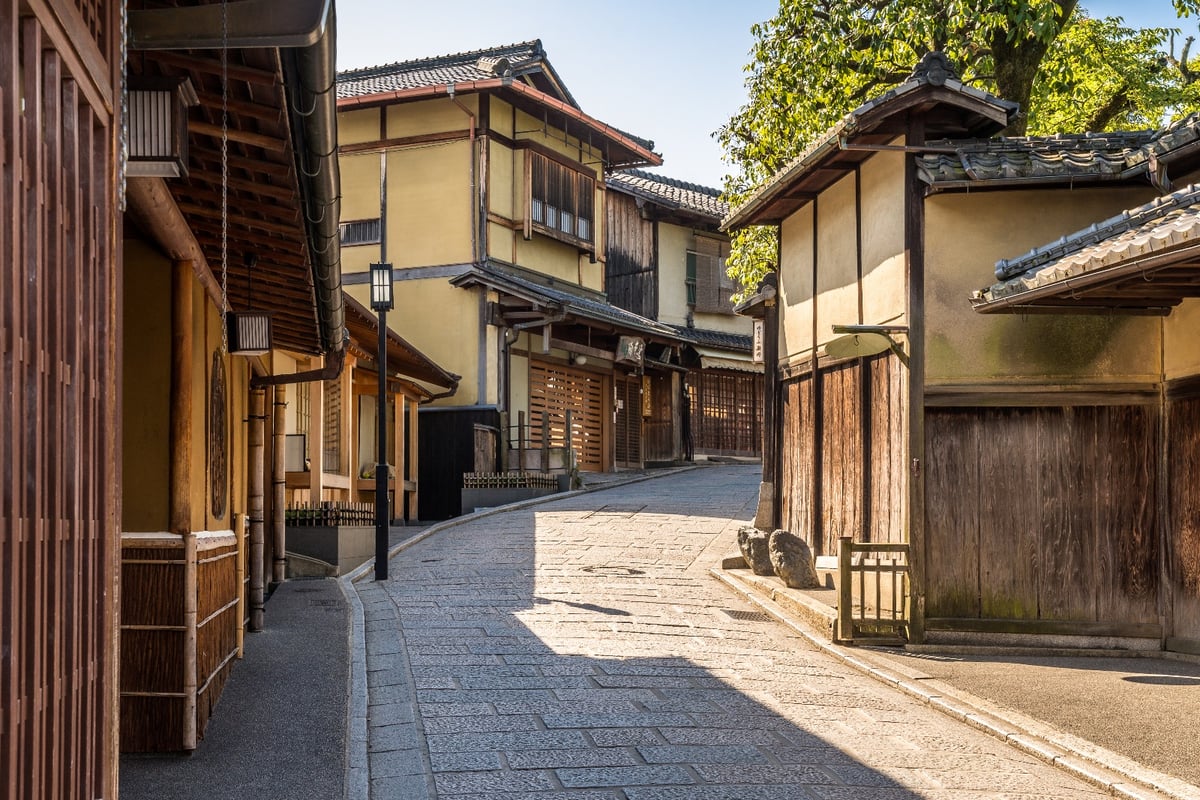
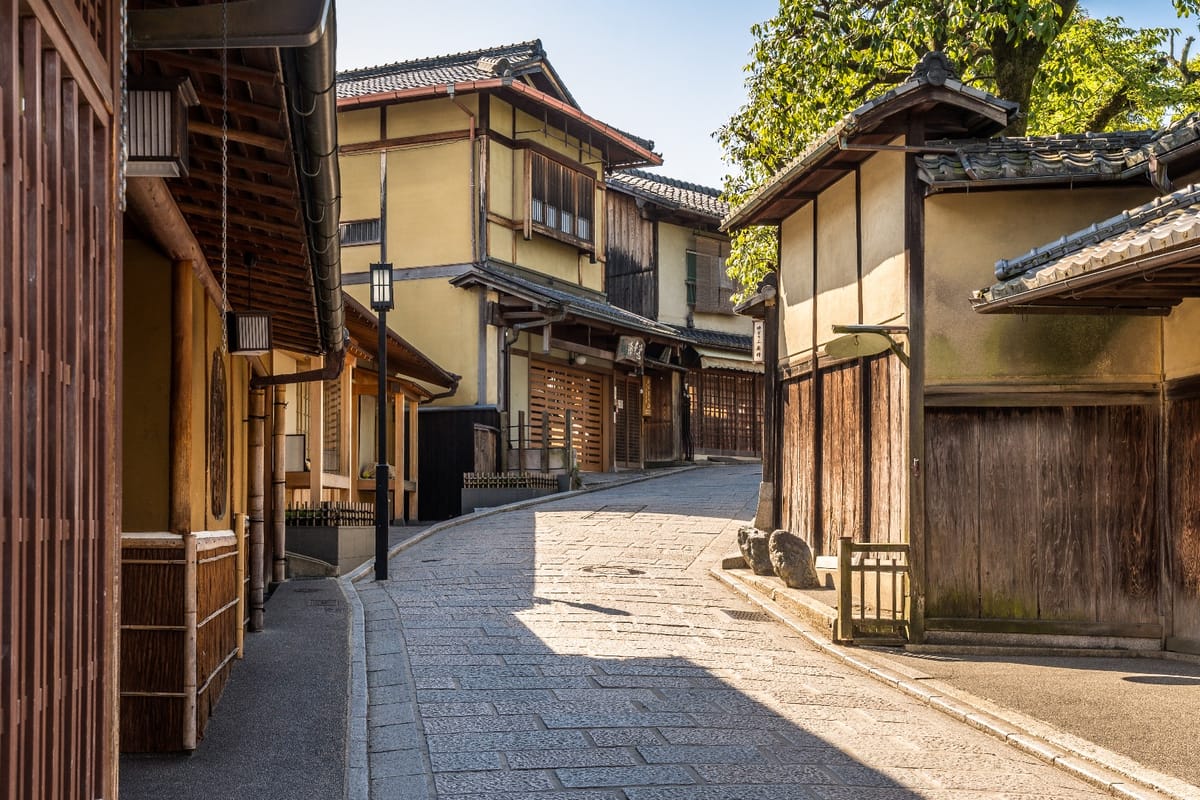
Ninenzaka in Higashiyama, the old quarter where several of the experiences in this guide take place. Photo: Domenico Convertini, CC BY-SA 2.0
Kyoto sells both kinds of ticket, and it helps to know which one you are buying.
A demonstration puts you in a seat. The clearest example is Gion Corner, the small theatre beside the Gion Kobu Kaburenjo in Gion, where seven traditional arts share one stage in about 50 minutes: Kyomai dance performed by maiko, chanoyu (tea ceremony), ikebana, koto music, bugaku court dance, kyogen comedy, and, depending on the season, bunraku puppet theatre or noh. Shows start at 18:00 and 19:00 and cost ¥5,500 for adults, with premium seats at ¥6,600 that come with a translation tablet. Children aged 7 to 15 pay ¥3,300 and under-7s are free. From 1 December to 11 March the theatre performs on Tuesdays to Fridays only. It is a good evening primer, and the tea you see there is made by someone else.
The tea ceremony is the experience most visitors start with, and Higashiyama, the preserved district between Yasaka Shrine and Kiyomizu-dera, is the natural place to do it. Camellia Flower Teahouse, in a machiya just off Ninenzaka, runs shared ceremonies of 45 minutes, starting on the hour between 10:00 and 17:00. The host performs the ceremony first, explaining each movement in English, guests eat a traditional sweet, and then everyone whisks their own bowl of matcha. That order matters: the sweet is not dessert, it is there to soften the bitterness of the tea.
Prices are per person: ¥4,000 for adults, rising to ¥5,000 in the peak months of March, April, October, November and the New Year period. Children aged 6 to 12 pay ¥2,500, or ¥3,000 in peak months, and children under 6 cannot join the shared sessions. Private ceremonies start from ¥8,000 per person. Book online ahead of time; in cherry blossom and autumn leaf season the popular hours fill days in advance. Chairs can be provided on request if kneeling on tatami is a problem, which is worth asking about when you book.
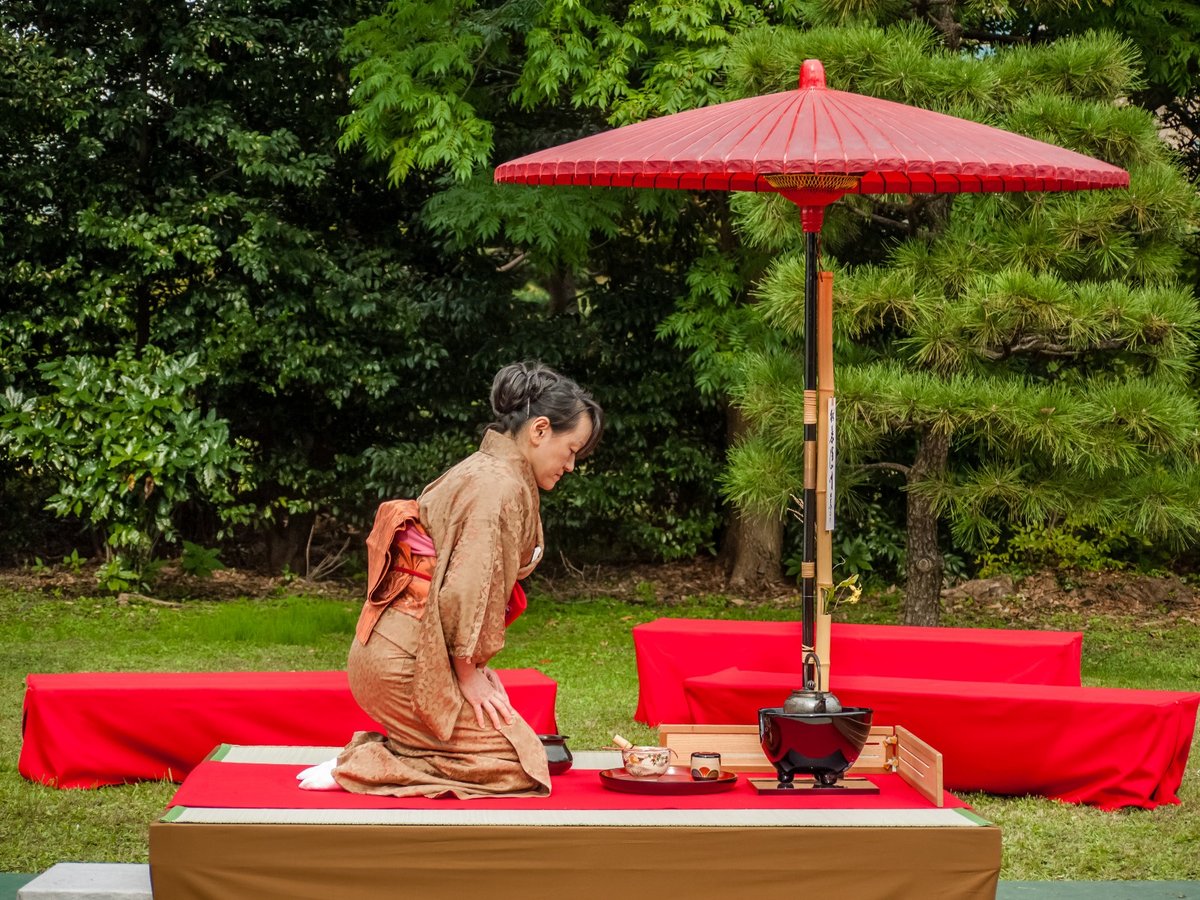
At a hands-on ceremony the host demonstrates first, then guests whisk their own bowl. Photo: Ermell, CC BY-SA 4.0
The lanes below Kiyomizu-dera were lined with kilns for centuries, and Kiyomizu-yaki, the painted pottery of Kyoto, is still made on the same slopes. Zuikou, a kiln founded in 1928, runs wheel-throwing classes at its Kiyomizu studio beside Yasaka Pagoda, and this is the branch where lessons are offered in English. You choose a form, a cup, bowl, plate or tumbler, shape it on an electric wheel with an instructor beside you, then pick one of five glazes.
The short Light Plan costs ¥2,900 for one piece and takes about 25 minutes. The Standard Plan is ¥3,900, and the 55-minute Zuikou Plan at ¥6,900 covers two pieces. One thing to plan around: you do not take your pot home. It has to be dried, trimmed, glazed and fired, and the studio ships the finished piece to your home address. Delivery takes roughly seven to ten weeks and the shipping fee is charged separately, so treat it as a souvenir that arrives after the trip.
Nishiki Market is a covered shopping street about 390 metres long and barely four metres wide, one block north of Shijo-dori in the centre of the city. Around 130 shops sell what Kyoto actually cooks with: pickles, yuba (tofu skin), dried fish, tofu doughnuts, tamagoyaki on sticks, tea, knives and Kyoto vegetables. It has traded here for roughly 400 years and is still a working market, which is why it works best as a slow graze rather than a sightseeing stop.
There is no single opening time, because each shop sets its own hours. Most open from around 10:00 and close by early evening, and many close on Wednesdays. The market association asks visitors not to eat while walking: buy your skewer or doughnut, eat it standing in front of the shop, then move on. It is a small rule that keeps a very narrow street passable. The nearest stations are Shijo (subway Karasuma Line) and Karasuma (Hankyu Line), both a few minutes away on foot.
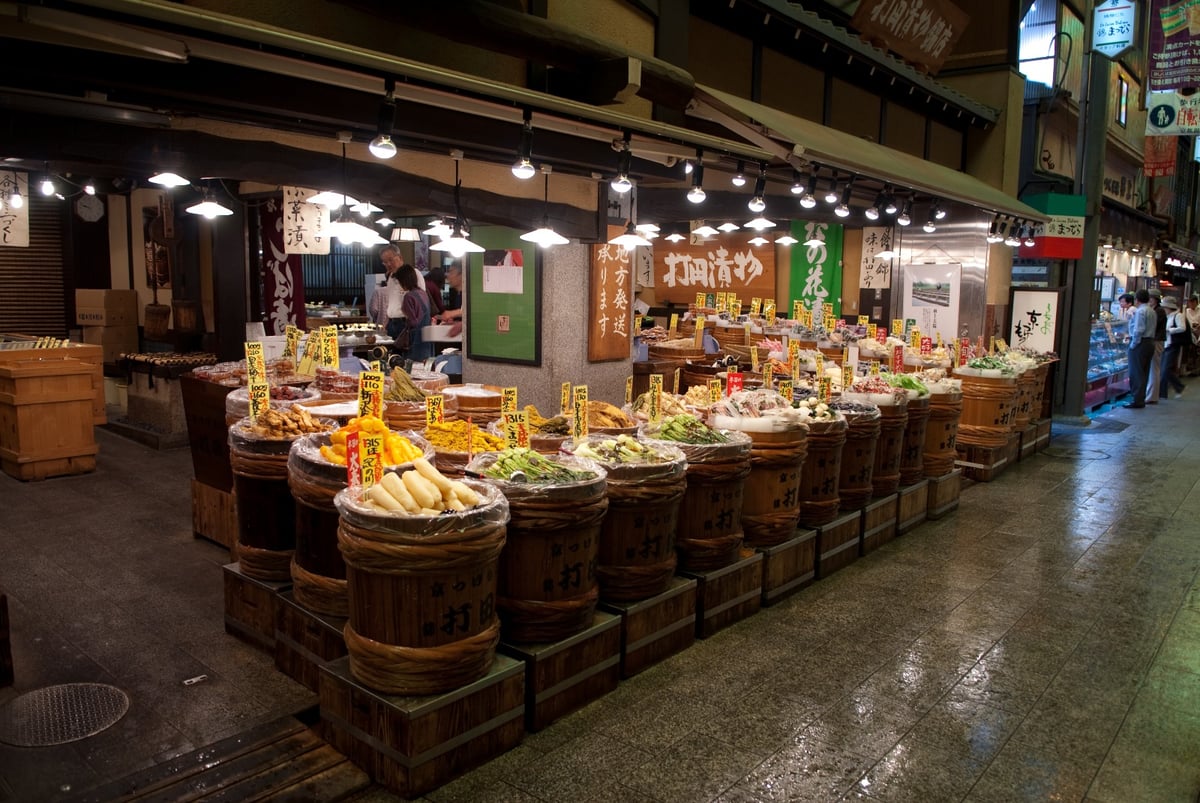
A tsukemono (pickle) shop in Nishiki Market, where Kyoto households have shopped for centuries. Photo: collinox, CC BY 2.0
Wagashi, the small sculpted sweets served with matcha, are made from sweetened bean paste and change shape with the season: a plum blossom in February, a chrysanthemum in autumn. At Yoshihiro, a long-established Kyoto confectioner, the making class lasts about 60 minutes and you shape two seasonal sweets under a professional artisan, then eat one with matcha. Adults pay ¥3,000 and children ¥2,000, plus tax. Sessions run four times a day, and children from the age of 3 are welcome.
The catch is the booking window. Classes need at least two people, and online reservations must be made at least two days ahead, so this is not one to leave until the morning of the visit. Private studios offer a smaller, pricier version of the same idea, with full English instruction, if your group wants the room to itself.
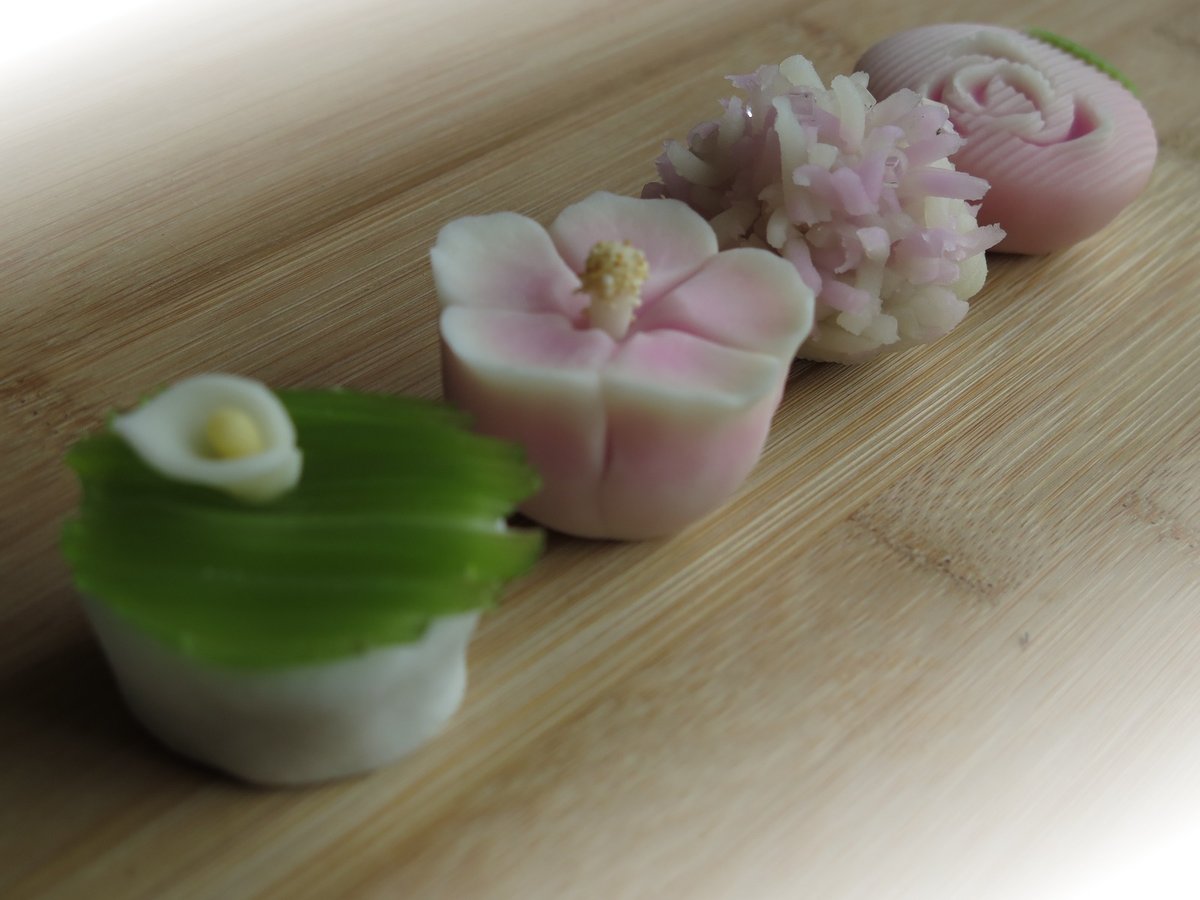
Nerikiri sweets are shaped by hand and change with the season. Photo: Douglas Perkins, CC0
Kyo-yuzen is the hand-dyeing tradition behind Kyoto's finest kimono, developed about 350 years ago. At Marumasu Nishimuraya, a dyeing workshop in a machiya townhouse near Karasuma Oike, the beginner's course uses paper stencils rather than freehand brushwork, which makes it genuinely manageable for a first attempt. You choose an item, a small handkerchief starts at ¥1,600, with tote bags, T-shirts and furoshiki cloths above that, pick from more than 3,000 stencil designs, and apply the colour yourself. The course takes one to one and a half hours, and most pieces go home with you the same day.
The studio is open daily from 9:00 to 17:30, with last admission at 16:00, and accepts same-day reservations when there is space, which makes it the most flexible booking in this guide. It closes from 1 to 3 January. Because the whole session happens indoors, it is also the obvious answer to a wet afternoon.
Kintsugi repairs broken pottery with lacquer and dusts the seams with gold, so the break becomes part of the object's history rather than its end. Traditional urushi lacquer takes weeks to cure, so Kyoto's visitor workshops use a modern, food-safe version that can be completed in one sitting. At KYOGEI, the simplified workshop costs ¥8,900 per person and runs for about 90 minutes to two hours. You can bring your own chipped piece, or choose an antique ceramic at the atelier from ¥500, and you take the repaired piece home the same day.
One detail to read before booking: the standard workshop is led in Japanese, and English interpretation is available for an additional ¥5,000 per person. Other studios build English instruction into the price. Compare the total, not the headline fee, when you choose between them.
Kyoto's food classes range from home cooking in a machiya to this, the city's most single-minded option. Ramen Factory, five minutes from Demachiyanagi Station, spends 90 minutes on one bowl: you knead noodle dough from wheat flour, roll and cut it on a noodle machine, prepare chashu, choose your soup base and oils, then sit down and eat what you made. Instructors teach in English, and vegan, halal and gluten-free versions run in the same class at no extra cost.
It costs ¥19,800 per adult and ¥18,700 for children aged 3 to 12, tax included, the highest price in this guide. Part of that is the meal itself, since the class replaces lunch or dinner. Book online; classes run several times a day, including an 18:00 sitting.
Fushimi, about 20 minutes south of Kyoto Station by train, is one of Japan's great sake districts, built on soft underground water that brewers have used for centuries. The Gekkeikan Okura Sake Museum occupies a brewery building from 1909 and walks you through the old tools of the trade, cedar barrels, presses and paddles, before the part most people come for: a tasting of three sakes, included in the admission for visitors aged 20 and over.
Admission is ¥600 for adults, ¥100 for ages 13 to 19 and free for children 12 and under, with a small souvenir for visitors aged 13 and above. The museum is open from 9:30 to 16:30, with last admission at 16:00, and it closes in mid-August, from 28 December to 4 January, and on occasional extra days, so check the calendar before you go. Walk-ins are accepted, and online booking is available. Two practical notes: the museum has been cashless since July 2026, so bring a card or a phone payment app, and drivers are not served alcohol, which is standard at Japanese breweries. The nearest station is Chushojima on the Keihan Line, five minutes away on foot, and the willow-lined canals and white-walled storehouses of the district make the walk back part of the visit.
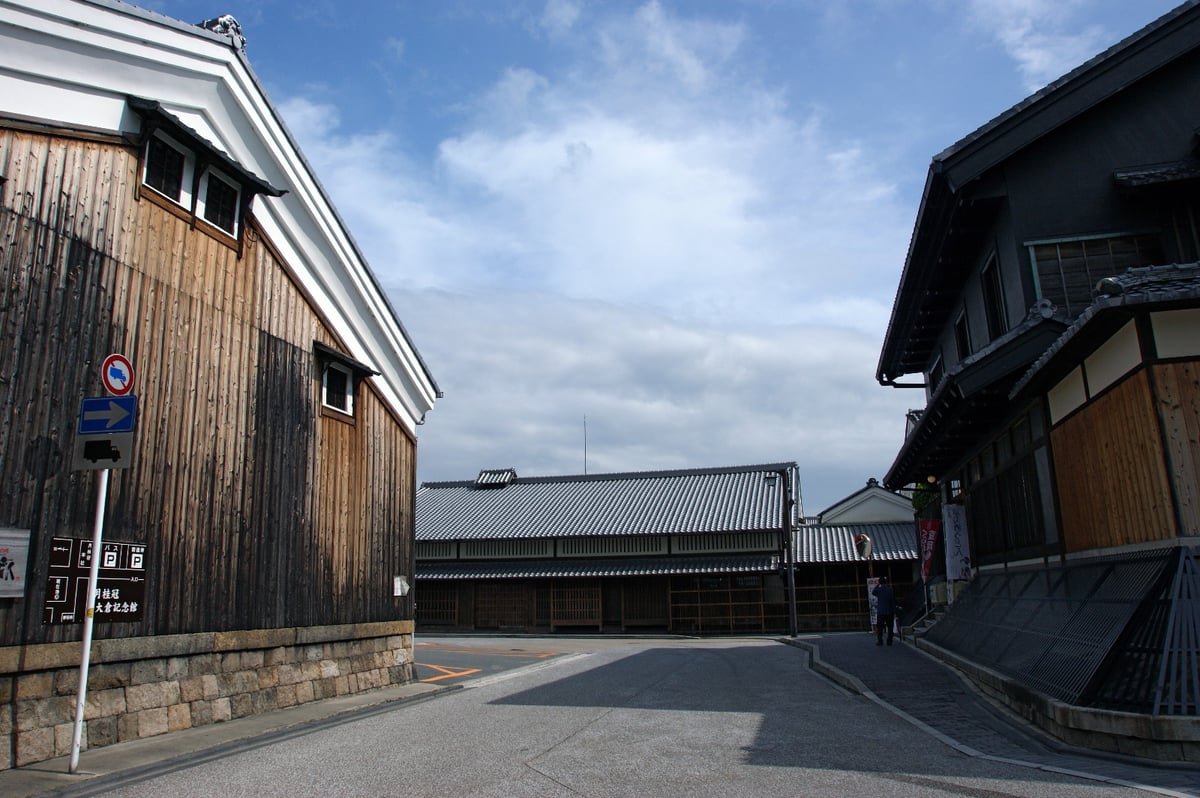
The Gekkeikan Okura Sake Museum, in a former brewery building in the Fushimi sake district. Photo: 663highland, CC BY 2.5
If you have half a day and want it to feel unhurried, stay in the centre. Arrive at Nishiki Market at about 10:30, once most shops have opened, and graze your way along it for an hour, treating the stalls as lunch. Then walk west for about ten minutes to Marumasu Nishimuraya and take the early-afternoon yuzen course. You will be finished by mid-afternoon, dyed handkerchief in your bag, with the rest of the day free.
This pairing is also the rainy-day plan. The market runs under an arcade roof and the workshop is entirely indoors, so wet weather costs you nothing but the short walk between them. In fine weather, the same shape works in Higashiyama: a pottery session late in the morning, then a tea ceremony in the afternoon, with Ninenzaka and Sannenzaka in between.
| Experience | Area | Time needed | Price basis | Book ahead? | Children |
|---|---|---|---|---|---|
| Tea ceremony (shared) | Higashiyama | 45 minutes | ¥4,000 per adult, ¥5,000 in peak months | Yes, online | Ages 6 and over |
| Pottery wheel (Kiyomizu-yaki) | Higashiyama | 25 to 55 minutes | From ¥2,900 per piece, shipping extra | Yes | Check ages when booking |
| Wagashi making | Central Kyoto | About 1 hour | ¥3,000 per adult, ¥2,000 per child, plus tax | Yes, at least 2 days ahead | Ages 3 and over |
| Yuzen stencil dyeing | Nakagyo | 1 to 1.5 hours | From ¥1,600, priced by item | Same-day possible | Check ages when booking |
| Kintsugi (modern method) | Kyoto | 1.5 to 2 hours | ¥8,900 per person, English interpretation extra | Yes | Check ages when booking |
| Ramen making | Demachiyanagi | 90 minutes | ¥19,800 per adult, meal included | Yes, online | Ages 3 and over |
| Sake museum and tasting | Fushimi | 1 to 1.5 hours | ¥600 per adult, tasting included | Walk-ins accepted | All ages enter, tasting is 20 and over |
| Gion Corner (watching) | Gion | About 50 minutes | ¥5,500 per adult | Recommended | Under 7s free |
Do I need to book ahead?
For most hands-on sessions, yes. Tea ceremonies, pottery, wagashi and ramen classes all take online reservations and can fill several days out in spring and autumn. Two exceptions: the yuzen studio takes same-day bookings when it has space, and the sake museum accepts walk-ins. Gion Corner tickets can be bought at the door, but reserving online removes the risk of a sold-out show.
Is it suitable for beginners?
Yes, and that is the point of these formats. Every activity above is designed for people who have never done it, with an instructor demonstrating first and helping throughout. The one honest warning is the potter's wheel: clay is less obedient than it looks, and a slightly lopsided cup is the normal first result.
Can children join?
Often, with age floors that vary. Shared tea ceremony sessions start at age 6, wagashi classes at Yoshihiro welcome children from 3, and the ramen class takes children from 3 at a child price. At the sake museum children enter free or cheaply but cannot taste. For pottery, yuzen and kintsugi, minimum ages are set by each studio and are not always published, so confirm when you book rather than at the door.
Workshops generally welcome photos of your own work, but ask before photographing instructors or other guests, and follow the host's lead in a tea room, where phones are best put away during the ceremony itself. In Nishiki Market, photograph the street freely and ask before close-ups of shopkeepers.
Gion needs more care. Hanamikoji, the main street, is public and photography there is fine. The narrow lanes branching off it are private property: signs at their entrances prohibit both entry and photography, and warn of a ¥10,000 charge. Never stop, follow or block a maiko or geiko on her way to an appointment for the sake of a picture. The public streets give you the same wooden facades and lantern light without the trespass.
If your trip continues on to Tokyo, the experiences page on this site lists hands-on sessions there too, including ring making in Asakusa: yonihon.com/experiences. The Kyoto workshops above are independent local businesses, so book with them directly and check their pages for the latest times and prices.
9 minutes · November 23, 2026
