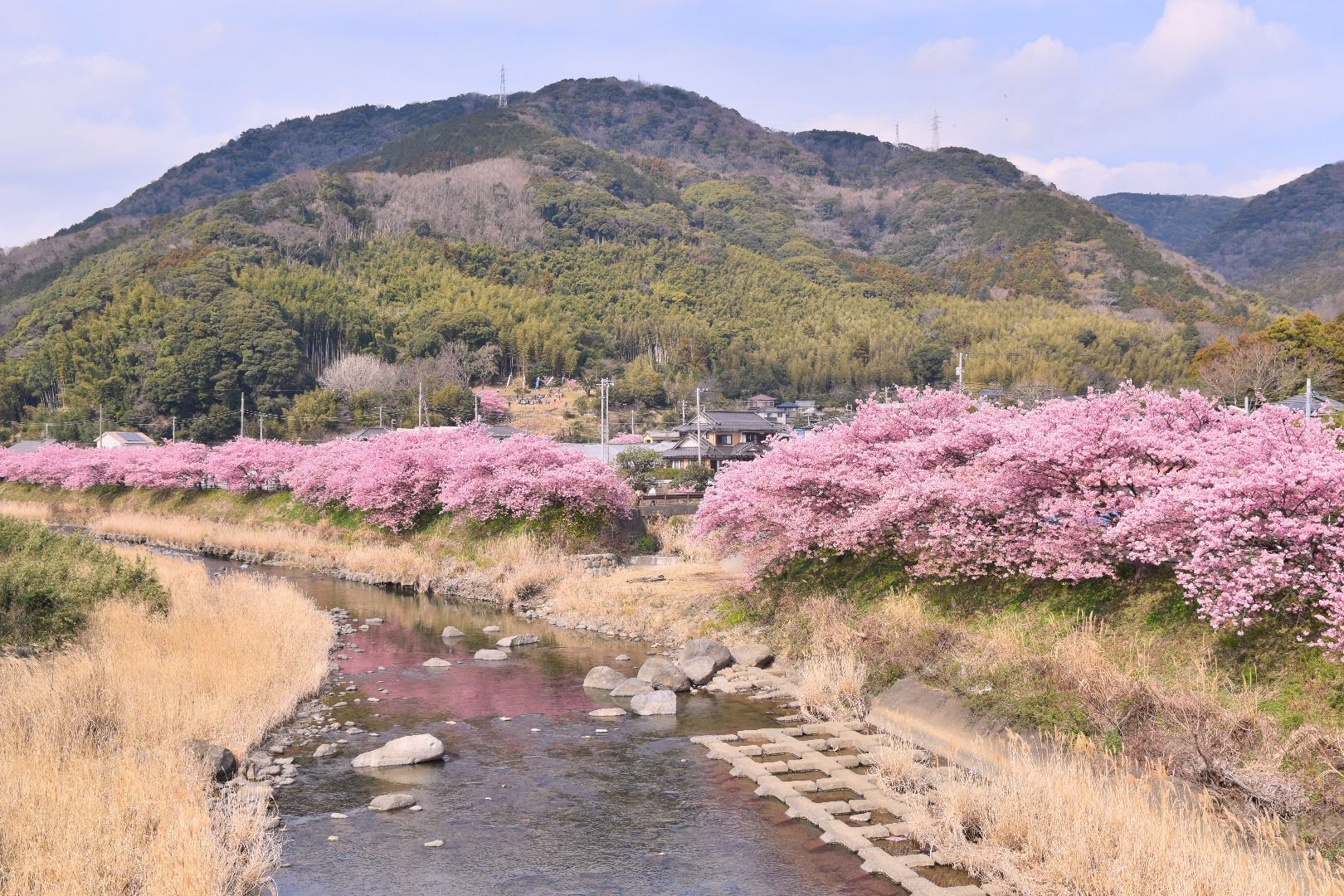
Most of Japan is still in its winter coat when the cherries open in Kawazu. The town sits on the south-east coast of the Izu Peninsula, and its trees are a different variety from the pale Somei Yoshino that Tokyo waits for in late March. Kawazu-zakura flowers are a deeper pink, they open from early February, and they hold for weeks rather than days. For the length of the festival, about 850 of them line some 4 kilometres of the Kawazu River, and the tourism association counts roughly 8,000 across the town as a whole.
The whole variety goes back to a single tree. Around 1955, a Kawazu resident named Iida Katsumi came across a cherry seedling growing wild and planted it in his garden in the Tanaka district. The tree was named Kawazu-zakura in 1974 and made the town's official tree the following year, and the original still grows in that garden, about 1.2 kilometres from Kawazu Station on the road towards Mount Amagi. Every pink bank along the river descends from that one garden tree.
The walk itself is simple and that is the appeal. Paths run along both banks from near the station, food stalls set up along the water, and yellow rapeseed flowers under the pink canopy for much of the season. In the evening the trees are lit from 18:00 to 21:00, which turns the same walk into a different one. In 2026 the lit stretches were downstream of Tatebashi bridge by the station and behind the Odoriko Onsen Kaikan hall; the exact stretches for 2027 will be confirmed closer to the season.
One honest warning about timing. The festival dates are fixed months in advance, the blossom is not. Full bloom lasts about a week to ten days somewhere inside the festival window, and it moves with the winter weather. In 2026 the festival opened on 7 February and full bloom was declared on 13 February. The tourism association runs live cameras on the official festival site (kawazuzakura.jp) and a recorded bloom report line (0558-34-1560, Japanese), and both are worth checking in the week before you travel rather than booking around the opening day and hoping.
Crowds are the other thing to plan around. Kawazu is a town of about 7,000 people, and a Shizuoka Prefecture landscape plan puts peak festival days at 50,000 to 60,000 visitors. Weekends at full bloom are the pinch point, on the paths and on the roads in. The tourism association itself suggests that drivers park at the large car park at Izu-Kogen Station and ride the Izukyu Line in for the last stretch. Weekday mornings are the quietest time on the river paths, and walking upriver away from the station thins the crowds out further.
Photos: Raita (CC BY 2.0), 9689tatsuya (CC BY 4.0) and Kirin7739 (CC0), via Wikimedia Commons.

You cannot run the 2027 Tokyo Marathon, because the 40,000 places went in a ballot that closed in August 2026. But race day, Sunday 7 March 2027, is one of the great free shows in Tokyo: wheelchair racers at 9:05, the world's best marathon runners at 9:10, then hours of costume runners, all on closed streets from Shinjuku to Tokyo Station. Here is where to stand.
About 850 deep-pink Kawazu-zakura trees along 4 kilometres of the Kawazu River, flowering a full month before Tokyo's cherry blossom season Yellow rapeseed blooming under the pink canopy along the banks for much of the festival Every tree in town descends from one garden seedling planted around 1955; the original tree still grows 1.2 km from Kawazu Station The riverside trees are lit every evening from 18:00 to 21:00, so one visit can cover the daytime walk and the night colours Live cameras and a recorded bloom line from the tourism association, so you can time the trip to the full-bloom week instead of guessing
•Check the live cameras on kawazuzakura.jp or the bloom report line (0558-34-1560) in the week before you go; full bloom lasts a week to ten days and moves with the weather
•Reserve seats on the Odoriko limited express ahead of time in the middle of the season, as the direct trains from Tokyo fill at full bloom
•Come on a weekday morning for the quietest paths; weekends at full bloom bring 50,000 or more visitors to a town of 7,000
•If you drive, follow the tourism association's advice and park at Izu-Kogen Station, then ride the Izukyu Line in; roads around Kawazu jam badly at peak bloom
•Stay until the light-up at 18:00 if you can, or stay the night in one of Kawazu's onsen inns and walk the river again in the morning
•Walk upriver from the station end for thinner crowds, and detour to the original Kawazu-zakura tree in the Tanaka district if the town's one-tree story appeals to you
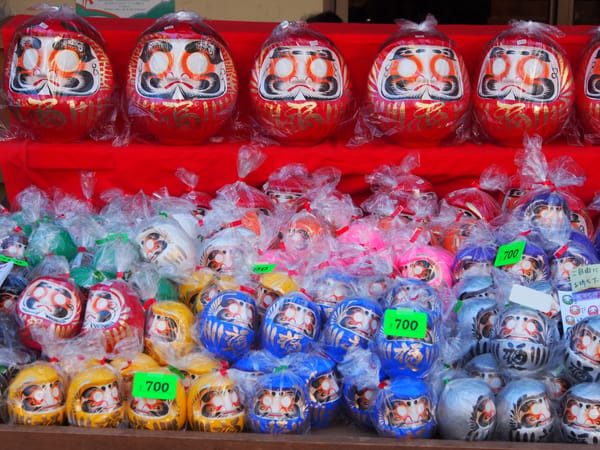
For two days every March, hundreds of stalls fill the grounds of Jindaiji Temple in Chofu with daruma dolls of every size and colour, and monks open each new doll's first eye with a Sanskrit character. It is one of Japan's three great daruma markets, an easy bus ride from Shinjuku.
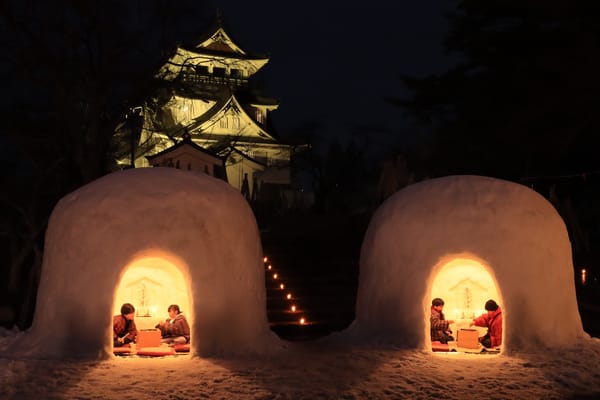
On 12 and 13 February 2027, and note that the dates have moved, the children of Yokote in Akita invite strangers into candle-lit snow huts and serve them grilled mochi and sweet amazake. The custom is about 450 years old, and it only happens on two evenings a year.