Things to Know Before Visiting Japan
Japan is one of the most rewarding countries to visit — but it operates by its own rules. The culture is rich, the customs run deep, and a little preparation makes an enormous difference. Whether it’s your first trip or you’re finally ticking it off the bucket list, here’s everything you should know before you go.
1. Japan Is Still Largely a Cash Society
Despite being one of the world’s most technologically advanced countries, Japan runs heavily on cash. Many restaurants — especially ramen shops, izakayas, small eateries, and rural establishments — are cash-only. Shrines, local markets, and some taxis also won’t accept cards.
Always carry at least ¥10,000–¥20,000 on you. The easiest and most reliable way to withdraw yen is at 7-Eleven ATMs, which accept virtually all international debit and credit cards without issue. Japan Post ATMs are a good backup. Avoid airport currency exchange counters for large amounts — the rates are poor.
Set up a Wise or Revolut card before you travel — they offer near-zero fees on international withdrawals and are accepted at 7-Eleven ATMs across Japan.
2. Tipping Is Not Just Unnecessary — It Can Be Offensive
Do not tip in Japan. Not at restaurants, not in taxis, not at hotels, not anywhere. Tipping is not part of Japanese culture and can cause genuine confusion or even embarrassment for the person receiving it. Exceptional service is simply the expected standard, not something that warrants extra payment.
If you want to express gratitude, a sincere bow and a heartfelt arigatou gozaimasu (thank you very much) is the right way to do it. At ryokan, small gifts (omiyage) are occasionally given to hosts, but money never is.
3. Get a Suica or PASMO IC Card Immediately
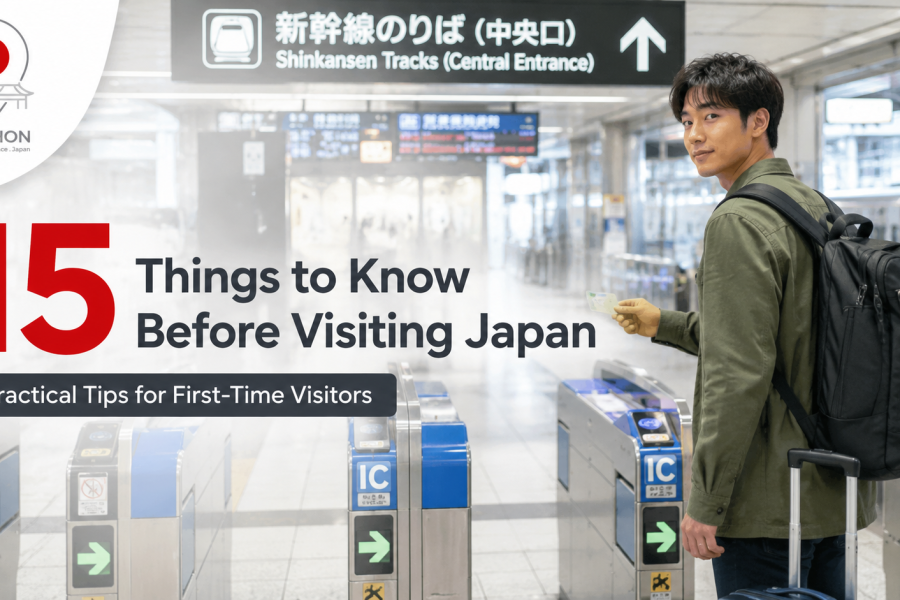
The moment you arrive at the airport, get an IC card — either a Suica (issued by JR East) or a PASMO (issued by Tokyo Metro). These rechargeable cards work as tap-to-pay on virtually every train, subway, and bus across Japan. They also work at convenience stores, vending machines, and many restaurants.
You can load them with yen at any station ticket machine. Having one eliminates the need to buy individual tickets for every journey and saves significant time — especially during busy rush hours when queues at ticket machines can be long.
You can now add a Suica card directly to Apple Pay or Google Pay before you even land — search “Suica app” or set it up via your device’s wallet app.
4. The JR Pass Is Worth It — But Only If You’re Travelling Between Cities
The Japan Rail Pass (JR Pass) gives you unlimited travel on most Shinkansen bullet trains and JR lines for 7, 14, or 21 days. It’s excellent value if you’re doing the classic multi-city route (Tokyo → Kyoto → Osaka → Hiroshima, for example). A 7-day pass costs around ¥50,000 and must be purchased before arriving in Japan.
However, if you’re only staying in one or two cities, the JR Pass likely isn’t worth it. Do the math based on your specific itinerary before buying.
5. Remove Your Shoes — Know When and Where
Japan has a clear indoor/outdoor divide, and shoes stay outside in many places. You’ll be expected to remove your shoes when entering a ryokan (traditional inn), most traditional restaurants with tatami seating, many temples and shrines, and private homes.
A good rule of thumb: if there’s a step up at the entrance (called a genkan) and you see a row of slippers or a shoe rack, take your shoes off. Slip-on shoes are genuinely useful for Japan travel — you’ll be removing them frequently.
Wear clean socks every day. You’ll be removing your shoes often, sometimes in front of others, and holes or dirty socks are quietly embarrassing in Japanese social settings.
6. Train Etiquette Is Strictly Observed
Japanese trains are quiet spaces. Phone calls are not made on trains — it’s considered rude and you’ll almost never see a local do it. Conversations are kept to a low murmur. Eating on local commuter trains is frowned upon (though long-distance Shinkansen rides are an exception, and ekiben — station bento boxes — are a beloved travel tradition).
Priority seats (marked in a different colour) are reserved for elderly passengers, pregnant women, and people with disabilities. Give them up without being asked. Bags go on your lap or overhead rack, not on the seat next to you during busy hours.
7. Japan’s Seasons Change Everything
When you visit dramatically affects your experience. Japan is a country that lives by its seasons — and the two peak periods, cherry blossom season in spring and autumn foliage season, transform the country into something genuinely breathtaking.
Cherry blossoms (sakura) typically peak in late March to early April in Tokyo and Kyoto. Autumn koyo (foliage) peaks in mid-to-late November. Both seasons are stunning but busy — book accommodation months in advance. If you prefer quiet, winter and early summer (avoiding the rainy season in June) offer far fewer crowds.
Golden Week (late April to early May) is Japan’s busiest domestic holiday period. Avoid travelling between cities during this time unless booked well in advance — trains and hotels sell out completely.
8. Convenience Stores Are Genuinely Remarkable
Japanese convenience stores — 7-Eleven, Lawson, and FamilyMart — are unlike anything you’ve encountered elsewhere. They serve genuinely delicious, freshly prepared food: onigiri (rice balls), hot steamed buns, sandwiches, noodles, karaage chicken, and hot soups — all for under ¥500.
They’re also open 24 hours, have ATMs, sell SIM cards, allow bill payments, offer printing services, and stock everything from umbrellas to sake. Make a habit of stopping in for breakfast or a late-night meal — it’s one of Japan’s great everyday pleasures and a real part of the culture.
The egg salad and tuna mayo sandwiches at Japanese 7-Elevens have a cult following for good reason. Try one on your first morning — it costs around ¥250 and will surprise you.
9. Rubbish Bins Are Almost Nowhere to Be Found
One of Japan’s most disorienting quirks for first-time visitors: there are almost no public rubbish bins. Despite being one of the cleanest countries on earth, Japan expects people to take their rubbish home with them. Bins were largely removed from public spaces after the 1995 Aum Shinrikyo subway attack.
The solution most locals use: hold onto your rubbish until you reach a convenience store (which all have bins outside or near the entrance), or take it back to your hotel. Resist any temptation to leave rubbish on a bench or ledge — it’s considered deeply inconsiderate.
10. You Don’t Need to Speak Japanese — But a Few Words Go a Long Way
English signage in major cities and tourist areas is excellent. Tokyo’s metro system, airport transfers, convenience stores, and most hotels are entirely navigable without Japanese. Google Translate’s camera mode handles menus and signs instantly.
That said, a handful of phrases will earn you genuine warmth and respect. Japanese people deeply appreciate any attempt to engage in their language, however small.
11. Onsen (Hot Springs) Have Rules — Learn Them First
Bathing in an onsen is one of Japan’s most treasured experiences. Natural hot spring baths are found across the country — in ryokan, public bathhouses (sento), and standalone facilities. But there are clear rules that must be followed.
Before entering the communal bath, you must wash your entire body thoroughly at the shower stations provided. This is non-negotiable — entering the bath without washing first is considered deeply unhygienic and disrespectful. Towels stay outside the water. Hair must be tied up or kept out of the bath. Most onsen are gender-separated.
One important note: tattoos are prohibited at most onsen due to historical associations with organised crime (yakuza). If you have visible tattoos, look specifically for onsen that are tattoo-friendly, or book a private family bath (kazoku-buro) at your ryokan.
The small towel provided at ryokan is for modesty while walking to the bath — fold it on your head while soaking, never put it in the water. It’s a local custom and adds to the experience.
12. Japan Is Extremely Safe — but Stay Respectful
Japan consistently ranks among the safest countries in the world. Violent crime against tourists is exceptionally rare. Lost wallets and phones are routinely handed in to the nearest police box (koban). Solo travel — including solo female travel at night — is common and generally very safe.
That said, safety doesn’t mean anything goes. Respecting local customs, keeping noise levels down in residential areas, not photographing people without permission, and following posted rules at temples and shrines is expected. The concept of meiwaku — causing trouble or inconvenience to others — is taken seriously in Japanese society.
Quick Reference: Common Questions
Citizens of over 60 countries — including the USA, UK, Australia, Canada, and most EU nations — can enter visa-free for up to 90 days. Always check the current requirements with the Japanese Ministry of Foreign Affairs before travelling.
Get a tourist eSIM (Airalo, Ubigi, or IIJmio) before departure, or pick up a prepaid data SIM at the airport on arrival. Download offline Google Maps of Japan as a backup. Pocket Wi-Fi rental is also available at all major airports.
Generally yes — eating while walking is considered impolite in most of Japan. The exception is street food at festivals or designated food stalls where vendors expect you to eat nearby. At convenience stores, eat outside near the store, not while moving down the street.
Yes, absolutely. Japanese tap water is clean, safe, and tastes good virtually everywhere in the country. Carry a refillable bottle — it saves money and is better for the environment than buying constant plastic bottles.
A comfortable mid-range budget is ¥10,000–¥15,000 per person per day (approximately $65–$100 USD), covering accommodation, meals, transport, and entry fees. Budget travellers can manage on ¥5,000–¥7,000. Tokyo and Kyoto are pricier than smaller cities.
Major cities like Tokyo and Kyoto have excellent vegetarian and vegan options, and awareness is growing. However, Japanese cuisine uses dashi (fish stock) extensively — even dishes that appear vegetable-based may contain it. Learn the phrase “niku to sakana wa taberaremasen” (I cannot eat meat or fish) and save it on your phone.